 Skip to content

Five Critical Mistakes That Can Ruin a Houston Auto Accident Settlement
A Houston auto accident settlement can be undermined long before negotiations end. The five mistakes below commonly reduce the evidence, treatment support, or insurance coverage available for a claim.
What to do first
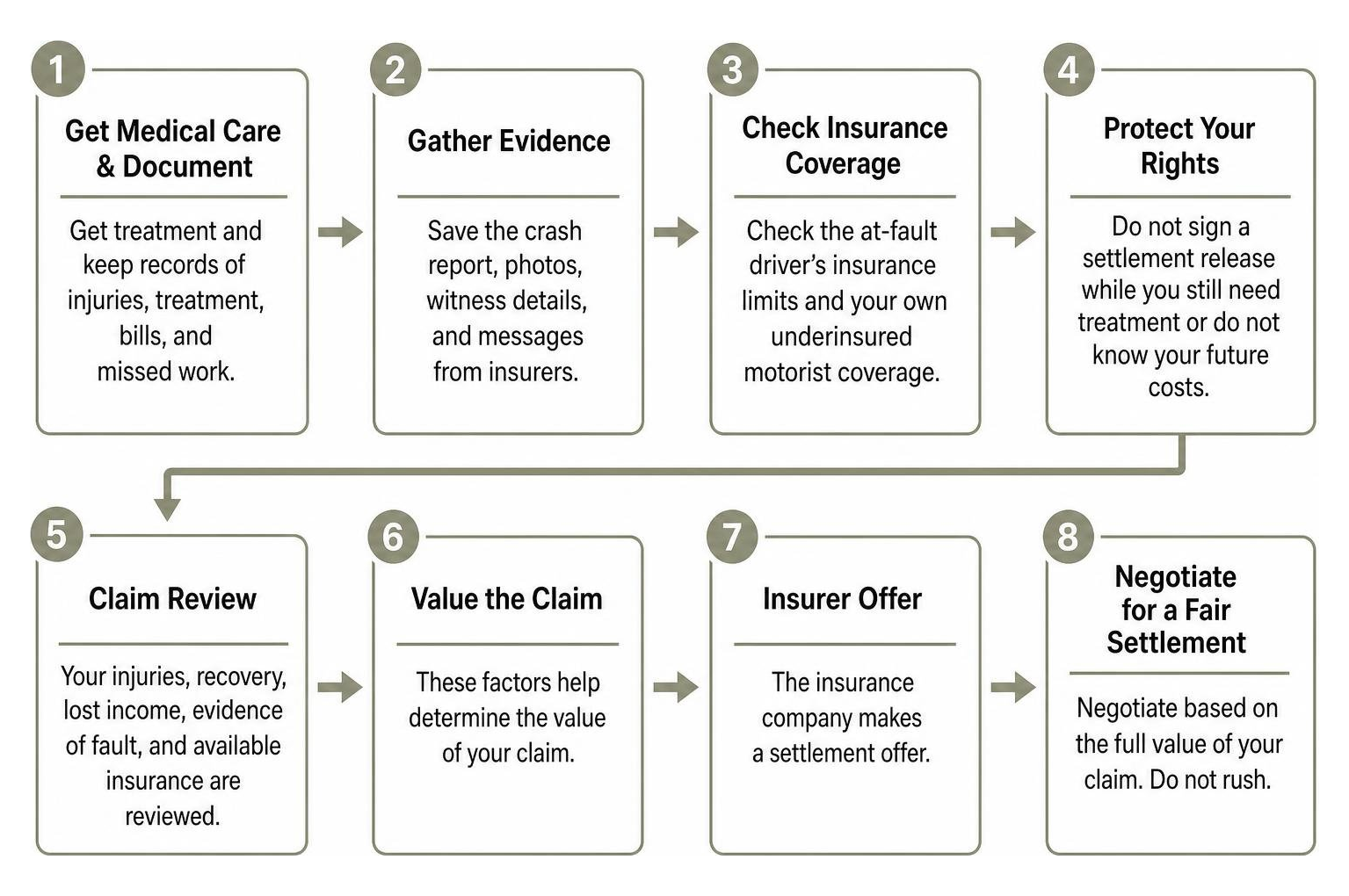
- Seek a medical evaluation as soon as practical, then organize each bill, treatment note, and work-loss record in one file.
- Create an evidence folder with the crash report, scene images, witness contacts, and insurer correspondence.
- Compare the at-fault driver’s limits with the coverages listed on your own declarations page, including underinsured motorist protection; this guide to car accident compensation in Houston can help frame the review.
- Hold off on any release until the likely course of treatment and future expenses are clear, then consider advice from a Houston insurance claim attorney or car wreck attorney in Houston.
The five mistakes covered here are accepting an early offer, delaying medical care or documentation, overlooking available insurance, mishandling comparative fault, and missing the filing deadline. Review car accident compensation in Houston before weighing an offer, and speak with a Houston insurance claim attorney or car wreck attorney in Houston about how those issues may affect a specific claim.
Mistake 1: Accepting an Early Settlement Before the Full Injury Picture Is Clear

Insurance adjusters may contact injured drivers within days of a crash on I-45, the North Freeway, or Loop 610 with an immediate offer. An early offer can seem useful when bills are arriving, but it may not account for surgery, physical therapy, lost income, or lasting limitations that become clearer later. For context, compare the average car accident settlement in Houston with the documented facts of the individual claim.
A signed liability release generally ends the right to seek additional payment for the same crash. Before evaluating an offer, gather medical records, billing statements, diagnostic imaging, wage documentation, and an estimate of reasonably anticipated care. The reasons not to settle early explain why a quick payment can leave an injured person responsible for later expenses, while these figures on the average car accident settlement in Texas show why broad averages should not control an individual decision.
Why Published Settlement Averages Can Mislead
Published settlement figures vary widely because severe commercial-vehicle crashes and permanent injuries can skew an average upward. Median figures and fact-specific comparisons can offer more useful context, but neither establishes the value of an individual claim.
A settlement evaluation should focus on the evidence of liability, the documented medical impact, lost earnings, future care needs, available coverage, and the likelihood of proving damages. For more context, review this guide to Harris County settlement payout ranges.
Mistake 2: Delaying Medical Care or Failing to Document the Claim
Every step of an auto collision claim in Texas can depend on the quality of the evidence and records available. Keep the crash report, photographs, witness details, and treatment records so the claim does not rely on memory alone. This guide to car wreck injury settlements provides additional context for preserving the information a claim may require.
Why Treatment Records Matter: Guide to Car Wreck Injury Settlements
Waiting too long to seek care or leaving gaps in treatment can give an insurer room to argue that the crash did not cause the injury or that the condition was less serious than claimed. Prompt evaluation also creates records that connect the collision to the diagnosis, prescribed care, and work restrictions.
Keep copies of emergency-room and follow-up records, diagnostic reports, pharmacy receipts, therapy notes, itemized bills, employer wage verification, and photographs of visible injuries and vehicle damage. If symptoms change, report those changes to the treating provider rather than relying on memory later.
Mistake 3: Overlooking Policy Limits and Available Coverage
Texas drivers must carry liability insurance, but minimum limits may be inadequate after a serious wreck on Beltway 8 or I-10. A claim should not stop with the other driver’s policy. Review the declarations page for Personal Injury Protection, commonly called PIP, and Uninsured or Underinsured Motorist coverage, commonly called UM/UIM. Coverage is only part of the analysis, so preserve evidence for proving fault in Houston auto collisions as well.
PIP can help with qualifying medical expenses and lost wages regardless of fault. UM/UIM may apply when the at-fault driver has no insurance or too little coverage for the damages. A careful coverage review should also identify every potentially applicable policy before a release is signed.
Mistake 4: Letting the Insurer Shift Too Much Blame to You
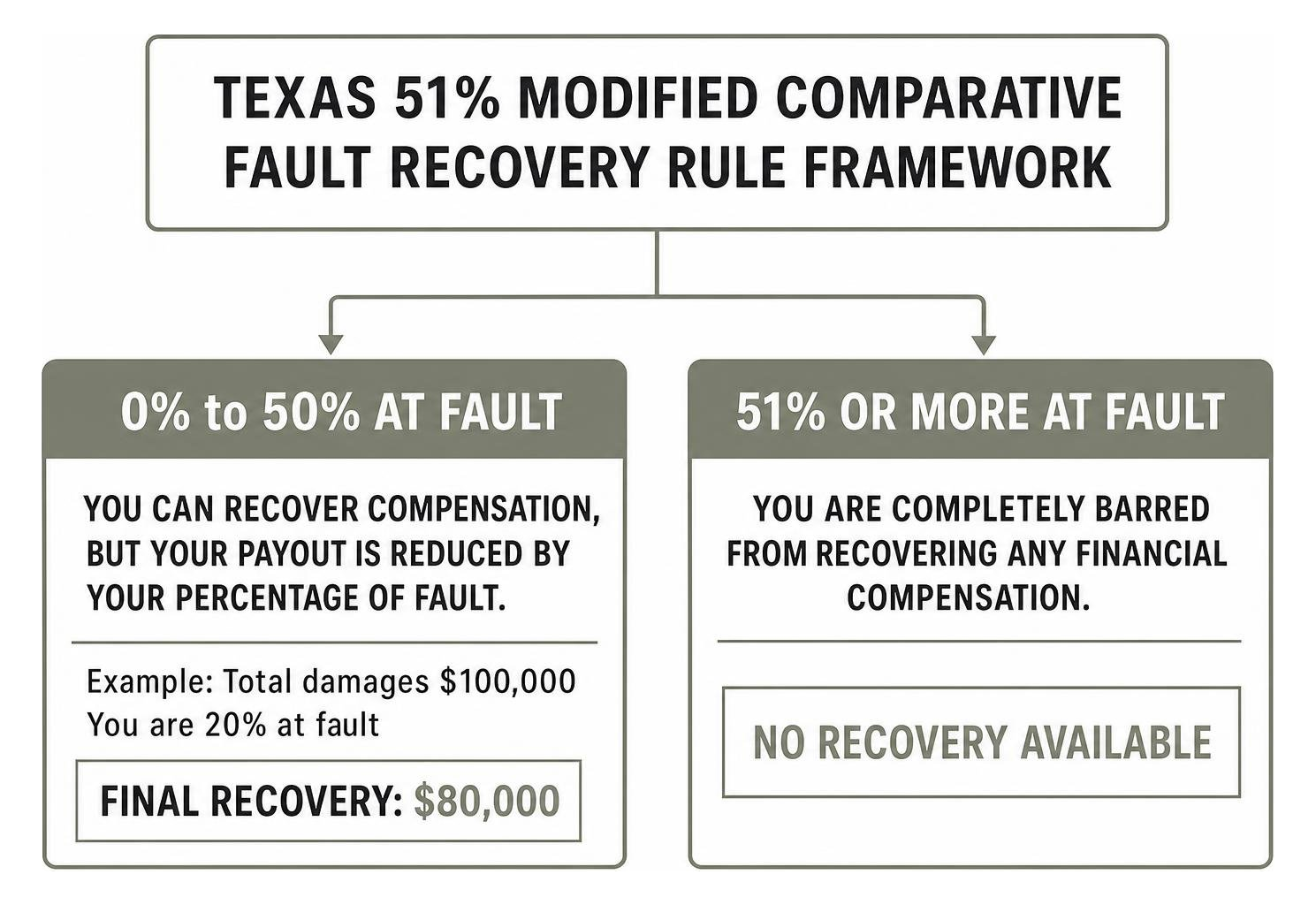
Texas uses a modified comparative-fault rule. A person who is found 51 percent or more responsible for a crash generally cannot recover damages from the other driver. If the person is less than 51 percent responsible, recoverable damages are reduced by that share of fault.
That makes early evidence especially important. Preserve the police crash report, scene and vehicle photos, witness contact information, traffic-camera footage when available, and communications about the collision. These details can be critical when an insurer disputes what happened at an intersection such as Westheimer Road and Post Oak Boulevard.
Mistake 5: Missing Texas’s Two-Year Filing Deadline
For most Texas personal-injury claims, Section 16.003 of the Texas Civil Practice and Remedies Code provides a two-year deadline to file suit. Settlement discussions do not automatically extend that deadline. Waiting until the final weeks can leave little time to investigate the claim, identify coverage, and prepare a filing in Harris County Civil Courts at Law when litigation is necessary.
A calendar reminder is not a substitute for legal advice because exceptions can affect the deadline. The practical point is simple: begin preserving evidence and assessing the claim early enough to protect every available option.
How Legal Representation Can Help Maximize Total Settlement Value
A lawyer can coordinate evidence, assess insurance coverage, respond to fault allegations, and evaluate whether a proposed release reflects the documented losses. This overview of maximizing total settlement value explains how those parts of a claim fit together. Westloop Law Firm can review the circumstances of a Houston collision and discuss the options available under Texas law.
Frequently Asked Questions About Houston Auto Accident Settlement Mistakes
Can a settlement be reopened after signing a release?
Usually, a signed release resolves the claim covered by that agreement. Because the result can be difficult to undo, it is important to understand the injuries, treatment needs, and available coverage before signing.
Does a delay in treatment automatically end a claim?
No. A delay does not automatically prevent recovery, but it can make causation and the severity of injuries harder to prove. Accurate medical records and a clear explanation of the timeline may become more important.
What happens if I am partly at fault for a Houston crash?
If a driver is less than 51 percent responsible, the recoverable damages are reduced by that share of fault. At 51 percent or more, Texas law generally bars recovery from the other driver.
How long do I have to file a lawsuit after a crash?
Most Texas personal-injury lawsuits must be filed within two years of the collision date. Because deadlines and exceptions depend on the facts, seek advice well before the deadline approaches.
Protect Your Houston Settlement by Avoiding These Five Mistakes
The strongest claims are built early: get appropriate medical care, preserve evidence, identify every applicable policy, respond to fault allegations with facts, and protect the two-year filing deadline. These steps cannot guarantee a result, but they can prevent avoidable problems from weakening a Houston auto accident settlement.
If a collision has left you with questions about treatment records, insurance coverage, or a proposed release, contact Westloop Law Firm to discuss your options.