 Skip to content
How Much is My Injury Case Worth in Houston?
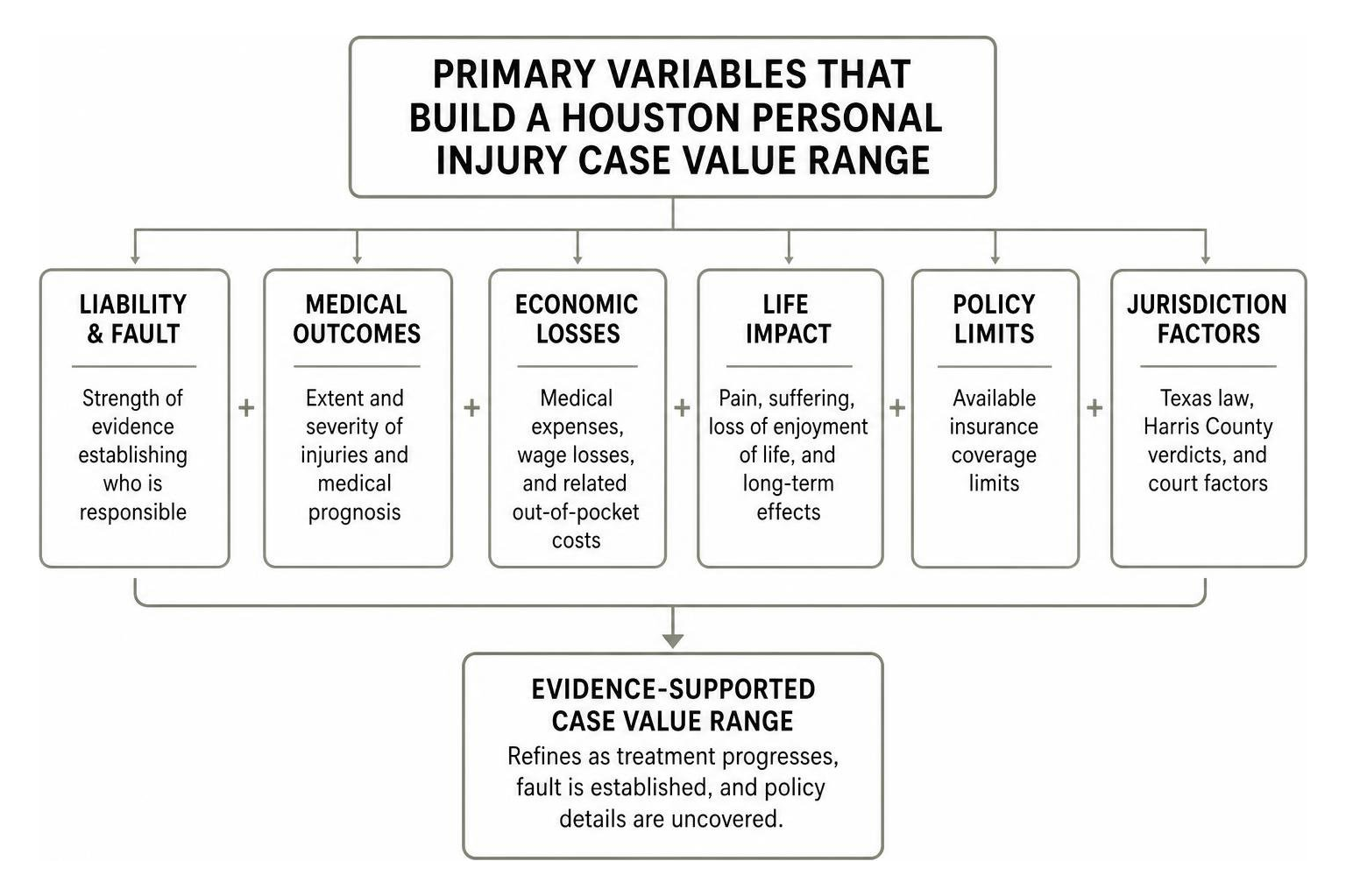
How Much is My Injury Case Worth in Houston? The answer is a case-specific range, not a fixed number. The range is shaped by the medical harm, available insurance, lost income, future needs, and proof of fault, so early estimates should remain cautious until the evidence is complete.
The claim’s value can change as treatment develops, so preserve records and reassess the range when new medical or insurance information becomes available.
The answer depends on the harm, proof, fault, and insurance available. A minor injury with short treatment may have limited value, while a serious injury with lasting care, lost income, and clear liability may support a much larger claim. Contact a personal injury lawyer in Houston to get some help with it,
What to do first:
- Get medical care and follow the treatment plan.
- Save photos, witness details, bills, and missed-work records.
- Avoid giving a recorded statement before understanding the claim.
- Ask for a case review before accepting a settlement.
There is no reliable one-size-fits-all calculator. The most useful starting point is a documented range based on medical expenses, lost income, future care, and the evidence showing who caused the crash.
WestLoop Law Firm reviews the full record, including the medical proof and available coverage, before giving practical guidance about claim value. The firm’s WestLoop Law Firm Google Business Profile provides location and contact details.
What Damages and Evidence Set the Value of a Houston Injury Case?
The value of a Houston injury case usually starts with documented losses and the proof supporting them. Medical care, lost income, future treatment, pain, and daily limitations matter most when records connect them clearly to the accident.
Economic damages can include emergency care, follow-up treatment, prescriptions, therapy, lost wages, and reduced earning ability. Future expenses may require medical opinions, a life-care plan, or vocational and economic analysis when an injury affects long-term work or independence.
Non-economic damages address physical pain, mental anguish, impairment, and disfigurement. Their value is not set by a multiplier. Strong medical notes, photographs, testimony from people who know the injured person, and a consistent record of day-to-day limitations make the impact easier to explain. For more detail, see calculating damages with a car accident injury attorney.
A strong claim ties each loss to records. Keep the dates of treatment, provider recommendations, out-of-pocket expenses, and time missed from work in one file. If care is still ongoing, avoid treating a preliminary total as the final value of the claim.
For a closer look at the documentation used to measure these losses, see calculating damages with a car accident injury attorney. Keep receipts, wage records, treatment notes, and accident evidence together from the beginning.
How Do Texas Fault, Insurance, and Filing Rules Affect Recovery?
Texas rules can reduce, cap, or block recovery even when injuries are serious. A claim’s practical value depends on shared fault, the policies that apply, and whether the case is protected before the filing deadline.
Under Texas Civil Practice and Remedies Code Section 33.001, a claimant who is more than 50 percent responsible cannot recover damages. That 51 percent bar is a key valuation statistic: a claim valued at $100,000 before fault would be reduced to $80,000 if the claimant were 20 percent responsible.
Insurance can create another limit. Personal Injury Protection, or PIP, may pay certain medical expenses and lost income regardless of fault when coverage applies. Texas Insurance Code Section 1952.151 addresses required PIP offers and written rejection. Other possible sources include the at-fault driver’s policy, uninsured or underinsured motorist coverage, and commercial coverage. For broader background, see the Houston personal injury guide 2026.
Texas generally gives an injured person two years to file a personal injury lawsuit under Texas Civil Practice and Remedies Code Section 16.003. After a crash on I-10, I-45, Loop 610, or Beltway 8, do not assume insurer negotiations pause that deadline.
Deadlines can be shorter for some claims and may involve special notice rules when a government entity is involved. The two-year rule is a general deadline, not a substitute for advice about the facts of a specific claim. Prompt action also helps preserve video and witness evidence.
What Should You Do to Protect a Houston Injury Case?
Fast, organized action helps protect the value of a Houston injury case. The goal is to preserve evidence before it disappears and to create a clear record of the injury, treatment, financial losses, and the crash’s effect on daily life.
Start with the crash report, scene photos, witness names, medical records, and wage documents. For collisions investigated by the Houston Police Department, Harris County Sheriff’s Office, or Texas Department of Public Safety, request and save the available report and keep each provider bill and treatment note.
Evidence is especially important after multi-vehicle crashes near the I-45 and I-10 interchange or on Loop 610, where fault can be disputed. Video, vehicle damage photos, and prompt witness statements can help establish what happened before a claim becomes a negotiation about blame.
Medical documentation should show not only the diagnosis but also how the injury affects work, sleep, mobility, and ordinary tasks. When treatment is expected to continue, ask providers for clear recommendations and keep appointments. Missing records can make a legitimate loss harder to explain.
For an overview of the claim process and next steps, read what to know about the injury claim process in Houston.
What Mistakes Can Reduce a Houston Injury Case’s Value?
A Houston injury case can lose value when treatment, proof, or deadlines are neglected. The biggest mistakes often give an insurer room to question the severity of the injury, the cause of the crash, or the amount of financial loss.
Avoid settling before the diagnosis and treatment plan are clear. Also avoid unexplained gaps in care, broad medical authorizations, and recorded statements made before the facts and injuries are understood. For a fuller explanation, see how much your Houston personal injury case is worth.
Social media posts can also be misread or used out of context. Keep communications factual, preserve documents, and do not rely on an online calculator or a quick offer to set the claim’s value.
An attorney review can also identify evidence that is easy to miss, such as nearby camera footage, employer records, or insurance notices. This is especially useful when more than one vehicle, employer, or policy may be involved. The right next step depends on the specific facts and timing.
Learn more about available representation through this Houston personal injury claims overview.
Frequently Asked Questions About Houston Injury Case Value
Is there an average settlement for a Houston injury case?
There is no reliable average that predicts an individual claim. Case value can vary widely based on the injury, medical proof, time away from work, fault, available insurance, and whether future care is expected.
Can I recover compensation if I was partly at fault?
Possibly. Texas reduces damages by the claimant’s share of fault, but the 51 percent bar prevents recovery when the claimant is more than 50 percent responsible. Evidence can make a major difference in disputed-fault cases.
Should I accept the first settlement offer?
Not before understanding the diagnosis, treatment outlook, financial losses, and coverage. A signed release usually ends the claim, so an early offer may not account for future care or income losses.
By Nhan Nguyen, WestLoop Law Firm. Contact Nhan Nguyen at WestLoop Law Firm to discuss the facts, records, and next steps for a Houston injury claim with the best personal injury lawyer in Houston.