 Skip to content

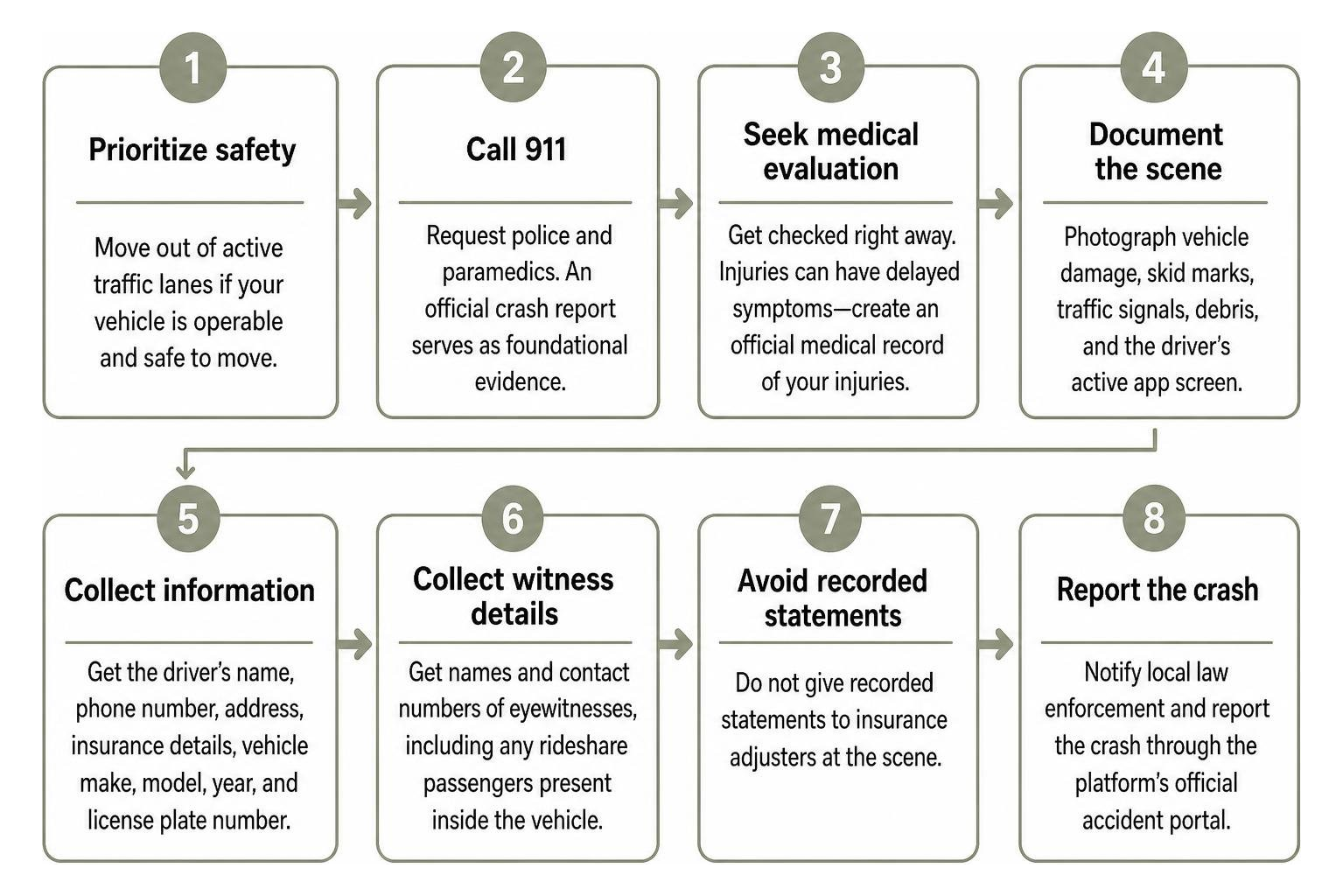
What to do first:
- If you are asking, “What if I Was Hit by an Uber Driver in Houston?”, move to a safe place away from traffic.
- Call 911 for police and medical help.
- Get medical care, even if symptoms seem minor.
- Photograph vehicles, the scene, and the driver’s app status.
- Exchange information and get witness contact details.
What Should Happen in the First Hour After a Houston Uber Collision?
First, protect your safety, call 911, seek medical care, and preserve evidence. In Houston, crashes on I-10, I-45, Loop 610, or Beltway 8 can create secondary-collision risks, so move only when it is safe. Do not guess about fault or give a recorded insurer statement before you understand your options.
Ask the responding Houston Police Department or Harris County Sheriff’s Office officer for the report or incident number. Keep photos, medical records, repair estimates, and the rideshare driver’s name, insurance information, plate number, and app status. If the driver leaves, give police every identifying detail you remember and notify your own insurer about a possible uninsured-motorist claim.
How Should You Report the Crash?
Report the collision to law enforcement first, then notify Uber through its official accident-reporting process. Provide only the known facts: where and when the crash occurred, the vehicles involved, and whether medical care was needed. Preserve screenshots and documents rather than relying on memory later. Review these steps after a car accident in Houston for additional guidance.
Uber’s accident-reporting guidance explains how a driver can report a crash. A person hurt by a rideshare driver should also keep a copy of the Texas Peace Officer’s Crash Report when it becomes available.
What if the Driver Flees?
A hit-and-run crash should be reported immediately. Tell officers that the vehicle displayed Uber signage or was operating as a rideshare vehicle, and provide the color, make, model, partial plate, route, and direction of travel. Your uninsured-motorist coverage may be relevant if the driver cannot be identified.
Which Rideshare Policy May Apply After a Houston Crash?
Uber coverage depends on the driver’s app status when the crash happens. If the app is off, the driver’s personal policy is usually the starting point. When the driver is available for trips or carrying a passenger, rideshare coverage may apply under Texas law and Uber’s policy terms.
Texas Transportation Code Chapter 2402 sets insurance requirements for transportation network companies. Uber also summarizes its coverage periods in its Insurance for Rideshare Drivers | Uber.
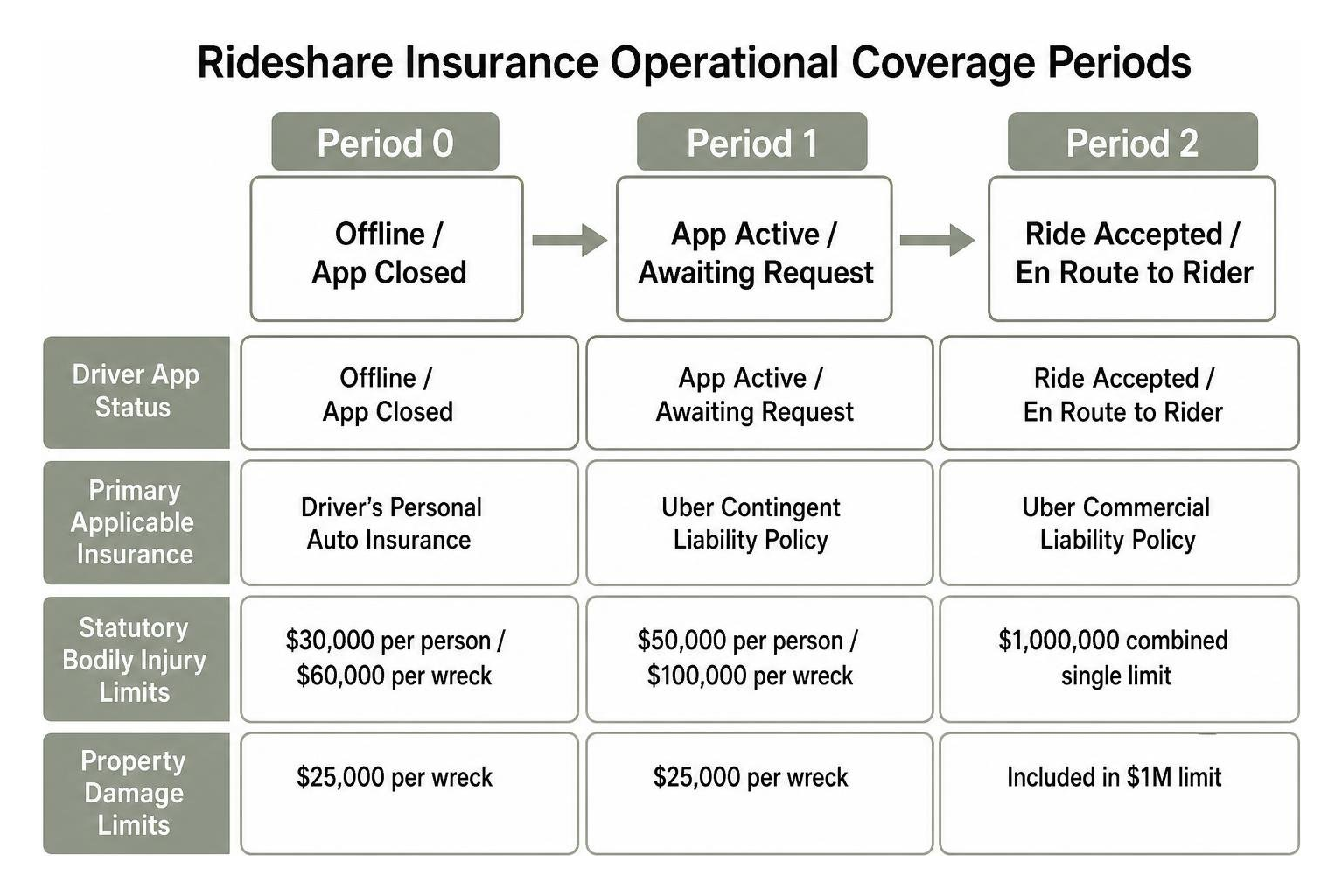
| Driver status | Coverage that may apply |
|---|---|
| App off | Driver’s personal auto insurance |
| App on and awaiting a request | Contingent rideshare liability coverage |
| Ride accepted or passenger in the vehicle | Commercial rideshare coverage |
What Changes When the App Is Off?
When an Uber driver is offline, the driver’s personal auto policy is generally the first source of coverage. A claim can become more complicated if the personal carrier disputes whether the driver was working. App records and other evidence can help establish the driver’s status.
What Changes During an Active Trip?
When a driver has accepted a trip or is transporting a passenger, Uber states that commercial insurance may apply. The applicable policy, available limits, exclusions, and responsibility can depend on the facts, so preserve the trip information and obtain the relevant insurance records before evaluating a claim.
Which Parties May Owe Compensation After a Houston Uber Crash?
The Uber driver, another motorist, and sometimes other responsible parties may share liability. The answer depends on what caused the collision, the driver’s app status, and the available evidence. A review of the crash report, vehicle damage, witness accounts, and digital trip data helps identify the proper insurance claims.
Distracted driving, unsafe speed, missed yields, and fatigue can contribute to collisions near the Galleria, downtown Houston, or major corridors such as Loop 610. In multi-vehicle crashes, responsibility may be divided among more than one driver.
Can You Sue the Uber Driver Directly?
A person injured by an Uber driver can generally bring a claim against the at-fault driver. The driver may be the named defendant even when another insurance policy provides a defense or payment. Early preservation of phone, app, and vehicle data can matter when liability or coverage is disputed.
For help assessing a Houston crash claim, see Car accident lawyer Houston.
What if You Were an Uber Passenger?
An injured Uber passenger can seek recovery from the person or entity responsible for the crash. If another driver caused it, that driver’s insurer may be the first source of payment. If coverage is unavailable or inadequate, other policies may apply depending on the facts and policy language.
Which Texas Rules Can Change a Rideshare Injury Claim?
Texas law can reduce or bar recovery based on fault, and most injury lawsuits have a two-year filing deadline. Personal Injury Protection may provide early benefits through your own policy. These rules are fact-specific, so promptly preserving records is important after a Houston rideshare crash.
Under Texas Civil Practice and Remedies Code Chapter 33, a claimant who is more than 50 percent responsible generally cannot recover damages. A claimant who is 50 percent or less responsible may recover a reduced amount.
How Does the 51 Percent Fault Rule Work?
Texas uses modified comparative responsibility. If a jury finds that an injured person was partly at fault, damages can be reduced by that percentage. If the person is more than 50 percent responsible, the law generally bars recovery. Insurance arguments about speed, visibility, or braking can affect this analysis.
What Is PIP and What Is the Filing Deadline?
Personal Injury Protection, or PIP, can cover certain medical expenses and lost income under an auto policy, regardless of fault. Texas law requires insurers to offer PIP unless it is rejected in writing. The standard deadline for an injury lawsuit is generally two years from the crash date.
See Texas Insurance Code Section 1952.152 for PIP and Texas Civil Practice and Remedies Code Section 16.003 for the limitations period.
How Can Westloop Law Firm Prepare an Uber Accident Claim?
A strong claim usually begins with medical documentation, the crash report, photographs, witness information, and proof of the driver’s app status. Westloop Law Firm can review the evidence, identify potential coverage, and explain the next steps. Do not delay evidence preservation while deciding whether to make a claim.
Attorney Nhan Nguyen, MD, JD is listed by the firm as its attorney and owner. The firm’s published case results include a reported $91,000 settlement involving a commercial party and a $112,500 settlement for a couple rear-ended by a commercial vehicle. Prior outcomes do not guarantee a similar result.
For a consultation, contact Westloop Law Firm. The firm can evaluate the crash report, insurance information, and available evidence before advising on a claim.
Which Houston Uber Crash Questions Matter Most?
After an Uber crash in Houston, the key questions are usually about medical care, available insurance, fault, and deadlines. The short answers below explain the common starting points, but coverage and legal options depend on the driver’s app status, the crash evidence, and the insurance policies involved.
Does Uber Insurance Cover Medical Bills?
It may. If the Uber driver caused the crash while using the app, rideshare liability coverage may be available, but the driver’s status and policy terms control. Medical bills are not usually paid automatically as treatment occurs, so injured people often use health insurance or available PIP benefits while a claim is evaluated.
What if the Driver Did Not Have the App Running?
If the app was off, the driver’s personal auto policy is usually the first source of coverage. The driver’s insurer may still dispute the claim, especially if it believes the vehicle was being used for business. Uninsured or underinsured motorist coverage under your own policy may also be relevant.
How Long Do I Have to File a Lawsuit?
In most Texas personal injury cases, the deadline is two years from the crash date. Missing that deadline can prevent a court claim, although limited exceptions may apply. Because evidence can disappear sooner, request the crash report, keep medical records, and consider getting legal advice well before the deadline.
Should I Give Uber’s Insurer a Recorded Statement?
You can report the crash and provide accurate basic information, but you do not have to guess about fault, injuries, or future treatment. Before giving a recorded statement, review what happened, gather your documents, and consider speaking with a lawyer about how the statement could affect your claim.
Protect Your Houston Uber Accident Claim Before Evidence Disappears
After a rideshare crash, focus first on your health, the police report, and preserving proof of what happened. Keep records from Memorial Hermann, Ben Taub Hospital, or any treating provider, along with photos, witness details, and app-status information.
Contact Nhan Nguyen, MD, JD, at Westloop Law Firm to discuss your Houston Uber accident claim. A prompt review can help preserve the records needed to evaluate responsibility and available coverage.