 Skip to content
Delayed Cancer Diagnosis Malpractice: 5 Critical Steps
Why Timely Cancer Diagnosis Matters More Than You Think
Delayed cancer diagnosis malpractice occurs when a healthcare provider’s failure to diagnose cancer in a reasonable time allows the disease to progress, worsening a patient’s prognosis. When a doctor misses signs, misreads a test, or fails to follow up, the consequences can be devastating.
Key Facts About Delayed Cancer Diagnosis Malpractice:
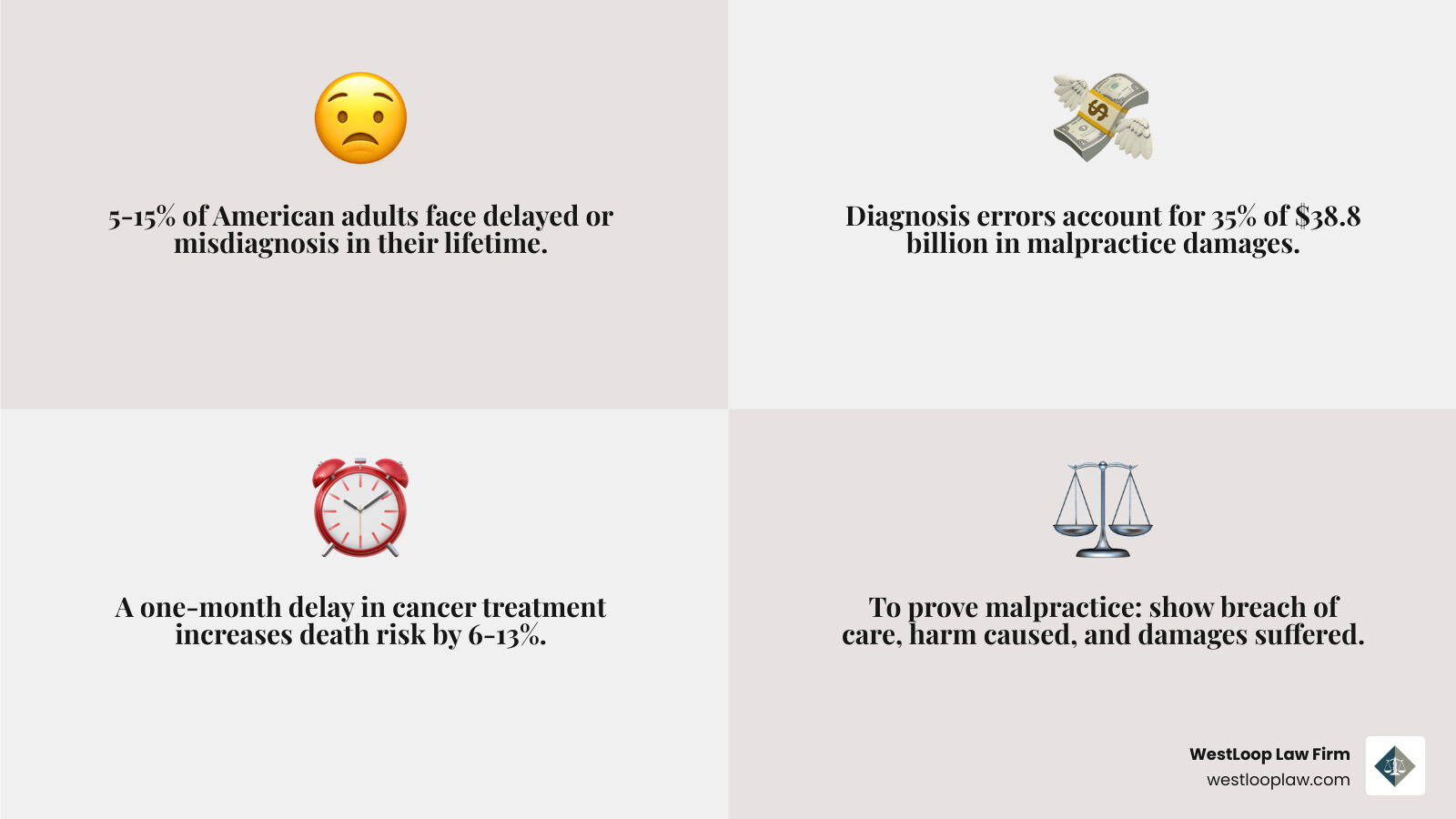
- Who it affects: 5-15% of American adults will experience a diagnostic error in their lifetime.
- What it costs: Diagnostic errors accounted for nearly 35% of $38.8 billion in malpractice damages from 1986 to 2010.
- Why timing matters: A one-month delay in cancer treatment can increase the risk of death by 6% to 13%.
- What you must prove: You must show a healthcare provider breached the standard of care, causing harm and damages.
- When to act: Texas has a strict statute of limitations for filing medical malpractice claims.
Facing a more advanced stage of cancer due to a delay is an immense emotional and financial burden. You may be dealing with harsher treatments, mounting medical bills, and the question of whether it could have been prevented.
This guide explains what constitutes delayed cancer diagnosis malpractice, how to prove your case, and what damages you may recover under Texas law. Understanding your legal options is the first step toward holding negligent providers accountable.
The Legal Framework of Delayed Cancer Diagnosis Malpractice
When you trust a doctor with your health and they miss something as serious as cancer, it’s more than just a mistake. It’s a legal matter that falls under delayed cancer diagnosis malpractice—a specific area of medical malpractice law where a healthcare provider’s negligence directly leads to harm.

Medical malpractice occurs when a provider deviates from the accepted “standard of care,” causing patient injury. While not every bad outcome is malpractice, a provider’s actions falling below what a reasonably competent professional would do can be grounds for a claim.
To build a successful claim, you must establish four key elements:
- Doctor-Patient Relationship: You were under the care of the medical professional.
- Breach of Duty: The provider failed to act as a reasonably prudent medical professional would have.
- Causation: The breach directly caused your injury or worsened your condition.
- Damages: You suffered actual harm or losses as a result.
Medical malpractice differs from general negligence due to the professional context and higher standards involved. You can learn more in our guide on Medical Malpractice vs Negligence: What’s the Difference in Houston TX?.
What Constitutes a Breach of the Standard of Care?
The “standard of care” is the benchmark for acceptable medical practice. In delayed cancer diagnosis malpractice cases, a breach of this standard can include:
- Failing to order appropriate tests (e.g., MRI, CT scan, biopsy) when symptoms warrant them.
- Misinterpreting lab results or imaging, such as a radiologist missing a mass on a mammogram.
- Ignoring or dismissing patient symptoms, brushing off persistent concerns as minor ailments.
- Not referring to an oncologist in a timely manner.
- Communication breakdowns between providers, causing critical information to be lost.
Proving a breach occurred requires a thorough investigation and medical testimony from qualified professionals, a process detailed in our guide on Proving Negligence Investigative Techniques Houston Medical Malpractice Cases.
The Critical Role of Causation
Proving causation is often the most challenging part of a delayed diagnosis case. You must demonstrate that the provider’s negligence directly worsened your condition. This is the “but for” test: “But for” the delay, would your prognosis be better?
We work with medical professionals to show that the delay:
- Worsened your prognosis, such as a survival rate dropping from 90% to 10%.
- Caused cancer progression from an early, treatable stage to an advanced one.
- Limited your treatment options, forcing you to undergo harsher therapies or eliminating curative options.
In Texas, the loss of chance doctrine may also apply. This allows for recovery if the delay reduced the likelihood of a better outcome, even if a cure was never guaranteed.
Proving Harm in a Delayed Cancer Diagnosis Malpractice Claim
Once breach and causation are established, we must demonstrate the full extent of your harm. This includes:
- Need for more aggressive treatments: More extensive surgery, chemotherapy, or radiation with severe side effects.
- Reduced life expectancy: The most devastating harm, measured in years lost.
- Increased pain and suffering: Both the physical agony of advanced disease and the emotional anguish of a worsened prognosis.
- Financial losses: Mounting medical bills, lost wages, and loss of future earning capacity.
If you’ve suffered due to a diagnostic error, our Wrong Diagnosis Lawyer Houston team can help you pursue the compensation you deserve.
Common Causes and Devastating Consequences of Diagnostic Delays
Delayed cancer diagnosis malpractice often results from systemic issues rather than a single mistake. Overburdened physicians, administrative errors, and communication gaps can lead to devastating delays. Common causes include:

- Misread mammograms or X-rays.
- Failure to follow up on abnormal test results.
- Dismissing patient symptoms as minor ailments.
- Lab errors in pathology or blood work.
- Poor communication between primary care doctors and other physicians.
These failures are not just excuses; they are explanations for how the system can fail patients, leading to catastrophic consequences.
How Delays Impact Cancer Progression and Prognosis
Cancer does not wait. Every day of delay allows cancer cells to grow and potentially spread (metastasize), changing a treatable disease into one that is far more difficult to manage. The difference in survival rates is stark.
| Cancer Type | 5-Year Survival Rate (Localized) | 5-Year Survival Rate (Distant) |
|---|---|---|
| Breast Cancer | 99% | 27% |
| Non-Small Cell Lung | 61% | 6% |
| Prostate Cancer | Nearly 100% | 31% |
| Colorectal Cancer | 90% | 14% |
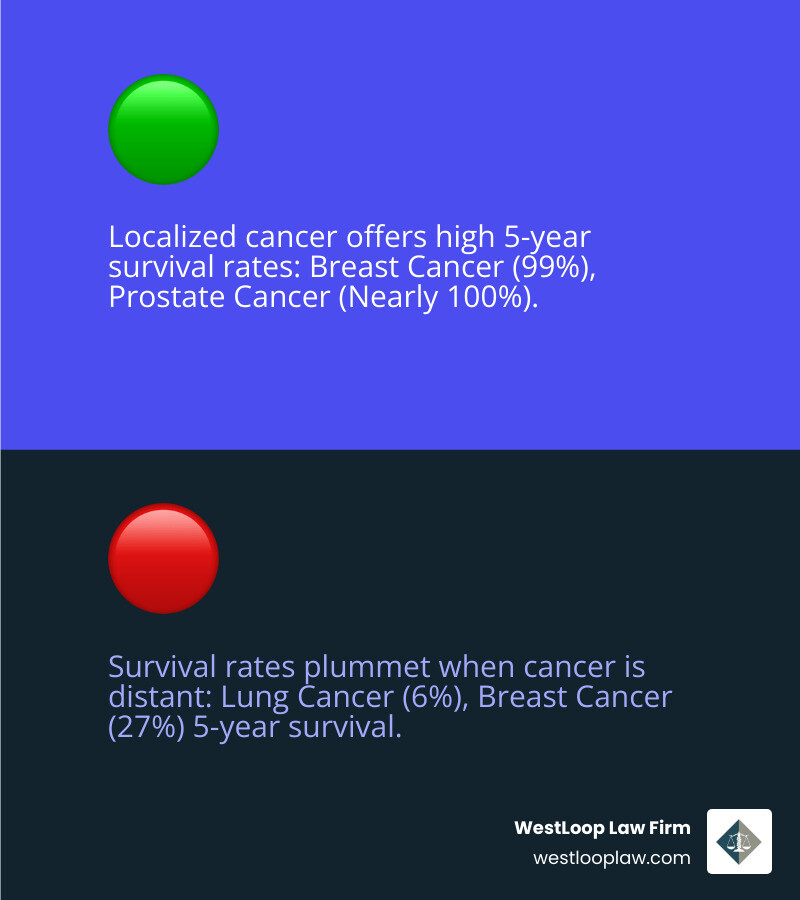
Research shows a one-month delay in treatment can increase the risk of death by 6% to 13%. A delay can mean progressing from a Stage I cancer treatable with minor surgery to a Stage IV cancer requiring aggressive, debilitating chemotherapy and radiation, with a much lower chance of survival.
The Ripple Effect: Beyond Physical Health
The devastation of a delayed diagnosis extends far beyond physical health.
- Financial Impact: Families face mounting medical bills for more expensive treatments, lost income from being unable to work, and a potential loss of future earning capacity.
- Emotional and Personal Impact: Patients endure immense pain and suffering from the advanced disease and harsh treatments. The emotional toll includes anxiety, depression, and the grief of a life cut short. Spouses may experience loss of consortium—the loss of companionship, affection, and intimacy.
While we cannot turn back time, we can fight to hold negligent providers accountable and secure compensation that addresses every dimension of your suffering.
Building Your Case: Evidence, Experts, and Legal Problems

Building a strong delayed cancer diagnosis malpractice case requires meticulous evidence gathering and legal skill. The process can be overwhelming, which is why professional help is crucial. If you’re unsure, consider these 5 Reasons to Hire a Medical Malpractice Lawyer.
The foundation of your case is your medical records. We scrutinize every document—doctor’s notes, test results, referral slips, and hospital records—to identify where the standard of care was breached. Often, the most critical evidence is what’s missing: the test that was never ordered or the follow-up that never happened.
The Role of Medical Witnesses
In Texas, testimony from qualified medical professionals is required to prove malpractice. These professionals act as translators, explaining complex medical details to a jury. They establish the standard of care, show how your doctor deviated from it, and connect that error to your harm.
For cancer cases, we work with oncologists, radiologists, and pathologists. Their testimony is powerful, explaining how a delay allowed cancer to progress, limited your treatment options, and reduced your chance of survival. Our approach to Proving Negligence Investigative Techniques Houston Medical Malpractice Cases relies on building strong cases with top medical professionals.
Navigating Legal Timelines: Statutes of Limitations
Let’s talk about something that keeps us up at night on behalf of our clients: the statute of limitations. This is the legal deadline for filing your lawsuit, and it’s not flexible. Miss it by even one day, and your case is over before it begins, no matter how strong your claim might be.
In Texas, you generally have two years to file a medical malpractice lawsuit. The clock typically starts from the date the malpractice occurred.
However, the “findy rule” can apply in delayed diagnosis cases. This rule may start the two-year clock from the date you finded, or reasonably should have finded, the injury and its link to negligence. For example, if an error occurred in 2020 but you weren’t diagnosed until 2022, the clock might start in 2022.
Texas also has a 10-year statute of repose, an absolute deadline from the date of the negligent act, regardless of when you finded the harm. These timelines are complex, so it is vital to act quickly. Contacting an attorney promptly ensures all deadlines are met. Our team understands Houston Medical Malpractice Lawyer Laws Regulation and can assess your case’s timeline.
Calculating Damages in a Delayed Cancer Diagnosis Malpractice Lawsuit
In a delayed cancer diagnosis malpractice case, damages are calculated to compensate for your losses. They fall into two categories: economic and non-economic.
Economic damages cover tangible financial losses that can be documented. They include:
- Medical Expenses (Past and Future): Costs for aggressive treatments like extensive surgery, chemotherapy, radiation, hospital stays, and ongoing care. We work with life care planners to project future costs.
- Lost Income and Earning Capacity: Compensation for missed work and the loss of future income and benefits if your ability to work is permanently affected or your life expectancy is reduced.
- Loss of Household Services: The cost of replacing services you once provided, such as childcare, home maintenance, or repairs.
Non-economic damages compensate for intangible, personal losses that don’t have a price tag. These include:
- Pain and Suffering: For the physical pain of advanced cancer and harsh treatments, as well as the emotional distress, fear, and anxiety.
- Mental Anguish: For the psychological impact of knowing a better outcome was stolen by negligence.
- Loss of Enjoyment of Life: For the inability to participate in hobbies, travel, and other life pleasures.
- Loss of Consortium: For the impact on a spouse, who loses companionship, affection, and support.
In rare cases of gross negligence, punitive damages may be awarded to punish the provider and deter future misconduct.
Calculating these damages is complex and requires a thorough understanding of your unique situation. Our firm is committed to helping you understand what you may be entitled to recover through our Lawyer for Medical Malpractice Compensation Guide.
Frequently Asked Questions about Delayed Cancer Diagnosis Claims
When you’re facing the possibility of a delayed cancer diagnosis malpractice claim, it’s natural to have questions. Here are answers to some common concerns.
What is the ‘loss of chance’ doctrine and how does it work in Texas?
The ‘loss of chance’ doctrine is a legal principle that recognizes that reducing someone’s chance of survival or recovery is a compensable injury. In a typical malpractice case, you must prove the negligence more likely than not (over 50% probability) caused the harm. However, this doctrine allows you to recover damages even if your survival odds were already below 50%.
For example, if a delay dropped your survival chance from 40% to 10%, you could be compensated for that lost 30% opportunity. In Texas, courts have recognized this doctrine, and damages are often calculated proportionally based on the percentage of chance that was lost due to negligence. This is crucial in cancer cases where prognoses can be uncertain.
How can I help prevent a delayed diagnosis for myself or a loved one?
While healthcare providers are responsible for timely diagnosis, you can be a proactive advocate for your health.
- Be Persistent: Clearly communicate your symptoms and don’t let your concerns be dismissed.
- Ask Questions: Understand the purpose of tests, the meaning of results, and the next steps in your care.
- Keep Records: Maintain a file of your symptoms, appointments, and test results.
- Follow Up: Never assume “no news is good news.” Actively follow up on all test results.
- Get a Second Opinion: If you are uncertain about a diagnosis or lack thereof, consulting another physician is a smart move. Your persistence could save your life.
What is the first step if I suspect medical malpractice?
The most important first step is to contact an experienced medical malpractice attorney in Houston immediately. Time is critical for preserving evidence and meeting strict legal deadlines.
We offer a free consultation to listen to your story and provide honest advice about your legal options. An attorney can help you obtain complete medical records and will handle all communications with insurance adjusters, who are trained to minimize payouts. Do not speak with them alone.
To prepare for your consultation, review our guide on Questions to Ask Houston Medical Malpractice Lawyer. Taking this step protects your rights and is the first move toward securing the justice you deserve.
Conclusion
No one should have to face cancer alone. And no one should have to face it with the added weight of knowing that their diagnosis came too late because of someone else’s negligence.
Throughout this guide, we’ve walked through the harsh realities of delayed cancer diagnosis malpractice – from the devastating physical toll of advanced disease to the crushing financial burden of more aggressive treatments. A missed test or a dismissed symptom can change a treatable, early-stage cancer into a life-threatening disease.
Proving a malpractice claim is a complex journey that requires showing a provider breached the standard of care and caused you harm. It involves gathering detailed medical records, working with medical professionals, and navigating strict legal deadlines.
But here’s what we want you to understand: you have rights, and you have options. Pursuing a claim is about justice, accountability, and securing the resources you need to face mounting medical bills and lost income.
For residents of Houston and surrounding areas, our team at WestLoop Law Firm brings together deep experience in the medical complexities of delayed cancer diagnosis malpractice claims. We know how to work with medical professionals, steer Texas statutes of limitations, and fight for the compensation you deserve.
The clock is ticking on your legal rights. Contact a Houston medical malpractice lawyer for delayed help today. Your consultation is free, and it is the first step toward letting an experienced team fight for you while you focus on your health.