 Skip to content
Delayed Diagnosis Claims: Protect Your Rights 2025
When Every Day Matters: Understanding Delayed Diagnosis Claims in Houston
Delayed diagnosis claims arise when healthcare providers fail to identify a medical condition in a timely manner, causing patients to suffer worse outcomes than they would have with prompt treatment. These cases represent a devastating intersection of medical care and legal rights—where a missed diagnosis of cancer, stroke, or infection at Houston Methodist, Memorial Hermann, or any Houston-area facility can mean the difference between recovery and tragedy.
Key Facts About Delayed Diagnosis Claims:
- What it is: A medical malpractice claim filed when a doctor fails to diagnose a condition within a reasonable timeframe
- Common causes: Failure to order tests, misreading results, inadequate patient history, or communication breakdowns
- Time limit in Texas: Two years from when you discovered (or should have discovered) the diagnostic error
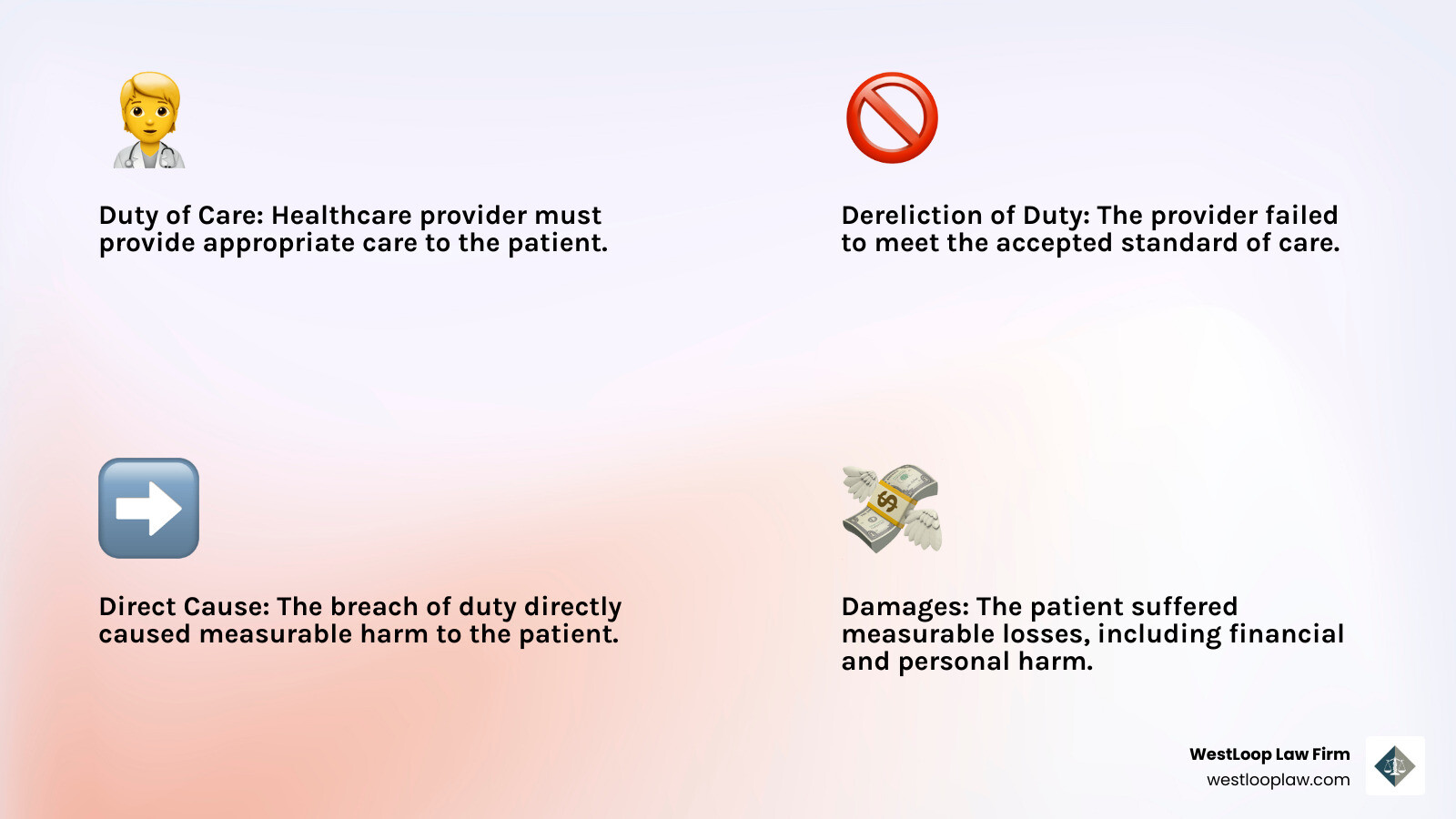
- What you must prove: The 4 D’s—Duty, Dereliction (breach), Direct cause, and Damages
- Potential compensation: Medical bills, lost wages, pain and suffering, and future care costs
The consequences can be severe. A quarter of cancer patients experience avoidable diagnostic delays, with almost 50% of delays occurring during assessment by their primary care physician. When cancer is caught early, the 5-year survival rate is 63%—but that number drops dramatically as the disease progresses. In Houston’s busy medical system, spanning from the Texas Medical Center to community clinics along I-10, these delays happen more often than they should.
A delayed diagnosis isn’t just about a later treatment date. It can mean the difference between outpatient chemotherapy and invasive surgery, between full recovery and permanent disability, or even between life and death. The emotional toll is immense, and the financial burden—from mounting medical bills to months away from work—can devastate Texas families already struggling with recovery.
Understanding your legal rights starts with knowing what constitutes medical negligence and how to prove that a healthcare provider’s delay directly caused you harm.
Understanding Medical Negligence in Houston
Medical negligence is the cornerstone of any delayed diagnosis claim in Houston. It’s not enough for a diagnosis to be delayed; we must demonstrate that the delay resulted from a healthcare provider’s failure to meet the accepted standard of care. This standard is what a reasonably prudent healthcare provider in Houston would have done in similar circumstances.
Healthcare providers in Houston, from doctors at MD Anderson Cancer Center to nurses in local clinics, have a fundamental duty of care to their patients. This duty means they must provide appropriate medical advice and treatment within a reasonable timeframe, considering the patient’s individual presentation and needs. When this duty is breached—for instance, by overlooking symptoms, misinterpreting test results, or failing to refer a patient to another Houston provider for further evaluation—and that breach causes harm, it can form the basis of a medical negligence claim.
Proving that a breach of duty caused harm is a critical step. We must establish a clear link between the negligent act (the delayed diagnosis) and the damages suffered by the patient. It is important to remember that a negative outcome, while heartbreaking, does not automatically equate to negligence. Sometimes, despite the best possible care, conditions simply worsen. Our focus is on whether the care provided fell below the acceptable standard for healthcare providers in the Houston medical community.

The Legal Elements of a Claim in Houston
To successfully pursue a delayed diagnosis claim in Houston, several legal elements must be established. These are the cornerstones upon which any medical malpractice case is built:
- Establishing a doctor-patient relationship: This is usually straightforward. It means you sought and received medical care from the healthcare provider in question. This relationship establishes the provider’s duty of care toward you.
- Proving the provider acted negligently: This is where we demonstrate a breach of the standard of care. It means showing that the healthcare provider’s actions (or inactions) deviated from what a reasonably competent healthcare provider in Houston would have done under similar circumstances. This often involves comparing the care you received to accepted medical practices and guidelines.
- The “but-for” causation test in Texas law: This is perhaps the most challenging element. We must prove that “but for” the healthcare provider’s negligence, the harm would not have occurred. In other words, we must show that the delayed diagnosis directly caused your injuries or worsened your condition. If an earlier, proper diagnosis would have led to a better outcome, then causation can be established. This is a critical distinction, as it moves beyond simply proving negligence to proving that the negligence led to a specific, identifiable harm.
- Documenting financial and personal losses: Finally, we must demonstrate that you suffered actual damages as a result of the delayed diagnosis. These can include medical bills, lost wages, pain and suffering, and other quantifiable and non-quantifiable losses.
The Contentious “Loss of a Chance” Doctrine
The “loss of a chance” doctrine is a particularly complex and debated aspect of delayed diagnosis claims, especially when we compare legal standards across jurisdictions. In some US states, including Texas to a limited extent, this doctrine allows for recovery when a healthcare provider’s negligence reduces a patient’s chance of a better outcome, even if it’s not possible to prove with absolute certainty that a better outcome would have occurred. For example, if a doctor’s delay in diagnosis reduced a patient’s chance of successful treatment by, say, 10%, some legal systems might allow the patient to recover 10% of their potential future losses. This offers a pathway to justice when direct causation is difficult to prove definitively.
However, this contrasts sharply with stricter legal standards found in other countries, such as Canada. Canadian caselaw often makes it difficult to pursue delayed diagnosis claims because claimants must prove that the delay in diagnosis directly caused their worsening condition on a “balance of probabilities,” rather than simply proving negligence and a lost opportunity for a better outcome. The current legal test in Canada is considered a high bar, requiring proof that adequate diagnosis and treatment would have afforded a chance of avoiding the unfavorable outcome, and this chance must surpass the threshold of “more likely than not.” This means that if a patient had a 30% chance of survival with earlier diagnosis, they might not receive any compensation if it can’t be proven that they would have survived “more likely than not” (i.e., over 50%).
This difference highlights Why the legal test for delayed diagnosis is debated. Proponents of the “loss of a chance” doctrine argue that it provides fairer compensation for patients who have demonstrably been harmed by negligence, even when scientific certainty of a different outcome is elusive. They suggest that requiring patients to prove that it is “more likely than not” they would have had a better outcome sets too high a standard and creates a significant barrier to accessing justice.
Common Causes and Consequences of a Delayed Diagnosis in Houston
Delayed diagnosis claims in Houston often stem from a variety of factors, ranging from human error to systemic issues within healthcare facilities along the Katy Freeway or near the Texas Medical Center. Understanding these common causes helps us identify potential negligence and build a strong case.
Some of the most frequent reasons for a delayed diagnosis include:
- Failure to order appropriate tests: A healthcare provider might overlook key symptoms or simply fail to order necessary diagnostic tests, such as blood work, X-rays, or MRI scans, that would have led to an earlier diagnosis.
- Misinterpretation of lab results or imaging: Even when tests are ordered, errors can occur. A radiologist might misread an MRI, or a lab technician might misinterpret blood work, leading to a missed or incorrect diagnosis.
- Not taking a complete patient history: A thorough understanding of a patient’s symptoms, medical history, and family history is crucial. When providers fail to gather this essential information, they might miss clues that would point to a specific condition.
- Communication breakdowns between departments: In large medical systems like those found in Houston, patients often interact with multiple departments and providers. If communication between these teams is poor, critical information can fall through the cracks, delaying diagnosis.
- Administrative errors in scheduling: Sometimes, delays are not clinical but administrative. Long wait times for appointments, misplaced referrals, or errors in scheduling follow-up tests can all contribute to a delayed diagnosis.
Conditions Frequently Affected by Diagnostic Delays
While any condition can suffer from a delayed diagnosis, some are particularly time-sensitive, meaning that early detection is paramount for effective treatment and a better prognosis. When diagnosis of these conditions is delayed, the consequences can be catastrophic.
Here are some of the conditions that frequently lead to delayed diagnosis claims:
- Cancer: This is perhaps the most common and devastating example. A delay in diagnosing cancer can mean the difference between Stage 1 and Stage 4, significantly impacting treatment options and survivability. For instance, a patient might be initially diagnosed with a digestive issue, but when symptoms persist, further investigation reveals cancer in the digestive system.
- Stroke: Every minute counts during a stroke. Delays in diagnosis and treatment can lead to permanent brain damage, severe disability, or death.
- Heart attack: Similar to a stroke, prompt diagnosis and intervention are crucial for a heart attack to prevent irreversible damage to the heart muscle.
- Sepsis: This life-threatening condition, caused by the body’s overwhelming response to an infection, can progress rapidly. Delays in diagnosing sepsis can lead to organ failure, amputation, severe impairments to cognitive function, and death.
- Traumatic brain injury (TBI): The severity and long-term impact of a TBI can be greatly influenced by the timeliness of its diagnosis and management.
- Spinal cord injuries: Prompt diagnosis and stabilization of spinal cord injuries are vital to minimize neurological damage and improve functional outcomes.
The Impact on Houston Patients
The ripple effects of a delayed diagnosis extend far beyond the immediate medical consequences, impacting every facet of a patient’s life in Houston.
- Progression of illness to a more advanced stage: For conditions like cancer, a delay can mean the disease progresses from a treatable early stage to a more aggressive, advanced stage, making treatment more complex and less effective.
- Requirement for more invasive or painful treatments: Patients might need more aggressive surgeries, higher doses of medication, or longer courses of therapy than they would have with an earlier diagnosis. This means more pain, longer recovery times, and increased discomfort.
- Reduced survival rates and life expectancy: As the research shows, the earlier cancer is diagnosed, the better the chances of surviving. The 5-year survival rate for cancer is 63%, but this varies greatly depending on the type of cancer and the stage at which it’s diagnosed. A delay can drastically reduce these odds. You can find more information on General cancer survival statistics.
- Significant emotional and psychological distress: Living with an undiagnosed or worsening condition is incredibly stressful. Patients often experience anxiety, depression, anger, and a loss of trust in the medical system. The knowledge that their suffering could have been avoided or lessened is a heavy burden.
- Financial strain from medical bills and lost work: Delayed diagnoses often lead to increased medical costs, including more extensive treatments, longer hospital stays at facilities like Memorial Hermann or Houston Methodist, and ongoing care. Patients may also lose significant income due to time off work for treatment and recovery, or even face diminished earning capacity if their condition leads to permanent disability. This financial burden can be devastating for Houston families.
How to Prove Houston Delayed Diagnosis Claims
Proving a delayed diagnosis claim in Houston is a meticulous process that requires thorough investigation and a clear understanding of medical and legal principles. Our goal is to connect the dots between the negligent delay and the harm you suffered.
The first crucial step is gathering all medical records from Houston-area providers. This includes everything from initial doctor’s visits and symptom complaints to lab results, imaging scans, consultation notes, and treatment plans. These records form the backbone of your case, providing a timeline of your medical journey and highlighting where the diagnostic process went awry.
The crucial role of testimony from medical professionals cannot be overstated. We work with independent medical practitioners who can review your case and provide testimony on the accepted standard of care, whether it was breached, and how that breach caused your injuries. These professionals, often retired doctors or those not directly involved in your care, can explain complex medical concepts to a jury in a clear, understandable way.
Proving causation is the biggest challenge in these cases. We must demonstrate that the delayed diagnosis, and not some other factor, was the direct cause of your worsened condition or injuries. This can be complex, especially when dealing with diseases that have variable prognoses.
In Texas, there is a statute of limitations of two years for filing medical malpractice claims, including those for delayed diagnosis. This period generally begins from the date the negligent act occurred, or from the date you discovered (or reasonably should have discovered) the diagnostic error. It is absolutely critical to act promptly to protect your legal rights. Missing this deadline can permanently bar you from seeking compensation.
Defense strategies used to counter claims are often robust. Healthcare providers and their insurers frequently argue that:
- “It was already there”: They may claim that your condition was already advanced or severe when you first presented, and an earlier diagnosis would not have significantly changed the outcome.
- “You were going to die anyway”: Particularly in cancer cases, they might argue that the disease’s aggressive nature meant the outcome was inevitable, regardless of the diagnostic timeline.
Challenges in Proving Causation for Delayed Diagnosis Claims
As we’ve touched upon, the difficulty linking the delay directly to a worse outcome is often the primary hurdle in delayed diagnosis claims. It’s not enough to show that a doctor was negligent; we must prove, on a balance of probabilities, that the negligence directly caused your specific harm. This often involves arguing against defense claims that the outcome was inevitable. For example, in cancer claims, defense teams might present arguments based on the “doubling time” theory of cancer growth, suggesting the cancer was already widespread and aggressive, and thus an earlier diagnosis would have made no difference.
However, the complexity of cancer growth rate models presents significant flaws. These models assume predictable growth rates and often ignore the vast variability in cancer types and individual patient responses. We can counter these arguments by using medical literature and statistics to support the case. For instance, if studies show a significantly higher survival rate for a particular cancer when diagnosed at an earlier stage, this statistical evidence can be powerful in demonstrating that your chance of a better outcome was indeed diminished by the delay. While scientific precision is not always required for causation, strong circumstantial evidence and reliable medical data can lead to an inference of causation in a Houston courtroom.
Steps to Take if You Suspect a Delayed Diagnosis in Houston
If you suspect you or a loved one has suffered from a delayed diagnosis in Houston, taking immediate and deliberate steps is crucial to protect your health and your legal rights.
- Seek a second medical opinion immediately: Your health is the top priority. Consult another qualified healthcare provider, ideally one not affiliated with the initial provider, for an independent assessment. This can help confirm or correct the diagnosis and ensure you receive timely treatment.
- Request and collect all your medical records: Obtain copies of all relevant medical records from every healthcare provider and facility involved, including hospitals like Ben Taub General Hospital or clinics in the Galleria area. This includes doctor’s notes, lab results, imaging reports, and billing statements. These documents are vital evidence for your claim.
- Keep a detailed journal of your symptoms, appointments, and communications: Document everything. Note when symptoms first appeared, every appointment you had, who you spoke with, what was discussed, and any advice given. Also, record how the delayed diagnosis has impacted your daily life, work, and family. This personal account can be invaluable.
- Avoid discussing your case on social media: What you post online can be used against you. Refrain from discussing your medical condition, your suspicions of negligence, or your legal intentions on any public platform.
- Consult a lawyer to understand your rights: Contact a law firm like WestLoop Law Firm as soon as possible. We can evaluate your situation, explain the nuances of Texas medical malpractice law, and guide you through the process of pursuing a delayed diagnosis claim. Remember the two-year statute of limitations in Texas; prompt action is essential.
Compensation Available in Houston Delayed Diagnosis Claims
When a delayed diagnosis claim in Houston is successful, our goal is to help you recover compensation for the full extent of your losses. These damages are typically categorized into economic, non-economic, and sometimes punitive damages.
- Economic Damages: These are quantifiable financial losses directly resulting from the delayed diagnosis. They are objective and can be calculated with reasonable certainty.
- Non-Economic Damages: These are subjective and more difficult to quantify, as they relate to the non-financial impacts of your injury.
- Punitive Damages (in cases of gross negligence): In Texas, punitive damages may be awarded in rare cases where the healthcare provider’s conduct was exceptionally reckless, malicious, or grossly negligent, demonstrating a conscious indifference to the patient’s welfare. These damages are intended to punish the wrongdoer and deter similar conduct in the future, rather than to compensate the victim.
Calculating Damages in Delayed Diagnosis Claims
Calculating the full scope of damages in delayed diagnosis claims is a comprehensive process that considers both your past losses and the potential future impacts of your injury. We carefully assess every aspect of your suffering and financial burden.
- Past and future medical expenses: This includes all costs associated with your delayed diagnosis, from the initial mismanaged care to subsequent treatments, surgeries, medications, and hospital stays at facilities like Houston Methodist or Memorial Hermann. It also covers projected future medical needs due to the delayed diagnosis.
- Lost wages and diminished earning capacity: If the delayed diagnosis caused you to miss work, we seek compensation for those lost wages. Furthermore, if your ability to work or earn a living has been permanently impaired, we pursue damages for diminished earning capacity, considering your career trajectory and potential future income.
- Costs for rehabilitation and long-term care: Many patients suffering from a delayed diagnosis require ongoing physical therapy, occupational therapy, psychological counseling, or even long-term in-home care. These essential costs are factored into your claim to ensure you receive the support you need.
- Compensation for pain and suffering: This non-economic damage covers the physical pain and discomfort you endured due to the delayed diagnosis and its consequences.
- Damages for loss of enjoyment of life and emotional anguish: This accounts for the impact on your quality of life, including the inability to participate in hobbies, social activities, or daily functions you once enjoyed. It also covers the severe emotional distress, anxiety, depression, and psychological trauma caused by the medical error.
Frequently Asked Questions about Delayed Diagnosis Claims in Houston
What is the time limit to file a delayed diagnosis claim in Houston?
In Texas, the statute of limitations for medical malpractice, including delayed diagnosis claims, is generally two years from the date the negligent act occurred or from the date the injury was reasonably discovered. It is critical to act quickly to protect your legal rights, as missing this deadline can prevent you from filing a claim.
What should I do first if I suspect a delayed diagnosis from my doctor?
Your first priority is your health, so you should seek a second opinion from another qualified physician in Houston. Concurrently, you should begin gathering all relevant medical records and document your experience in detail. Consulting with a lawyer early can help you understand the process and deadlines for delayed diagnosis claims.
Can I have a claim if my condition was eventually treated successfully?
Yes, you may still have a valid claim. If the delay in diagnosis caused you to undergo more extensive treatment, endure unnecessary pain and suffering, incur additional medical costs, or miss more time from work than you would have with a timely diagnosis, you may be entitled to compensation for that harm. The key is proving that the delay caused you harm that would not have occurred with a timely diagnosis.
Navigating Your Houston Claim and Moving Forward
Navigating the aftermath of a delayed diagnosis can feel like an overwhelming journey, especially when you’re already struggling with health challenges. As we’ve explored, these cases are inherently complex, requiring a deep understanding of medical standards, legal precedents, and the intricacies of proving causation. The importance of understanding legal elements like duty, breach, and causation cannot be overstated, as they form the bedrock of any successful delayed diagnosis claim in Houston.
The need for prompt action is also critical, given Texas’s strict statute of limitations. Every day that passes can make it more challenging to gather evidence and build a compelling case. If you or a loved one has suffered due to a delayed diagnosis, you don’t have to face this battle alone. A law firm like WestLoop Law Firm can help you steer the legal system after a medical error, whether it occurred at a clinic off I-10, a hospital in the Texas Medical Center, or any healthcare facility across our great city. We are here to advocate for your rights and pursue the compensation you deserve.