 Skip to content

Do I Need a Police Report After a Car Accident in Houston?
What to do first:
Do I Need a Police Report After a Car Accident in Houston?
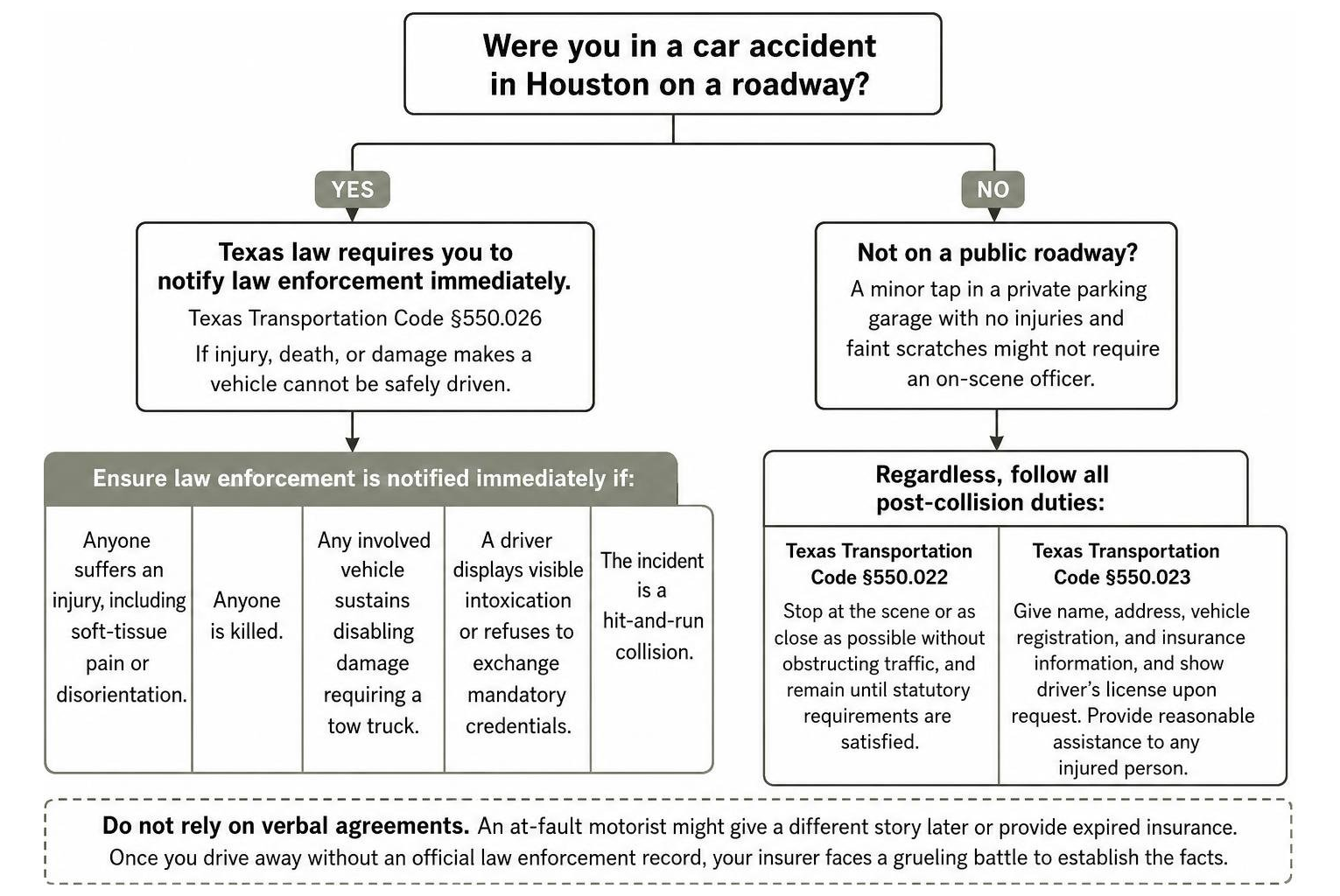
- Usually, call 911 or HPD when there is an injury, a death, suspected intoxication, a hit-and-run, blocked traffic, or a vehicle that cannot be driven safely. A minor, drivable crash may not bring an officer, but documenting it still matters.
- Move out of active lanes on I-45, I-10, Loop 610, or Beltway 8 if it is safe to do so. Turn on hazard lights.
- Check for injuries, exchange insurance and contact information, and photograph the vehicles, road conditions, and license plates.
- Ask for the report or incident number and notify the insurance carrier promptly.
Texas law requires an operator to immediately notify local law enforcement when a crash causes injury, death, or damage that prevents safe operation of a vehicle. See Texas Transportation Code Section 550.026.
A police response and a written crash report are not guaranteed after every minor collision. Still, an official record can help preserve the time, location, statements, and scene evidence if fault becomes disputed later.
Houston crashes often happen on fast, crowded corridors. If a vehicle is blocking traffic or cannot be driven safely, call 911 rather than relying on an informal agreement at the roadside.
When Should You Call 911, HPD, or File Online?

Call 911 for injuries, blocked lanes, suspected intoxication, violence, a fleeing driver, or a vehicle that is unsafe to drive. For a non-emergency crash in Houston, contact HPD through its non-emergency options and follow the dispatcher’s instructions.
Houston Police Department – Online Police Report is for qualifying non-emergency incidents. It is not a substitute for emergency help, and it cannot be used when an injury or other exclusion applies.
Save photos, witness details, and the other driver’s insurance information even when an officer does not respond. For a fuller checklist, follow the same safety and documentation steps.
What if the Other Driver Leaves?
Do not chase the driver. Pull to a safe location, call 911, and record the vehicle’s direction, plate details, color, and visible damage. Witness names and prompt reporting can be important when a hit-and-run claim is reviewed.
How Do Texas Reporting Duties and a CR-3 Affect Your Claim?
Insurance carriers use a Texas Peace Officer’s Crash Report, commonly called a CR-3, as one source of information about the crash. It may record location, vehicle positions, witness information, and the officer’s observations, but it does not automatically decide fault.
Texas insurance rules also matter after a Houston crash. The Texas Department of Insurance explains that drivers must carry liability coverage and describes available coverages in its auto insurance guide.
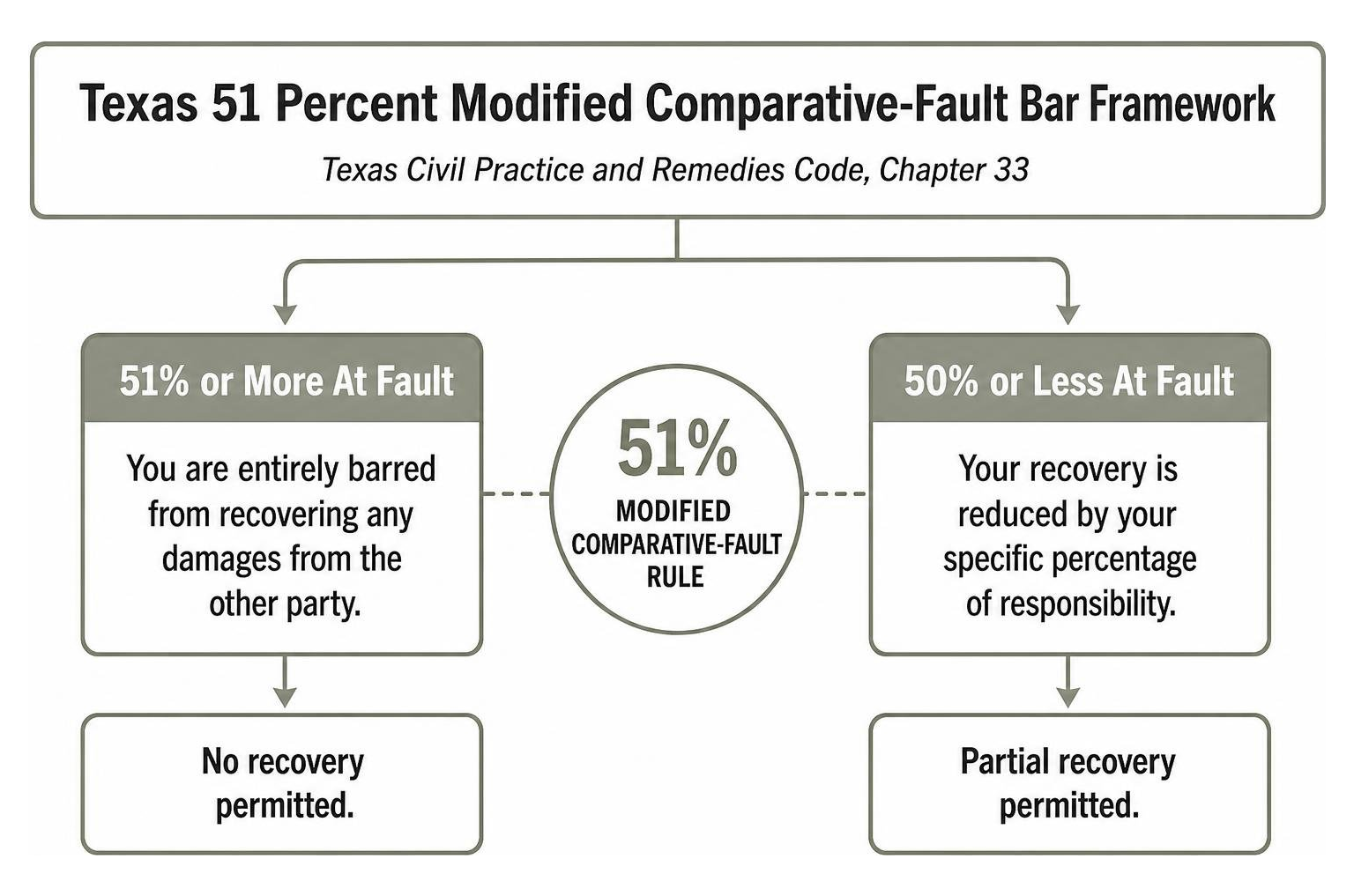
Texas personal-injury claims may involve Personal Injury Protection, or PIP, unless it was rejected in writing. Texas also uses a modified comparative-fault rule: a person found more than 50 percent responsible generally cannot recover damages from another at-fault party. The deadline for many injury and property-damage lawsuits is two years from the crash date.
Keep the CR-3, photos, repair estimates, medical records, and insurer messages together. These records are especially useful when a collision on I-10, Loop 610, or another Houston roadway leads to a disagreement about what happened.
What Information Should You Preserve?
Preserve the report number, scene photos, contact details, and any towing or treatment records. A complete file gives an insurer and, if needed, the Harris County Civil Courts at Law a clearer timeline than memory alone.
How Do You Get a Houston CR-3 Crash Report?
A Houston CR-3 is the officer’s crash report. Request it after the investigating agency has completed its filing, then compare it with your photos and notes. The report can help identify the responding agency, crash location, and information an insurer may request.
An investigating officer generally has up to 10 days after a crash to complete and submit a CR-3. If the report is not available immediately, check again after that processing period rather than assuming it was never filed. See Texas Transportation Code Section 550.062.
People involved in the crash and other qualifying parties can request a report under Texas law. HPD provides a Crash Report Request Form with the eligibility and request details.
Before requesting the report, gather the crash date, location, incident number if available, and the involved driver’s name. Compare the completed report with your records and promptly raise objective errors, such as a misspelled name or incorrect plate number, with the investigating agency.
Why Check the Report Carefully?
Review the narrative, vehicle information, and crash location. A factual correction may be possible with supporting records, while disagreements over an officer’s opinion are more difficult and may require additional evidence. Keep a copy of every request and response.
What Do Houston Drivers Ask About Police Reports?
A police report is often useful, but the right next step depends on injuries, vehicle safety, and whether HPD responds. These answers address common questions after a Houston collision and explain what to preserve if a formal report is delayed or unavailable.
Can I file an online report if someone is hurt?
No. Call 911 when anyone is injured or needs medical help. HPD’s online reporting option is for qualifying non-emergency incidents and does not replace an emergency response.
Will insurance deny my claim without a police report?
Not automatically. However, without an official report, the insurer may rely more heavily on photos, vehicle damage, witness information, and the drivers’ competing accounts. Keep your own detailed records.
How long does a Houston CR-3 take to appear?
An officer generally has up to 10 days to submit the report. Availability can take longer, so use the incident information to check again after the initial processing period.
What if the other driver gives false information?
Call HPD, avoid confronting the driver, and save photos of the vehicle, plate, and insurance card. Report the discrepancy to the insurer and provide any witness details.
For more document guidance, see documents to keep after a Houston car accident.
What Should You Do After a Houston Crash?
After a crash, prioritize safety, report qualifying incidents, and keep every document in one place. Prompt reporting and clear records can make it easier to explain what happened when an insurer reviews the claim.
A CR-3 may be one important record, but it is not the only one. Preserve photos, repair estimates, medical records, witness contact details, and written messages with the insurance carrier. If you need immediate treatment, put your health first and follow the advice of medical professionals.
For a practical attorney perspective, bring the report number, photos, and insurer correspondence to any consultation. A review of the timeline can help identify missing records, questions to raise with the carrier, and approaching deadlines. Do not delay solely because the full extent of vehicle damage or an injury is still developing. Early organization today helps preserve information while witnesses, roadway conditions, and repair evidence are easier to document carefully.
For help after a serious Houston collision, contact Westloop Law Firm and speak with a Car accident lawyer Houston about the immediate next legal steps. A consultation can help identify the records and deadlines that may apply to the claim.