 Skip to content
Can a Houston Bar Be Liable for a Drunk Driving Crash?
What to do first:
- Call 911, get medical care, and tell police what you know about the driver’s drinking.
- Save photos, witness names, and any clue about where the driver was served alcohol.
- Speak with a Houston dram shop lawyer soon. Bar video and sales records may not be kept for long.
Yes, a bar or restaurant may be liable under Texas dram shop law if it served alcohol to someone who was visibly intoxicated, posed a clear danger, and then caused the crash. The driver may also be liable. Working with an experienced personal injury attorney in Houston or dedicated car accident attorneys in Houston helps victims hold negligent establishments accountable. A skilled Houston personal injury lawyer can explain what must be proved, what evidence matters, and how a claim may help cover your losses.
Understanding Texas Dram Shop Laws and Establishment Liability
When an impaired motorist causes a wreck along major corridors like Interstate 45, Loop 610, or Interstate 10, the immediate focus naturally rests on the driver. However, under the Texas Alcoholic Beverage Code Chapter 2, civil liability extends beyond the person behind the wheel. The Texas Dram Shop Act establishes that commercial providers of alcohol—such as bars, taverns, sports lounges, and restaurants—share legal responsibility when they continue serving patrons who are already obviously intoxicated.
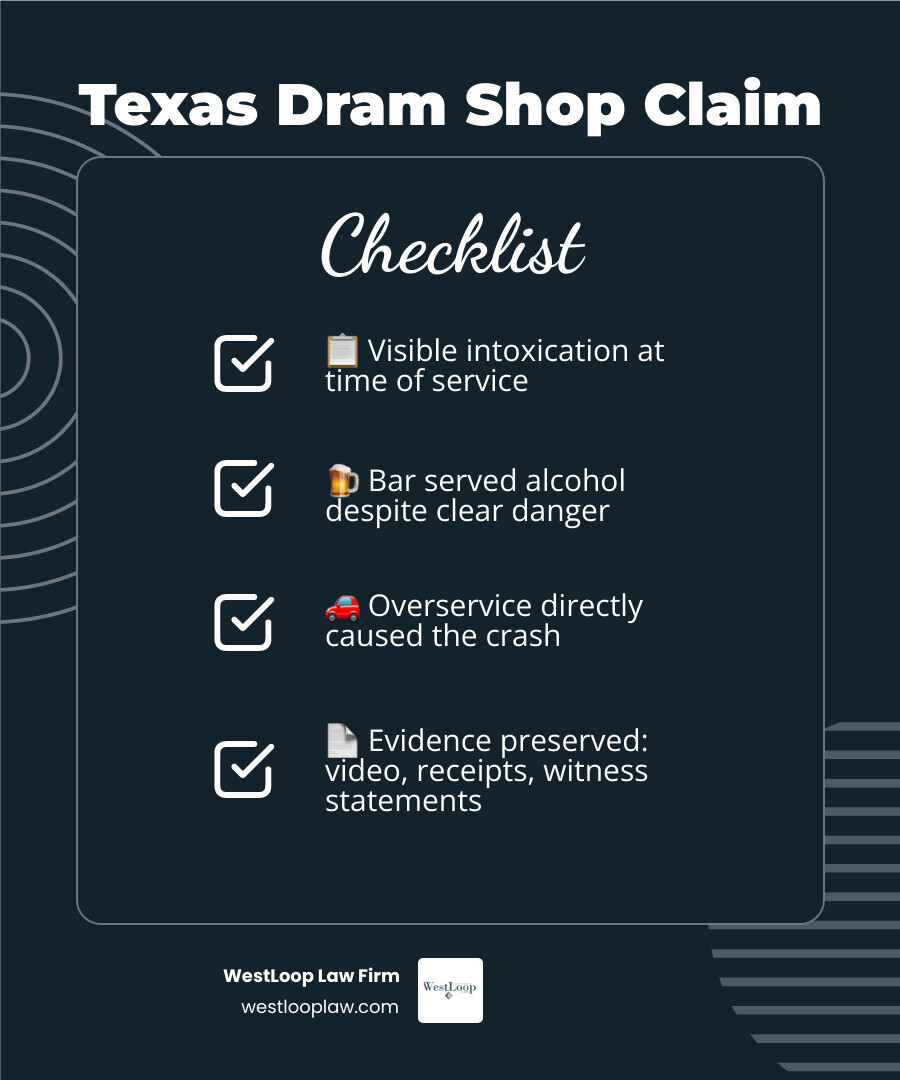
To hold an establishment accountable, the injured party must establish three critical elements:
- The alcohol provider sold, served, or provided alcoholic beverages under a commercial license or permit.
- At the time of service, the recipient was obviously intoxicated to the extent that they presented a clear danger to themselves and others.
- The intoxication of that patron was a direct proximate cause of the resulting collision, damages, or catastrophic injuries.
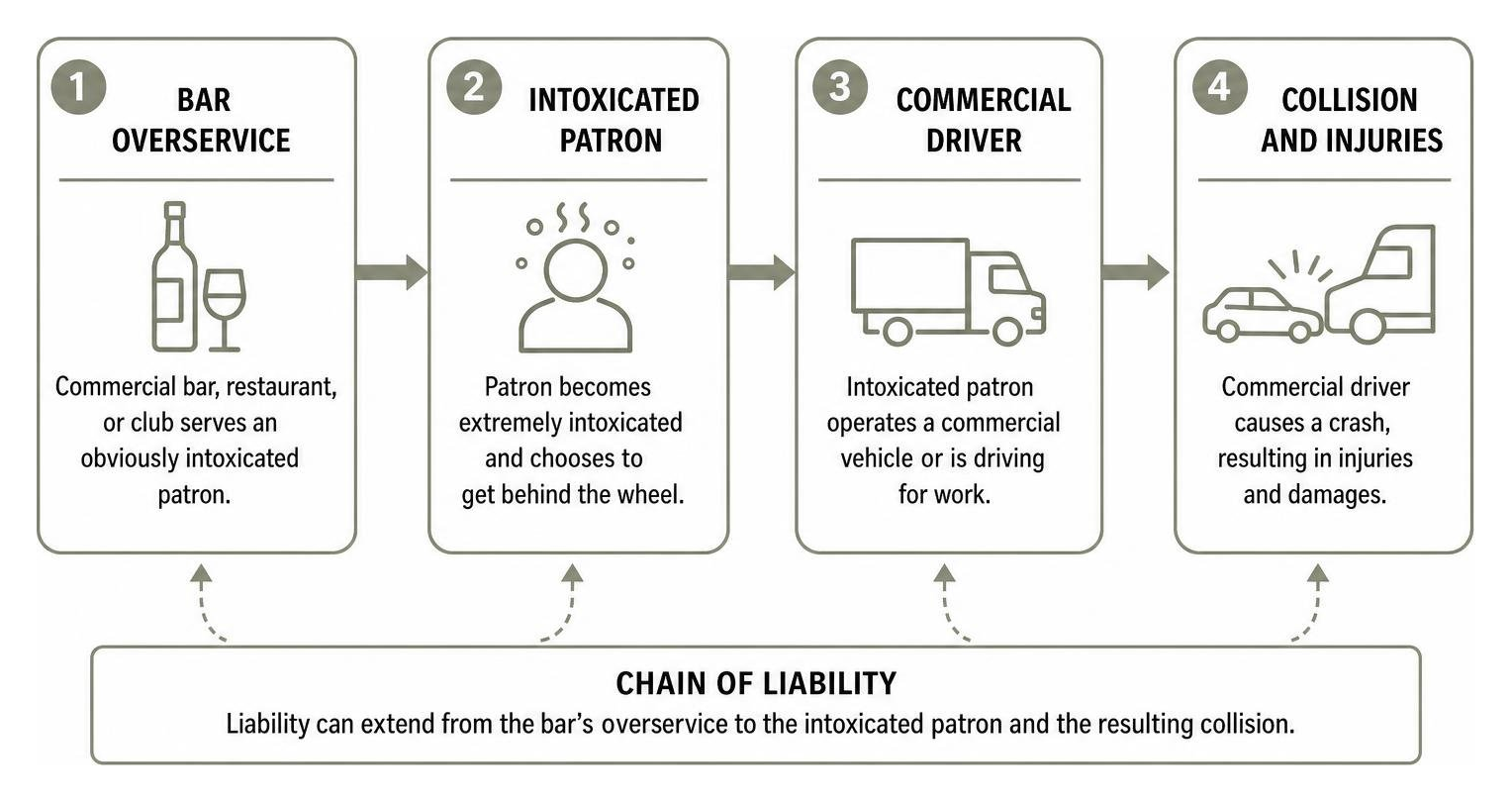
Understanding how to hold Houston drunk drivers accountable for your injuries often requires looking at the entire sequence of events leading up to the crash, starting with the establishment that poured the drinks.
| Claim Factor | Standard Drunk Driving Claim | Texas Dram Shop Claim |
|---|---|---|
| Primary Defendant | Individual intoxicated motorist | Commercial bar, restaurant, or club |
| Statutory Basis | Common law negligence & Texas Transportation Code | Texas Alcoholic Beverage Code § 2.02 |
| Core Requirement | Driver negligence / driving while intoxicated | Serving an obviously intoxicated patron |
| Primary Insurance | Personal auto liability policy (often state minimums) | Commercial general liability & liquor liability policies |
| Standard of Fault | Traditional comparative fault principles | Proportionate responsibility & safe harbor evaluations |
Legal Standards for Proving Overservice in Harris County
Proving overservice in Harris County Civil Courts at Law requires clear factual evidence showing that the patron exhibited noticeable indicators of extreme intoxication before their last drink was served. Under Texas law, “apparent intoxication” is judged by outward behavioral signs rather than purely chemical numbers, though blood alcohol concentration (BAC) plays an important role.
Common indicators that bar staff should recognize include:
- Slurred speech and delayed cognitive responses
- Unsteady balance, stumbling, or leaning heavily on the bar counter
- Dropping drinks, fumbling with payment cards, or knocking over glassware
- Aggressive, belligerent, or overly rowdy behavior
- Bloodshot, glassy eyes and an inability to focus
Our Houston drunk driving attorney guide outlines how these behavioral signs connect directly to the establishment’s legal duty to cut off service before the patron gets behind the wheel.
Potentially Liable Parties Beyond the Impaired Driver
Commercial alcohol providers include a wide variety of hospitality businesses across Houston, ranging from neighborhood dive bars in the Heights to high-end lounges in the Galleria area, sports stadiums near downtown, and concert venues along Washington Avenue.
Texas law draws a clear line between commercial vendors and social hosts. While private party hosts serving adult guests generally do not face liability under the Dram Shop Act (unless they provide alcohol to minors), licensed commercial entities operate under strict regulatory obligations. Furthermore, if the drunk driver was operating a company vehicle or working at the time of the wreck, commercial entities may share responsibility under established rules for legal recourse for collisions involving drunk commercial operators.
Why You Need a Houston Dram Shop Lawyer to Investigate Bar Liability
Pursuing a liquor liability claim involves complex corporate insurance structures, multi-party litigation, and aggressive defense teams. At WestLoop Law Firm, we examine commercial liability policies, analyze point-of-sale timestamps, and cross-reference electronic receipts to uncover exactly when and how overservice occurred. Working with a dedicated Houston car accident lawyer ensures that all potential sources of financial recovery are identified early in the process.
How a Houston Dram Shop Lawyer Proves Apparent Intoxication
Proving that a bartender served someone who was already visibly impaired requires concrete, objective evidence. When we build these claims, we rely on several key evidentiary sources:
- Digital Surveillance Footage: High-definition video from inside the establishment showing gait, balance, and interactions with bar staff.
- Point-of-Sale (POS) Logs: Time-stamped registers showing the exact quantity and rapid pace of alcoholic drinks purchased.
- Toxicology Reports: Scientific calculations that determine the patron’s likely blood alcohol level at the exact time of service.
- Eyewitness Testimony: Statements from patrons, waitstaff, rideshare drivers, or bystanders who witnessed the patron’s condition.
- Toxicology and Law Enforcement Testimony: Qualified testimony explaining how specific alcohol levels impair motor skills and judgment.
When to Consult a Houston Dram Shop Lawyer for Your Claim
If you or a loved one suffered catastrophic injuries—such as traumatic brain injuries, spinal cord trauma, or multiple fractures—standard personal auto insurance policies rarely cover the full extent of the damages. Texas drivers often carry only minimum liability coverage ($30,000 per person), which is quickly exhausted within days at major trauma centers like Memorial Hermann in the Texas Medical Center.
Consulting a skilled Houston personal injury lawyer immediately is crucial because establishments often overwrite surveillance video within 14 to 30 days. Sending formal preservation letters prevents the destruction of vital evidence.
Crucial Evidence and Common Defenses in Houston Liquor Liability Claims
Building an unassailable dram shop case requires swift evidence collection before critical digital records disappear.
Essential evidence includes:
- Formal spoliation letters sent immediately to the bar to freeze digital records
- Credit card statements, itemized bar tabs, and split-check records
- Texas Alcoholic Beverage Commission (TABC) incident reports and violation records
- Dispatch logs from local law enforcement and Houston Fire Department EMS units
- Server hiring files, shift logs, and internal employee incident books
The Texas “Safe Harbor” Defense Explained
Commercial alcohol providers frequently attempt to shield themselves from liability using the statutory “Safe Harbor” defense (Texas Alcoholic Beverage Code § 106.14). Under this rule, a bar owner may avoid liability if they prove that:
- All employees serving alcohol completed a TABC-approved seller-server training course.
- The employer maintains written policies forbidding the overservice of alcohol.
- The employer did not directly or indirectly encourage the employee to violate these rules.
However, this defense is not absolute. If a bar incentivized overservice through high-volume sales competitions, ignored prior overservice complaints, or pressured servers to maximize drink sales, the Safe Harbor protection is nullified.
Recoverable Damages in Texas Dram Shop Lawsuits
Victims of alcohol-related crashes can pursue comprehensive financial compensation for both economic and non-economic harm. Under Texas civil law, recoverable damages include:
- Past and Future Medical Expenses: Emergency trauma care, intensive care stays, surgeries, physical therapy, and long-term care needs.
- Personal Injury Protection (PIP) Benefits: Immediate reimbursement for medical bills and lost income through your own auto policy regardless of fault.
- Lost Income and Earning Capacity: Compensation for time missed from work and reduced future earning ability.
- Physical Impairment and Disfigurement: Compensation for mobility limitations, permanent scarring, or loss of bodily function.
- Pain, Suffering, and Mental Anguish: Damages for physical pain, emotional distress, and post-traumatic stress.
- Exemplary (Punitive) Damages: In cases involving gross negligence, additional financial awards intended to penalize the wrongdoer.
Consulting a qualified car accident lawyer in Houston helps ensure that every category of loss is documented accurately.
Immediate Steps and Timelines After a Crash Involving an Overserved Driver
What you do in the hours and days following a crash directly impacts your legal claim.
Follow these critical steps:
- Seek Immediate Medical Evaluation: Receive full medical assessments from local emergency teams or nearby trauma centers.
- Obtain Official Police Crash Records: Secure the Texas Peace Officer’s Crash Report (Form CR-3) detailing the responding officer’s field sobriety tests and preliminary findings.
- Preserve All Crash Evidence: Keep vehicle debris, dashcam recordings, photos of the scene, and all medical records.
- Identify Crash Locations: Serious wrecks frequently occur along high-traffic routes such as Beltway 8 or along local thoroughfares. Review our specific analyses of Westpark corridor crash claims and East Orem Drive DWI collision cases to see how local roadway conditions impact crash investigations.
Under the Texas Civil Practice and Remedies Code, the statute of limitations for personal injury and dram shop claims is strictly two years from the date of the incident. In October 2026, claims from older incidents face strict statutory cutoffs. Waiting too long risks losing the right to recover compensation entirely.
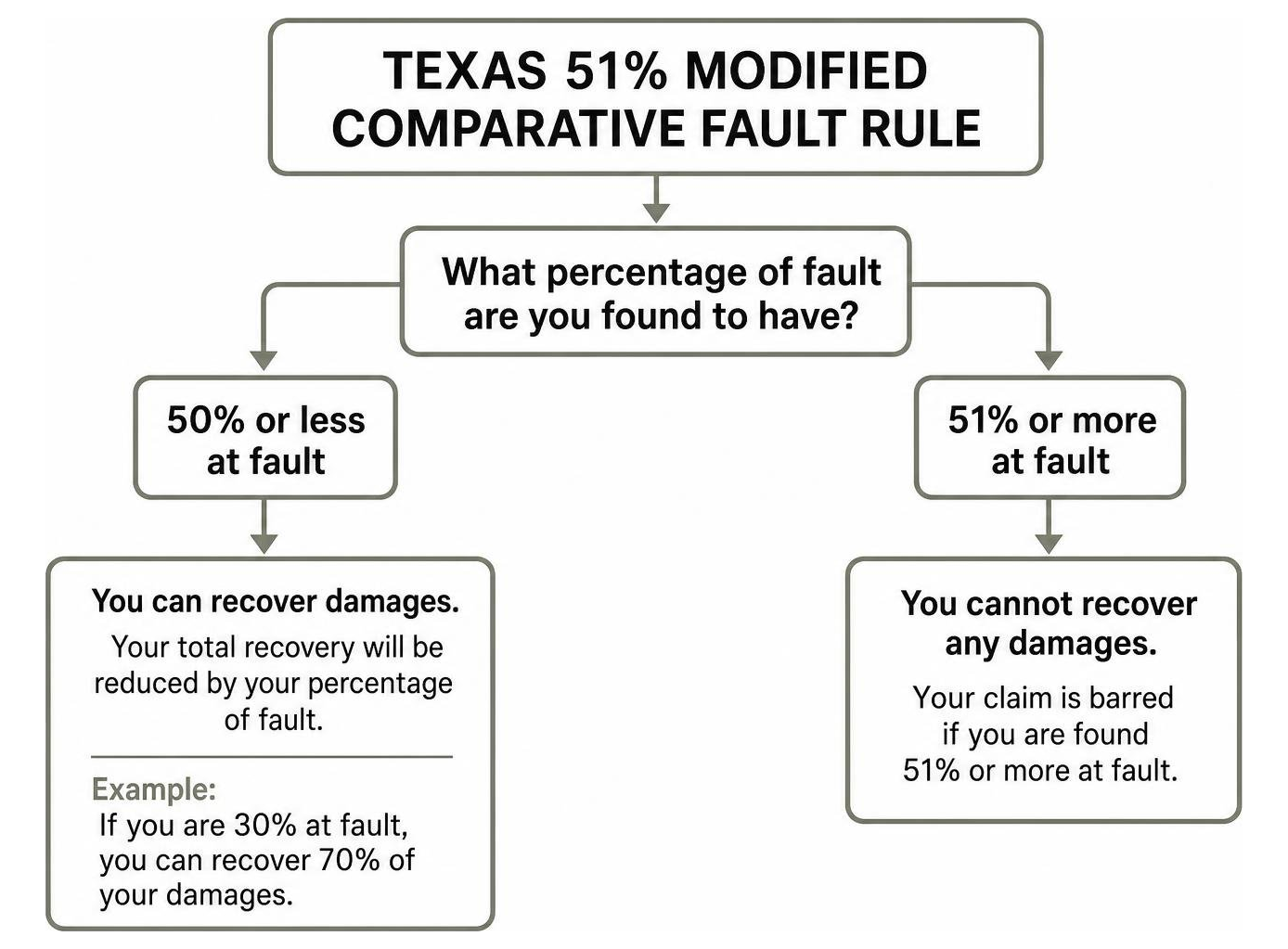
Furthermore, Texas follows a modified comparative-fault rule (the 51% bar rule). You can recover damages as long as you are 50% or less responsible for the collision, but your total recovery will be reduced by your percentage of fault. If you are found 51% or more at fault, you cannot recover any compensation.
Frequently Asked Questions About Houston Dram Shop Claims
What is the deadline to file a dram shop lawsuit in Texas?
Under the Texas Civil Practice and Remedies Code, you have two years from the date of the accident to file a lawsuit in Harris County Civil Courts at Law or Texas District Courts. However, because video surveillance, electronic POS data, and witness memories fade rapidly, you should begin your investigation as soon as possible rather than waiting until the deadline approaches.
Can a bar be sued if an intoxicated patron injures themselves in a crash?
Yes. Texas law allows for “first-party” dram shop claims, where an overserved individual sues the commercial vendor for injuries sustained due to their overservice. However, Texas’s 51% modified comparative-fault rule applies. If a jury determines that the intoxicated driver was more than 50% responsible for their own actions compared to the bar’s negligence, the driver cannot recover damages.
How does a dram shop claim impact available insurance coverage?
Standard auto insurance policies carried by individual drivers often have low liability limits that cannot cover severe injuries. Commercial bars, restaurants, and nightclubs typically carry commercial general liability (CGL) and specialized liquor liability insurance policies with policy limits often reaching $1 million or more. A dram shop claim opens access to these commercial policies, providing vital financial coverage for catastrophic medical bills and long-term recovery costs.
Taking Action with WestLoop Law Firm After a Drunk Driving Crash
Commercial alcohol providers have a legal and ethical duty to serve alcohol responsibly and protect the public. When bars and restaurants prioritize profits over safety by overserving patrons who then cause devastating crashes on Houston roads, they must be held fully accountable.
At WestLoop Law Firm, we combine thorough investigation with dedicated client advocacy to secure the financial recovery our clients need. We handle cases on a contingency fee arrangement, meaning you owe no legal fees unless we win compensation for your claim.
If you or a family member was injured by an overserved driver, connect with a trusted personal injury lawyer in Houston today for a comprehensive case evaluation. You can also visit our contact page to schedule a free, confidential consultation.