 Skip to content
Take the Right Steps to Protect Your Houston Crash Settlement
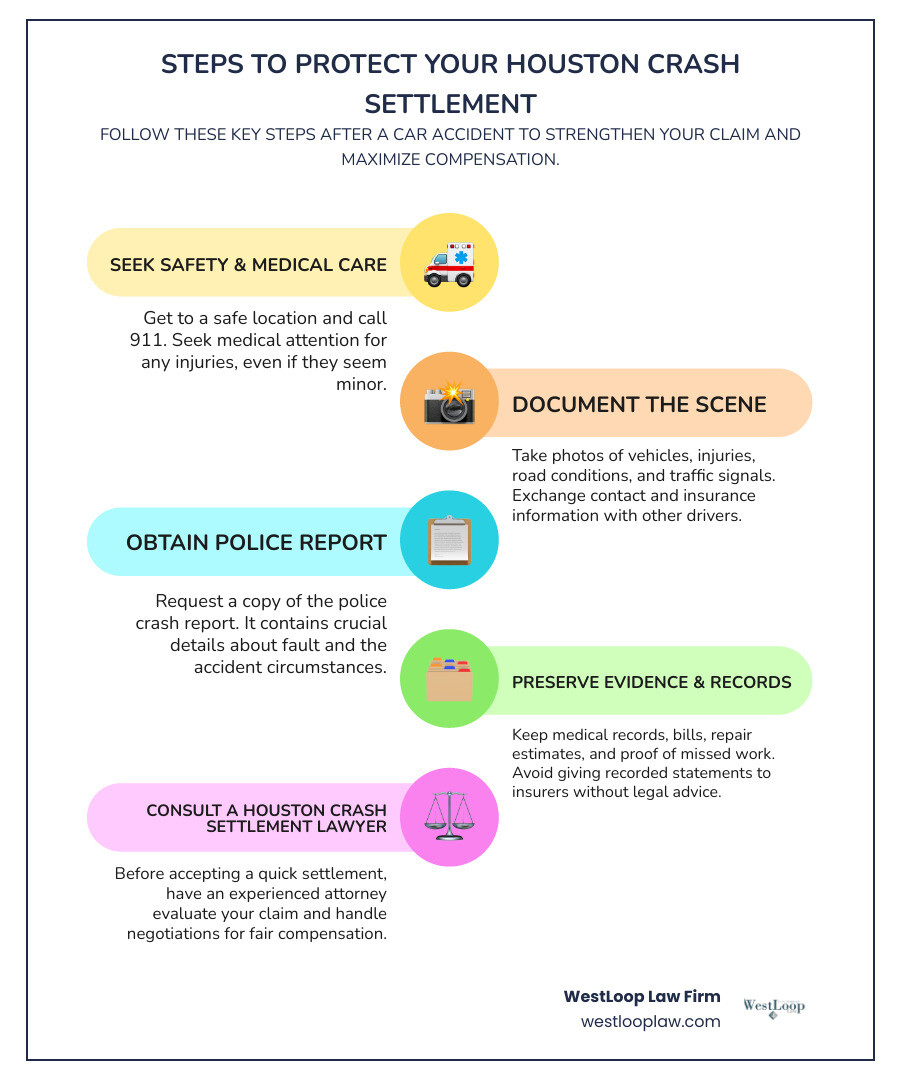
After a Houston crash, protect your claim by getting medical care, calling 911, saving photos and witness details, and avoiding a quick insurance settlement before you know the full cost of your injuries. A dedicated car accident settlement attorney can investigate fault, calculate present and future losses, handle insurer communications, and pursue fair compensation when an offer falls short.
Texas follows a modified comparative fault rule. You may still recover damages if you were partly responsible, as long as you are not more than 50% at fault. Your recovery may be reduced by your share of fault.
A strong claim often depends on early documentation:
- Get to safety and request a police report.
- Take photos of vehicles, injuries, road conditions, and traffic signals.
- Keep medical records, bills, repair estimates, and proof of missed work.
- Be cautious with recorded statements and fast settlement offers from insurers.
A crash can bring medical bills, missed paychecks, and uncertainty all at once. A houston accident settlement attorney at WestLoop Law Firm can help you understand the claim process and pursue proper car wreck compensation in Houston to support your recovery.
Why You Need a Houston Crash Settlement Lawyer After an Accident
Houston streets can be chaotic. Between the crowded lanes of the Westpark Tollway, the constant construction along Interstate 45, and the high-speed merges onto Interstate 69 and Loop 610, collisions happen every single day. When you suffer an injury on our roads, dealing with bodily pain while trying to understand insurance paperwork is overwhelming. Retaining an experienced Houston car accident attorney allows you to focus on healing while we concentrate on securing the maximum financial recovery allowed under Texas law.
When an accident occurs, insurance companies move swiftly, but not to help you. Their primary focus is to protect their bottom line. Claims adjusters are trained to minimize claim payouts or deny fault entirely. Without a dedicated legal team on your side, you risk settling for a fraction of what your claim is truly worth.
At WestLoop Law Firm, our team handles every aspect of the claim. We know how the local Harris County courts operate, how local juries evaluate injury claims, and how to present hard evidence that demands a fair settlement. If a crash leads to a tragic loss, our combined background in personal injury law and probate ensures that wrongful death claims and estate matters are resolved smoothly for grieving families.
Tactics Insurers Use to Minimize Settlements
Insurance adjusters often seem friendly when they call you after an accident, but their questions are carefully crafted. Some common tactics include:
- Requesting recorded statements early: Adjusters may ask misleading questions designed to make you inadvertently admit partial fault or minimize your physical pain before your full medical diagnosis is complete.
- Offering fast, lowball settlements: Insurers frequently extend quick checks before you finish medical treatment. Accepting this initial check releases the insurer from all future liability, leaving you to pay future medical bills out of pocket.
- Demanding blanket medical authorizations: Adjusters may ask you to sign broad medical releases to comb through your entire medical history, attempting to blame your current symptoms on pre-existing conditions.
- Disputing liability: Even in clear-cut rear-end or intersection collisions along busy corridors like Westheimer Road or Gessner Road, insurers may attempt to shift blame onto you.
- Delaying the claims process: Prolonging the review process wears down injured victims financially, making low settlement offers look enticing when household bills pile up.
Working with a Houston Crash Settlement Lawyer on a Contingency Fee Basis
Legal representation should never be out of reach because of your financial situation. That is why we work on a contingency fee basis.
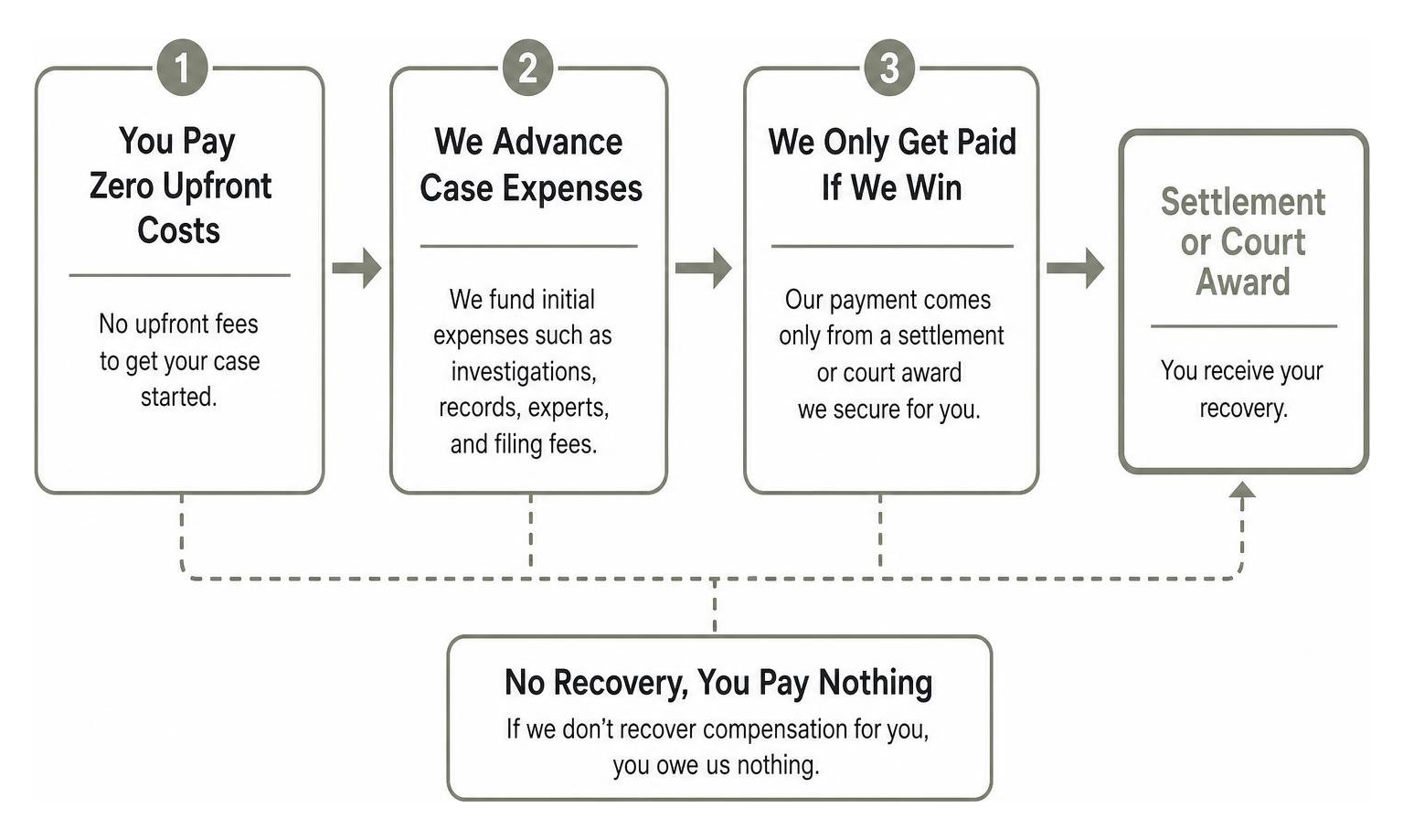
Under a contingency fee arrangement:
- You pay zero upfront costs to get your case started.
- We fund the initial expenses, including hiring accident reconstructionists, collecting medical records, acquiring traffic footage, and paying court filing fees.
- We only receive payment for our legal services if we secure a settlement or court award for you.
This fee structure ensures that our interests align directly with yours: obtaining the highest possible value for your claim.
Step-by-Step Guide: How to Secure Maximum Settlement Value
Securing full compensation requires following a clear, methodical process from the moment the collision occurs.

Preserving Critical Scene Evidence and Police Reports
The foundation of any injury claim begins at the accident location. Houston’s High Injury Network—which includes heavily traveled corridors such as Bissonnet Street, FM 1960, and Airline Drive—accounts for a large portion of our city’s severe collisions.
To safeguard your rights:
- Call 911 immediately: Request the Houston Police Department or the Harris County Sheriff’s Office to dispatch an officer to create an official Texas Peace Officer’s Crash Report (CR-3).
- Photograph everything: Capture wide-angle and close-up photos of all vehicle positions, property damage, skid marks, broken glass, traffic lights, lane markings, and visible injuries.
- Gather witness statements: Secure names, phone numbers, and addresses of any witnesses before they leave the area.
- Locate nearby surveillance cameras: Note nearby storefronts, gas stations, or traffic monitoring cameras that may have recorded the incident. We send spoliation letters promptly to preserve this footage before it is deleted.
Documenting Medical Treatment and Long-Term Damages
Insurance payouts rely heavily on verified medical records. You must seek an immediate medical evaluation at local emergency facilities like Memorial Hermann Southwest Hospital, Ben Taub Hospital, or Houston Methodist, even if your symptoms seem minor at first. Adrenaline can mask internal bleeding, concussions, and soft tissue damage.
Follow all medical instructions carefully:
- Attend all physical therapy sessions, doctor consultations, and follow-up visits.
- Maintain a personal daily journal documenting your pain levels, mobility limitations, and how your injuries disrupt your daily activities.
- Keep detailed receipts for out-of-pocket prescription expenses, co-pays, medical equipment, and travel costs for medical visits.
- Document all missed work hours, lost bonuses, and missed promotion opportunities with paystubs and employer letters.
Negotiating Demands and Structuring Settlements
Once your medical condition reaches Maximum Medical Improvement (MMI)—the point where your health has stabilized—we prepare a comprehensive settlement demand package.
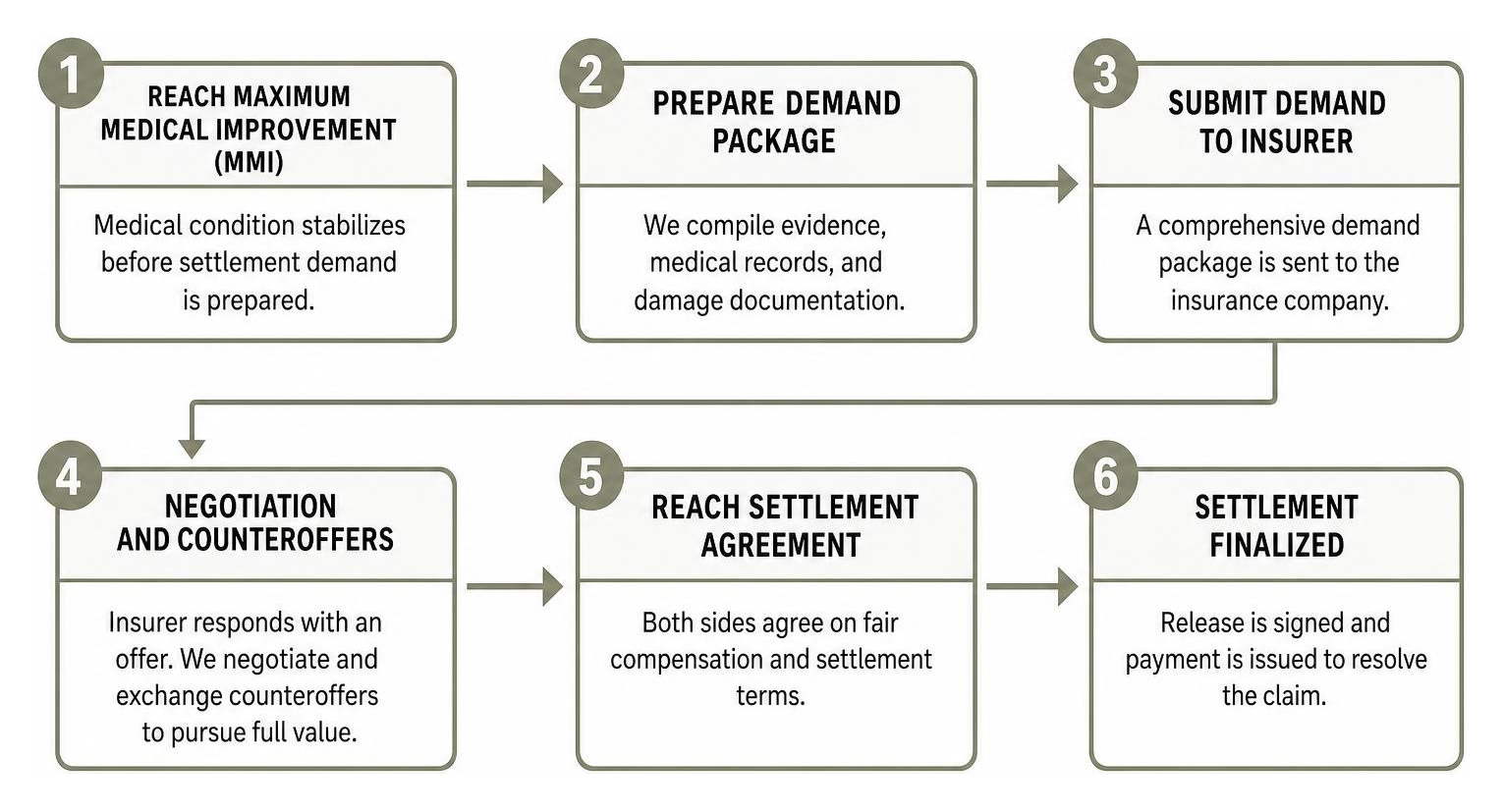
This package outlines:
- Detailed liability analysis proving the other driver’s fault.
- Complete itemization of economic damages (medical expenses, property losses, lost wages).
- Documentation supporting non-economic damages (pain, emotional trauma, impairment, disfigurement).
- Supporting statements from your physicians regarding required future treatments.
We present this package to the insurer, engaging in structured negotiations. If the insurance carrier refuses to offer fair compensation that covers your full losses, we file a formal lawsuit in the appropriate Harris County district court to move the case toward mediation or a jury trial.
Determining Fault and Compensation Under Texas Personal Injury Law
Texas personal injury claims operate under a fault-based tort system. The driver who fails to exercise reasonable care is legally responsible for the damages they cause.
Compensation Types: Economic vs. Non-Economic Damages
Texas law allows injured victims to pursue both tangible and intangible damages:
| Damage Category | Description | Examples |
|---|---|---|
| Economic Damages | Verifiable out-of-pocket financial losses resulting from the collision | • Emergency room and hospital bills • Future surgeries and rehabilitation • Lost wages and reduced future earning potential • Vehicle repair or replacement value • Medical equipment and home modifications |
| Non-Economic Damages | Non-financial losses reflecting personal and emotional suffering | • Physical pain and suffering • Mental anguish and emotional distress • Loss of enjoyment of life • Permanent scarring or physical disfigurement • Loss of consortium or companionship |
How a Houston Crash Settlement Lawyer Investigates Fault
Proving negligence requires clear evidence. When we build your claim, we conduct a thorough investigation that goes beyond the basic police report:
- Electronic data extraction: We download event data recorders (black boxes) from commercial vehicles or passenger cars to determine speed, braking activity, and steering inputs prior to impact.
- Distracted driving analysis: We subpoena cell phone logs to show whether a driver was texting, browsing, or talking at the exact moment of the crash.
- Accident reconstruction: We work with engineering professionals to reconstruct collision dynamics, trajectory paths, and force vectors.
- Multi-party liability checks: In complex multi-vehicle accidents or commercial truck crashes, we examine whether trucking companies, vehicle manufacturers, or third-party contractors share legal responsibility.
Navigating Texas Modified Comparative Fault and Filing Deadlines
Texas operates under the rule of modified comparative fault, also known as proportionate responsibility (Texas Civil Practice and Remedies Code Chapter 33).
Under this rule:
- You can recover damages as long as your share of fault is 50% or less.
- If you are found to be 51% or more responsible, you are barred from receiving any financial recovery.
- If you share a portion of fault (for example, 20%), your total financial recovery will be reduced by that exact percentage. For instance, an award of $100,000 would be reduced to $80,000.
Regarding deadlines, Texas has a strict two-year statute of limitations for car accident lawsuits, starting from the exact date the collision took place. If you are pursuing a claim against a government entity—such as a collision involving a City of Houston vehicle or METRO bus—the formal notice period is significantly shorter, often requiring action within a few months. Missing these statutory deadlines permanently forfeits your legal right to compensation.
Frequently Asked Questions About Houston Car Accident Settlements
What should I do immediately after a car accident in Houston?
Immediately move to a safe location if possible, turn on your hazard lights, and call 911. Request immediate medical assistance if anyone is hurt. Take detailed photographs of all vehicles, skid marks, road hazards, and injuries. Exchange insurance and contact details with the other driver, but avoid apologizing or discussing who caused the accident. Seek an immediate medical examination, and contact an attorney before giving recorded statements to any insurance representative.
Can I still recover compensation if I was partially at fault for the crash?
Yes. Under the Texas modified comparative fault system, you are eligible to recover compensation as long as your fault does not exceed 50%. Your final settlement amount will simply be reduced in proportion to your percentage of responsibility.
How long do I have to file a car accident lawsuit in Texas?
In Texas, the statute of limitations for personal injury and property damage claims arising from a motor vehicle accident is two years from the collision date. Claims against municipal or state government entities carry much shorter formal notice deadlines.
Partner with WestLoop Law Firm to Maximize Your Recovery
A car crash along Houston’s highways can change your everyday life in a matter of seconds. You should not have to face mounting medical debts, aggressive insurance adjusters, and complex Texas liability laws by yourself.
At WestLoop Law Firm, we are dedicated to protecting your legal rights and demanding every dollar your case deserves. Our unique background in injury advocacy and probate administration provides comprehensive legal support for every stage of your recovery. Contact us today to evaluate your case and start your journey toward a fair settlement.