 Skip to content
Can You Legally Switch Personal Injury Lawyers in Houston?
What to do first:
- Review your current retainer agreement and note any communication or case-progress concerns.
- Gather key documents, including police reports, medical records, and insurance correspondence.
- Schedule a confidential consultation with a prospective Houston personal injury firm before notifying your current lawyer.
- Ask the new firm to handle the formal termination, file transfer, and fee division on your behalf.
Yes, you can legally switch personal injury lawyers in Houston at any point during your claim. Under Texas law, you maintain absolute authority over who represents your legal interests. The Texas Disciplinary Rules of Professional Conduct recognize that the attorney-client relationship is built entirely on trust and client autonomy. If that trust breaks down, or if you feel your current counsel is failing to advance your case, you have an unqualified legal right to discharge your lawyer at any stage of the proceedings.
Whether your collision occurred along the congested lanes of Interstate 45, near the Interstate 10 corridor through the Energy Corridor, or on the Loop 610 interchange, your personal injury claim directly affects your physical and financial recovery. When you sign a retainer agreement, you are hiring a legal advocate to work for you—not surrendering your rights as an individual. If your counsel stops returning your calls, fails to investigate your accident thoroughly, or ignores crucial medical documentation from facilities like Memorial Hermann-Texas Medical Center or Ben Taub Hospital, you do not have to remain trapped in an unproductive professional relationship.
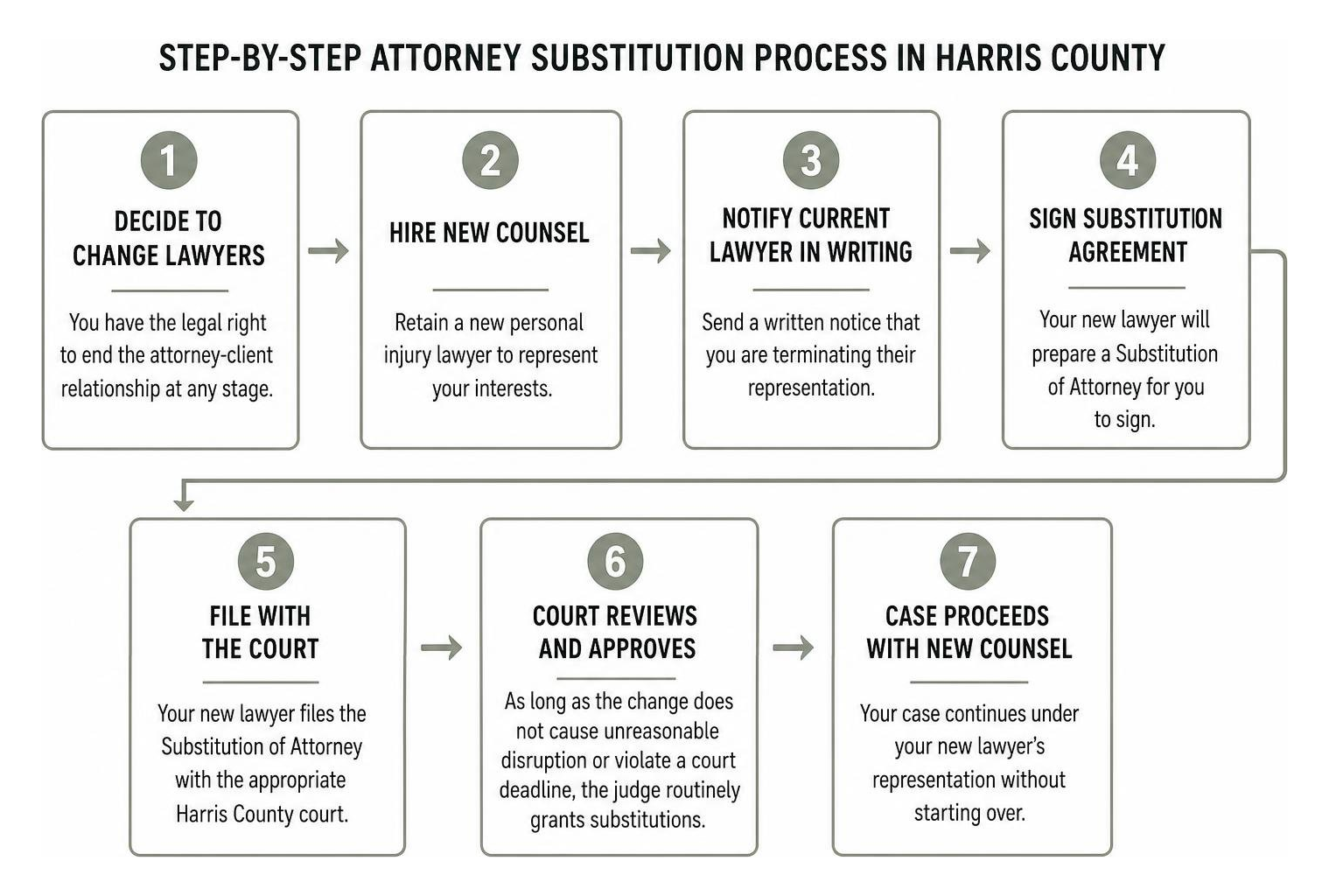
Many clients worry that firing their lawyer will anger the judge or violate Texas court procedures. In reality, substituting counsel is a routine administrative procedure across the Harris County Civil Courts at Law and the Harris County District Courts. As long as the change does not cause unreasonable disruption or violate a strict court deadline, judges routinely grant substitutions. When your case is stalled, evaluating your options is not just your legal right—it is a critical step toward protecting your compensation.
What Are the Warning Signs That You Need to Change Lawyers?
Knowing when to switch representation starts with distinguishing between the natural pacing of litigation and genuine attorney neglect. Personal injury claims take time, especially when gathering extensive medical records or waiting for injuries to reach maximum medical improvement. However, passive representation and indifference are serious red flags that warrant immediate action.
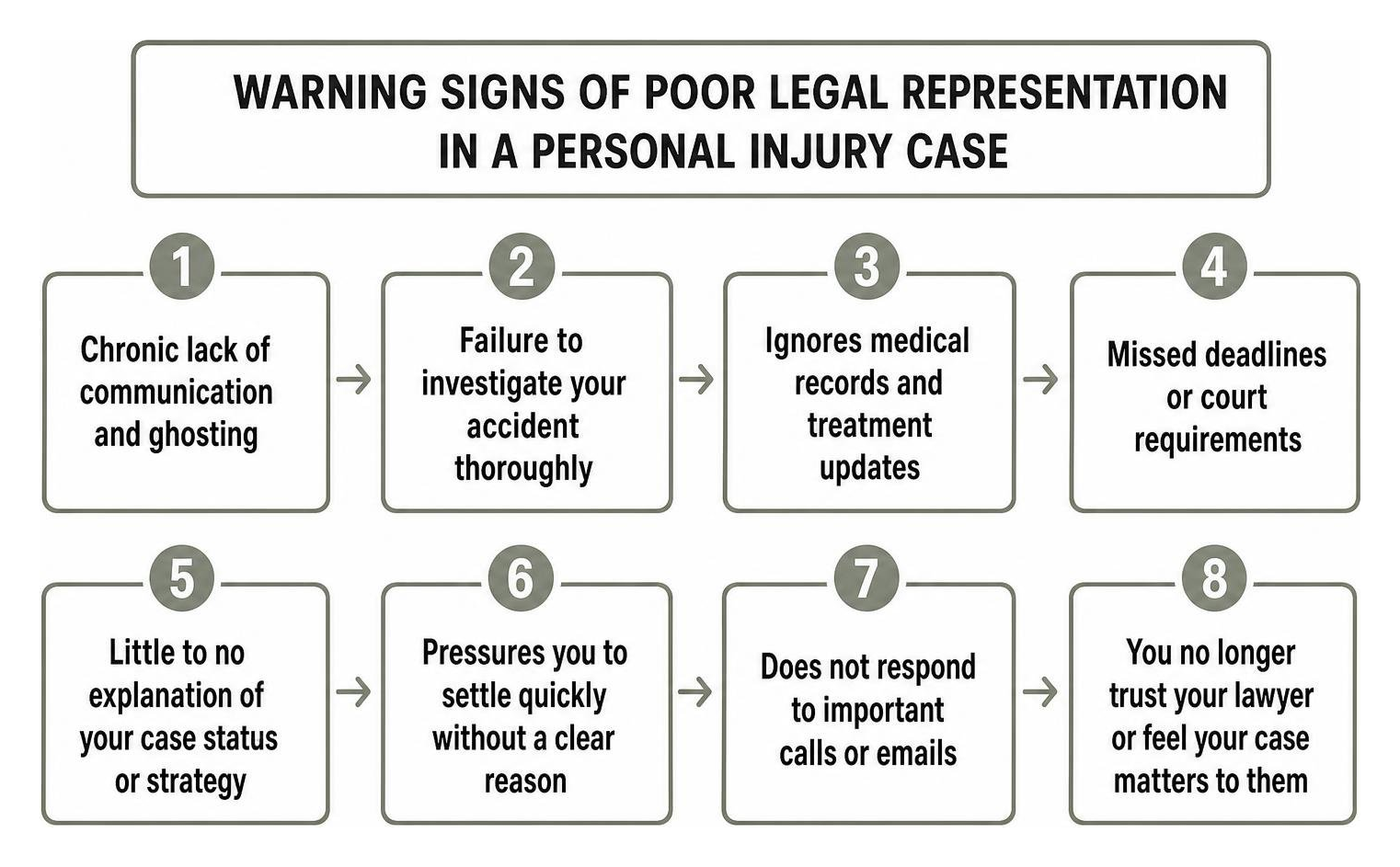
Here are the most common warning signs that indicate you may need new legal counsel:
1. Chronic Lack of Communication and Ghosting
Communication is the foundation of effective legal advocacy. If weeks or months pass without an update, or if your calls and emails are redirected to junior staff who have no answers about your file, your case is not receiving the attention it deserves. While lawyers cannot spend all day on the phone, they have a professional duty under Texas ethics rules to keep you reasonably informed about significant case developments.
2. Pressure to Accept an Inadequate Settlement
Some high-volume settlement mills prefer quick payouts over fighting for maximum recovery. If your lawyer urges you to take an early, lowball insurance offer before your doctors have completed your treatment—or before assessing long-term therapy needs—they may be prioritizing their firm’s cash flow over your well-being. A dedicated legal team prepares every case as if it will proceed to trial, ensuring insurance adjusters take your damages seriously.
3. Inattention to Texas Comparative Fault Rules
Texas operates under a 51% modified comparative-fault bar (Texas Civil Practice and Remedies Code Chapter 33). Under this statute, if the insurance company manages to pin 51% or more of the blame for a crash on you, you recover zero compensation. If you were 20% responsible, your total recovery is reduced by 20%. An attorney who fails to promptly interview witnesses, preserve dashcam footage, or inspect the accident scene on Beltway 8 risks leaving you vulnerable to aggressive insurer blame-shifting. Learning to spot these mistakes to avoid when hiring a Houston injury lawyer helps you identify whether your current counsel is actively safeguarding your claim.
4. Overlooking Critical Insurance Coverages
In Texas, auto policies must include Personal Injury Protection (PIP) unless the policyholder rejected it in writing. PIP covers immediate medical bills and lost wages regardless of fault. If your attorney has not reviewed your policy to secure your PIP benefits, or has failed to coordinate your health insurance liens properly, you could lose thousands of dollars in vital financial relief while your liability claim is pending.
How Do Attorney Fees and Case Files Work When You Fire Your Lawyer?

One of the most persistent myths preventing injury victims from switching lawyers is the fear of paying double legal fees. Clients assume that if they fire their current lawyer and hire a new firm, both attorneys will charge a full percentage of the final recovery.
You do not pay double legal fees when switching personal injury lawyers in Texas.
Personal injury claims are handled on a contingency fee basis. When you change representation, the total contingency fee percentage agreed upon in your new contract remains the standard fee deducted from your final settlement or jury award. The two law firms resolve the fee division internally based on established Texas legal principles:
- Attorney Charging Liens: Your discharged attorney may file an attorney lien on the case file to secure payment for the work they completed before termination.
- Quantum Meruit: Under Texas law, a discharged contingency lawyer is typically entitled to compensation under the doctrine of quantum meruit—meaning “as much as they deserved.” This is calculated based on the reasonable value of the demonstrable legal work performed, such as filing initial claims or gathering medical records, rather than a full contingency percentage.
- Direct Inter-Firm Resolution: When your case concludes, your new legal team negotiates and settles the lien directly with the former attorney out of the single contingency fee pool. You never pay out-of-pocket to cover the dispute.
Furthermore, under the Texas Disciplinary Rules of Professional Conduct, your case file belongs to you, not your lawyer. Upon formal written notice of termination, your former attorney is legally obligated to surrender the entire case file—including accident reports, witness statements, medical records, and court filings—to your new counsel. Reviewing discussions on how to change attorneys in the middle of a personal injury case reinforces that client rights supersede firm preferences.
| Representation Factor | Staying With Unresponsive Counsel | Transitioning to a Dedicated Firm |
|---|---|---|
| Fee Structure | Standard contingency fee percentage | Same single contingency fee; firms divide proceeds |
| Case Investigation | Passive, reliance on basic police reports | Aggressive evidence preservation, reconstruction, and depositions |
| Settlement Strategy | Often pressures client to take early insurer lowballs | Evaluates total medical debt, future care, and lost income |
| Courtroom Readiness | Avoids trial; settles cheaply to avoid litigation | Builds a trial-ready posture to force higher settlement offers |
| Client Communication | Delayed replies, gatekeeping, lack of direct lawyer contact | Transparent case timelines and proactive status updates |
What Are the Exact Steps to Switch Your Houston Injury Attorney?
Changing your legal counsel is a straightforward process when handled methodically. You do not have to engage in uncomfortable confrontations with your previous lawyer; your new firm manages the legal logistics for you.
Follow these four steps to transition your case smoothly:
Step 1: Consult a Prospective Law Firm Confidentially
Before taking any action with your current lawyer, schedule a free consultation with a firm you are considering. Review your situation openly. Bring copies of your current retainer agreement, police reports from the Houston Police Department or Harris County Sheriff’s Office, and any recent correspondence from the insurance company. This allows the prospective firm to confirm they can take your case without conflicts of interest and outline what strategy changes they recommend.
Step 2: Retain Your New Legal Team
Once you find a firm with the resources, responsiveness, and trial readiness you require, hire a dedicated Houston personal injury lawyer by signing a new representation agreement. This agreement establishes the new professional relationship and gives the firm legal standing to intervene and represent your interests.
Step 3: Let Your New Counsel Handle the Formal Termination
You do not need to call, argue with, or visit your former attorney. Your new legal team drafts a formal Letter of Discharge and Stop-Work Order. This document instructs the previous lawyer to cease all work immediately, notify the insurance adjusters of the change, and provide the complete case file. If your case is already in formal litigation in the Harris County Civil Courts at Law, your new counsel will draft and file a Joint Motion for Substitution of Counsel for the judge’s signature.
Step 4: Supervise the Evidence and Records Transfer
Your incoming legal team will audit your file, request missing records from local providers such as Houston Methodist or Memorial Hermann, and notify the opposing insurance adjusters of the new point of contact. To learn more about standard contractual transitions, you can read guidance on changing personal injury attorneys after signing a contract.
How Can You Choose the Right Houston Personal Injury Firm This Time?
Selecting a new law firm requires doing your due diligence to ensure you do not face the same frustrations a second time. Making an informed choice means looking beyond flashy billboards along the North Freeway or Southwest Freeway and evaluating a firm’s actual trial preparation, caseload management, and communication standards.
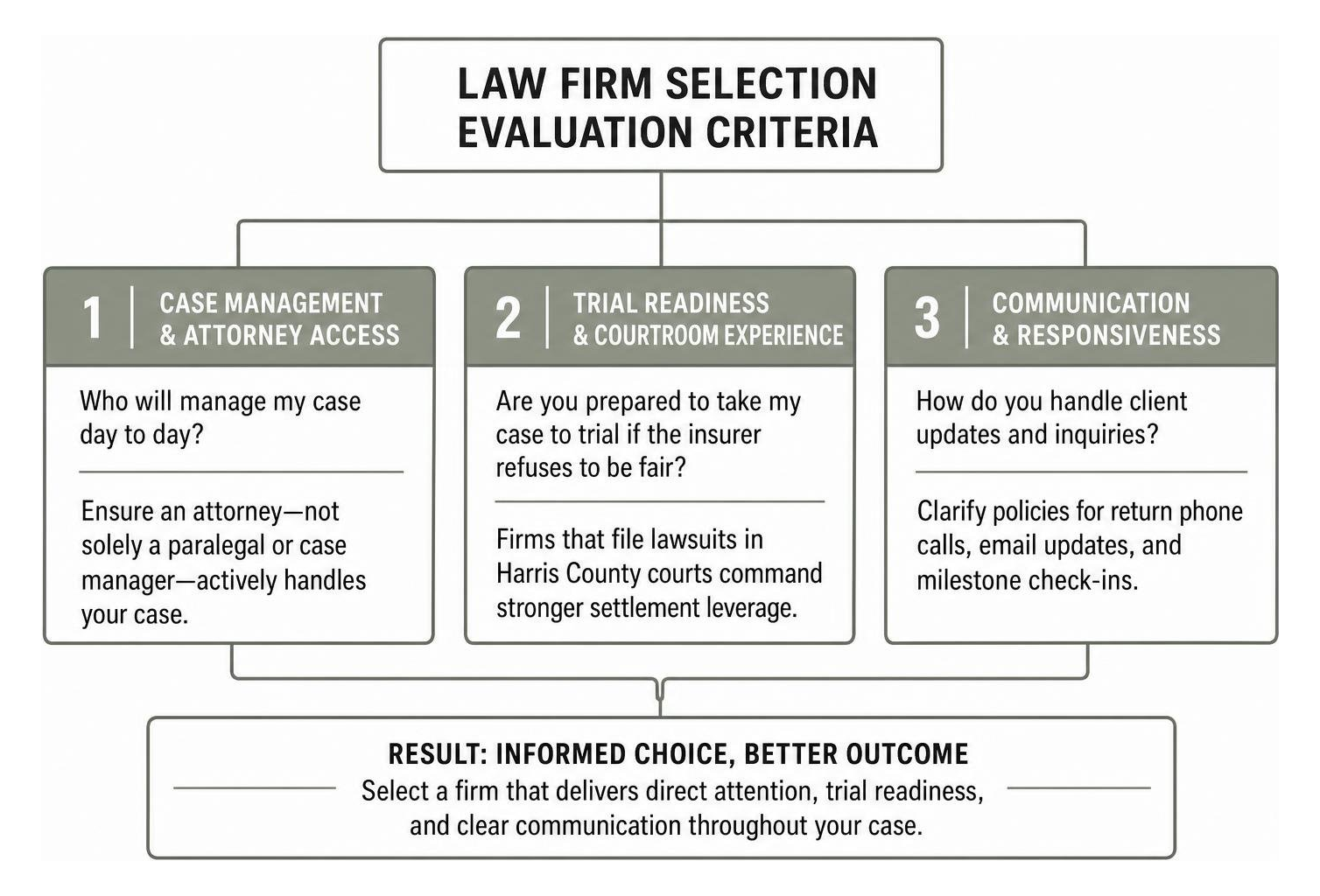
To ensure you don’t get hurt by a bad choice, prioritize firms that limit their active caseloads so every client receives direct attorney attention. When evaluating prospective representation, review this guide on how to choose the best personal injury law firm for your case and ask targeted questions during your meeting:
- Who will manage my case day to day? Ensure an attorney—not solely a paralegal or case manager—actively handles your legal strategy and negotiations.
- Are you prepared to take my case to trial if the insurer refuses to be fair? Insurance carriers track which firms settle cheaply and which ones file lawsuits in Harris County courts. A firm with courtroom confidence commands stronger settlement leverage.
- How do you handle client updates and inquiries? Clarify the firm’s policy regarding return phone calls, email updates, and milestone check-ins.
- How do you handle probate issues if the claim involves a wrongful death? In catastrophic injury or fatal accident claims, dealing with probate administration alongside injury litigation is essential for distributing proceeds legally and efficiently.
Taking the time to review the 25 things you need to know before hiring representation will give you the confidence to vet candidates thoroughly. When you understand what to expect at a free consultation, you can enter the conversation equipped to demand the level of advocacy your recovery requires.
Frequently Asked Questions About Changing Personal Injury Lawyers in Houston
Will switching lawyers delay my personal injury settlement?
Switching counsel causes a temporary pause of a few weeks while your new firm requests the case file, reviews the evidence, and files formal substitution paperwork. However, this minor delay is almost always offset by faster, more determined progress. An attorney who actively investigates your claim, files discovery motions, and aggressively negotiates with the insurance adjuster will push your case toward resolution far faster than an unresponsive lawyer who lets your file sit untouched.
When is it too late to switch personal injury attorneys in Texas?
You can technically change counsel at any point before a final settlement release is signed or a verdict is rendered. However, switching becomes significantly harder if your case is scheduled for trial within a few weeks, because judges in Harris County District Courts are reluctant to grant continuances that disrupt the court docket.
Additionally, you must remain mindful of the Texas statute of limitations. Under Texas Civil Practice and Remedies Code § 16.003, you have two years from the date of your accident to file a formal lawsuit. If your deadline is approaching in a matter of days and your current lawyer has not filed suit, you must act immediately to retain counsel capable of filing an emergency petition.
Do I have to personally confront my current lawyer to fire them?
No. You are not required to call, meet in person, or debate your decision with your current lawyer. Once you sign a representation agreement with your new firm, we send a formal notice of termination along with a request for the complete client file. Your new legal team handles all communications, protecting you from uncomfortable conversations and stress.
Can I change lawyers if I already received a settlement offer?
Yes, you can change representation after receiving a settlement offer. If your current attorney is pressuring you to accept an offer that fails to cover your outstanding medical bills from Houston-area trauma centers or future rehabilitation expenses, you can consult another firm. That your former lawyer will likely assert an attorney lien based on the offer on the table, but your new attorney can evaluate whether taking the case further will net a higher financial recovery even after accounting for the lien.
Take Control of Your Houston Injury Claim Today
You deserve legal representation that is responsive, transparent, and dedicated to securing the full compensation you are entitled to under Texas law. If your current attorney is not answering your calls, is neglecting critical evidence, or is rushing you into an inadequate settlement, you do not have to accept subpar service. You have the right to choose legal counsel who puts your recovery first.
At Westloop Law Firm, we combine comprehensive personal injury representation with in-depth probate knowledge, providing effective, multi-faceted advocacy for injured victims and families across the Greater Houston area. We handle the entire substitution process on your behalf—requesting your records, filing the required court paperwork, and handling fee discussions with your former counsel so you can focus on healing.
If you are ready to explore your options with a team that values communication and aggressive advocacy, reach out to us today. Learn more about our approach by visiting our Houston personal injury legal representation page or contact Westloop Law Firm to schedule your private, confidential case review.