 Skip to content
What Is a Beneficiary Injury Claim in Houston — and Do You Have One?
A beneficiary injury claim Houston families can file is a legal action that allows certain surviving family members to seek financial compensation after a loved one is seriously injured or killed due to someone else’s negligence.
If your family is dealing with a sudden loss or a catastrophic injury right now, here is a quick answer to what this means for you:
Who can file a beneficiary injury claim in Houston, Texas?
| Relationship to Victim | Can File? |
|---|---|
| Surviving spouse | Yes |
| Biological or adopted children | Yes |
| Parents of the deceased | Yes |
| Estate executor or administrator | Yes (if family does not file within 3 months) |
| Siblings or other relatives | No |
What can beneficiaries recover?
- Lost financial support and income
- Mental anguish and emotional suffering
- Loss of companionship and guidance
- Medical bills and funeral costs (through related claims)
- Punitive damages in cases of gross negligence
How long do you have to file?
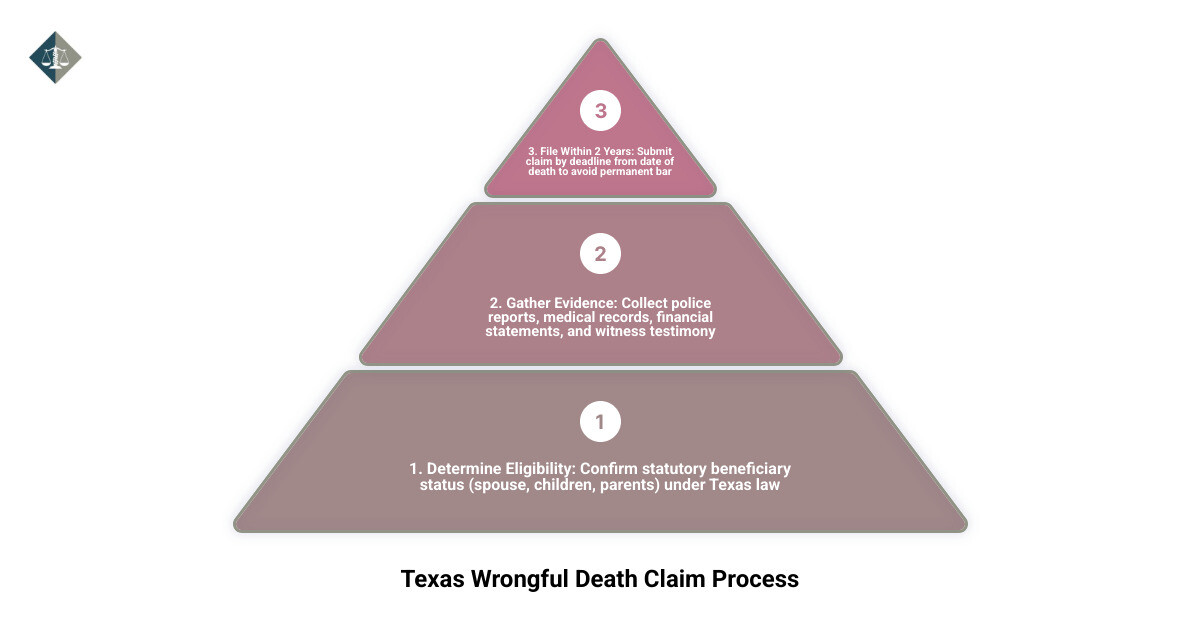
Texas law gives most families two years from the date of death to file a wrongful death claim under Texas Civil Practice and Remedies Code § 16.003. Missing this deadline almost always bars the claim entirely.
Losing someone you love is devastating. When that loss happens because of another person’s careless or wrongful actions — whether on I-45, at a Houston worksite, or anywhere else in Harris County — the grief is compounded by financial pressure and unanswered questions.
Who is responsible? What are your rights? How do you even begin?
This guide from Westloop Law Firm walks you through everything you need to know about beneficiary injury claims and wrongful death claims in Houston — in plain language, without the legal jargon.
Essential Beneficiary injury claim Houston terms:
Understanding the Beneficiary Injury Claim in Houston

When we talk about a Beneficiary injury claim Houston, we are looking at two distinct scenarios. The first involves a wrongful death where a loved one has passed away. The second involves a situation where a loved one is still alive but so severely injured – perhaps in a coma or suffering from a traumatic brain injury at a facility like Memorial Hermann – that they cannot file a claim for themselves.
In Houston, these claims are governed strictly by the Texas Civil Practice and Remedies Code. This law dictates that only specific people have “standing” (the legal right) to bring a lawsuit. Unlike some other states, Texas is very specific about who is considered a statutory beneficiary. For a general overview of how wrongful death claims work, families can review basic background information while they evaluate their next steps.
Navigating these rights requires Personal Injury Understanding Rights Houston/ to ensure the correct parties are represented. Whether the incident occurred near the Galleria or on the busy 610 Loop, identifying the right beneficiaries is the first step toward justice.
Who Qualifies as a Beneficiary in Texas?
In Texas, the “inner circle” of family members who can file a wrongful death claim is smaller than you might think. We often have siblings call us wanting to seek justice for a brother or sister, but under Texas law, siblings are excluded from filing a wrongful death claim.
The people who can legally file include:
- Surviving Spouses: This includes common-law spouses if the relationship meets Texas legal standards.
- Children: This includes biological children and legally adopted children. It does not matter if the children are minors or adults.
- Parents: Both biological and adoptive parents have the right to file for the loss of a child.
If none of these family members file a claim within three calendar months of the death, the executor or administrator of the deceased person’s estate can file instead, unless all the beneficiaries specifically ask them not to. Working with a Personal Injury Law Firm/ that understands both injury and probate law is vital here, as these two areas of law often overlap in beneficiary claims.
Filing for Incapacitated or Living Loved Ones
What happens if your loved one is still alive but cannot speak for themselves? We see this often in cases involving catastrophic accidents at the Texas Medical Center or following a major collision on Beltway 8. If a victim is mentally or physically incapacitated, a family member may need to step in.
To do this, you generally need to have a Power of Attorney (POA) that explicitly grants the authority to handle legal claims, or you must petition a Houston probate court to become a legal guardian. This allows you to file a Personal Injury Understanding Rights Houston/ claim on their behalf to cover their ongoing medical care, lost wages, and pain and suffering.
Wrongful Death vs. Survival Actions: What Families Must Know
Many families use the term “wrongful death” to cover everything, but in Houston, there are actually two different types of legal “buckets” for recovery: the Wrongful Death claim and the Survival Action.
- Wrongful Death Claim: This is for the family’s losses. It compensates the spouse, children, or parents for the hole left in their lives.
- Survival Action: This is for the deceased person’s losses. Think of it as the personal injury claim the person would have filed if they had survived. It “survives” their death and is filed by the estate.
A Personal Injury Lawyer In Houston Can Help/ you understand which path to take. Often, we file both simultaneously to ensure every penny of damage is accounted for.
Recoverable Damages for a Beneficiary Injury Claim in Houston
When we pursue a Beneficiary injury claim Houston, we look at several types of “damages” or compensation. These are generally split into economic and non-economic losses.
- Pecuniary Loss: This is the cold, hard math of what the deceased would have earned and contributed to the family (wages, benefits, and even the value of household chores).
- Loss of Companionship and Society: This compensates you for the loss of love, comfort, and companionship.
- Mental Anguish: This covers the emotional pain, torment, and suffering the survivors experience.
- Loss of Inheritance: This is the money the deceased likely would have saved and left to you in a will had they lived a full life.
For a broader look at what your family might be entitled to, see our Personal Injury Claims Overview Houston/.
Punitive Damages and Gross Negligence
In rare cases, the court may award “exemplary” or punitive damages. These aren’t meant to compensate the family but to punish the defendant for “gross negligence.”
In Houston, this often comes up in industrial accidents at the Port of Houston or refinery explosions in nearby Pasadena. To win punitive damages, we must prove that the defendant acted with more than just a simple mistake; they must have shown a conscious indifference to the safety of others. Because the standard is so high, Proving Liability Houston Personal Injury Cases/ requires extensive investigation and professional testimony.
The Legal Timeline and Statute of Limitations in Texas
Time is not on your side in these cases. In Texas, the statute of limitations for a Beneficiary injury claim Houston is generally two years from the date of the incident or death.
If you wait until two years and one day, the Houston courts will almost certainly dismiss your case, regardless of how clear the negligence was. There are very few exceptions, such as when the beneficiary is a minor child (the clock may pause until they turn 18) or if the cause of death was hidden through fraud.
It is best to start the process as soon as possible. How Soon File Personal Injury Claim In Texas/ is a common question, and the answer is always “the sooner, the better” to ensure evidence isn’t lost.
Proving Liability and Comparative Fault
Texas follows a “modified comparative negligence” rule, often called the 51% bar rule. This is a fancy way of saying that if your loved one was more than 50% responsible for the accident, the family cannot recover any money.
If they were 20% at fault — perhaps in a complicated multi-car pileup on I-10 — your total settlement would be reduced by 20%. Insurance companies love to use this rule to “blame the victim” and lower their payouts. We use accident reconstruction professionals to fight back and prove what really happened on Houston’s roads. For more on how this works in traffic cases, visit Personal Injury Lawyers In Houston Car Accidents/.
Evidence Needed for a Beneficiary Injury Claim in Houston
To win a case in Harris County, we need more than just a sad story; we need a mountain of evidence. This includes:
- Police and Accident Reports: Crucial for crashes on highways like US-59 or the Hardy Toll Road.
- Medical Records: To show the extent of suffering before death.
- Financial Records: Tax returns and pay stubs to prove lost future income.
- Witness Testimony: Statements from people who saw the accident or can speak to the family’s bond.
- Professional Analysis: Life expectancy professionals and economists who can project financial loss over decades.
Proving Liability Houston Personal Injury Cases/ is about building a narrative that a jury can understand and sympathize with.
Dealing with Insurance Companies and Maximizing Recovery
Insurance adjusters are not your friends. Their job is to protect their company’s bank account, not your family’s future. They often use tactics like:
- The “Quick” Lowball Offer: Offering a small check immediately in exchange for you signing away all future rights.
- Recorded Statements: Trying to get you to say something that implies your loved one was at fault.
- Delaying the Claim: Hoping you’ll get desperate for money and accept a lower settlement.
This is Why You Need A Houston Personal Injury Lawyer On Your Side/. We handle all communication so you can focus on healing.
Third-Party Liability and Workplace Injuries
Houston is a city built on labor — from construction on the 610 Loop to the shipping lanes of the Port. If a loved one is killed on the job, you might think Workers’ Comp is your only option. However, many Houston employers are “non-subscribers” (they don’t carry Workers’ Comp), which allows you to sue them directly.
Even if they do have Workers’ Comp, you may have a “third-party claim” against an equipment manufacturer or a negligent subcontractor. These claims often provide much higher compensation than standard death benefits. A Personal Injury Lawyer In Houston/ can identify these hidden sources of recovery.
Distribution of Settlements Among Beneficiaries
Once a settlement or verdict is reached, how is the money divided? If the family agrees, it can be split according to their wishes. If they don’t, a judge in a Houston probate or civil court will decide based on each person’s individual loss.
- Lump Sum: You get all the money at once.
- Structured Settlement: The money is placed in an annuity that pays out over many years (often used for minor children).
Managing these payouts often involves the Houston Injury Claim Lawyer/ working closely with probate professionals to set up trusts and ensure the money is protected for the long term.
Frequently Asked Questions about Houston Beneficiary Claims
Can siblings file a wrongful death claim in Houston?
No. Under the Texas Civil Practice and Remedies Code, siblings, grandparents, and aunts/uncles do not have the legal right to file a wrongful death lawsuit. Only the surviving spouse, children, and parents are eligible. However, a sibling could potentially be the executor of the estate and file a “Survival Action” on behalf of the estate itself. You can find more on this in Myths Facts Houston Personal Injury Law/.
What if the deceased was partially at fault for the accident?
As long as the deceased was 50% or less at fault, you can still recover damages. For example, if a jury finds your loved one was 30% at fault for a crash on I-45, and the total damages are $1 million, your family would receive $700,000. If they are 51% at fault, you receive nothing. This is why Understanding Personal Injury Lawyers In Houston/ is so important—we fight to keep that fault percentage as low as possible.
How long does it take to settle a beneficiary claim in Houston?
There is no “standard” time, but most complex cases take between 12 and 24 months. The investigation phase takes a few months, followed by filing the lawsuit. Many cases settle during mediation (a formal negotiation), but if the insurance company won’t be fair, we are prepared to go to trial. For more on what to expect, check out 10 Questions Personal Injury Lawyers In Houston/.
Seeking Justice with WestLoop Law Firm
At Westloop Law Firm, we know that no amount of money can replace a parent, a child, or a spouse. However, a Beneficiary injury claim Houston can provide the financial security your family needs to move forward without the crushing weight of medical debt or lost income.
Our team offers a unique advantage: we deeply understand both the aggressive world of personal injury litigation and the complex world of Houston probate law. This dual focus ensures that your claim is filed correctly, your rights are protected in court, and your settlement is distributed in a way that secures your family’s future.
If you are ready to seek justice for your loved one, we are here to listen and help. Contact a Houston Personal Injury Lawyer at Westloop Law Firm today for a free, confidential consultation. Let us handle the legal burden so you can focus on your family.