 Skip to content
What a Houston Brain Damage Lawyer Can Do for You
If you or someone you love is dealing with the consequences of a serious head injury, finding a houston brain damage lawyer is one of the most important steps you can take to protect your future.
Here is a quick snapshot of what you need to know:
- What they do: A brain damage lawyer investigates your injury, gathers evidence, and fights to get you full compensation for medical bills, lost wages, and pain and suffering.
- Who can file: Anyone injured by another party’s negligence — in a car crash on I-45, a fall at a job site, or a medical error at a Houston hospital.
- How long you have: Texas law gives you two years from the date of injury to file a personal injury lawsuit.
- What it costs: Most brain damage attorneys work on a contingency fee basis — you pay nothing unless they win your case.
- What you can recover: Medical costs, lost income, rehabilitation, pain and suffering, and more.
Brain injuries are not like broken bones. They can reshape every part of your life — how you think, how you feel, and how you function day to day. Some symptoms do not even show up until days or weeks after the accident.
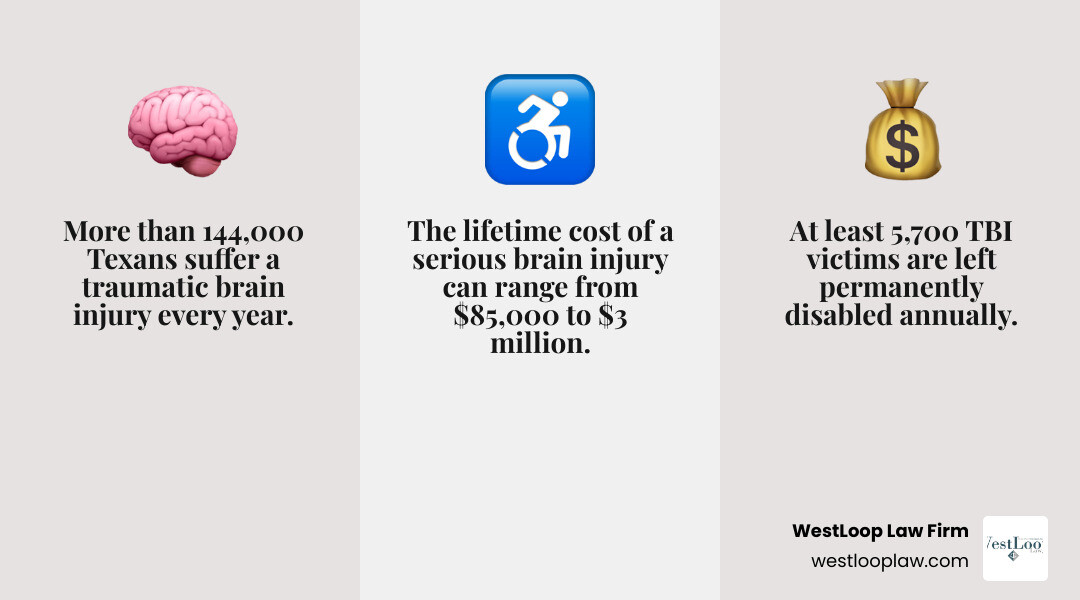
More than 144,000 Texans suffer a traumatic brain injury every year. At least 5,700 of them are left permanently disabled. The lifetime cost of a serious brain injury can run anywhere from $85,000 to $3 million.
Those numbers are real. And so is the legal burden that follows.
This guide walks you through everything — from understanding your injury to building a strong legal claim — so you know exactly what to expect and what to do next.
Discover more about Houston brain damage lawyer:
Part 1: Understanding Brain Injuries: TBI vs. ABI
To build a successful legal claim in Houston, we must first understand the medical reality of what has happened to your brain. Medical professionals divide brain injuries into two primary categories: Traumatic Brain Injuries (TBI) and Acquired Brain Injuries (ABI).
While both can result in devastating, lifelong cognitive and physical changes, the key difference lies in how the injury occurred.
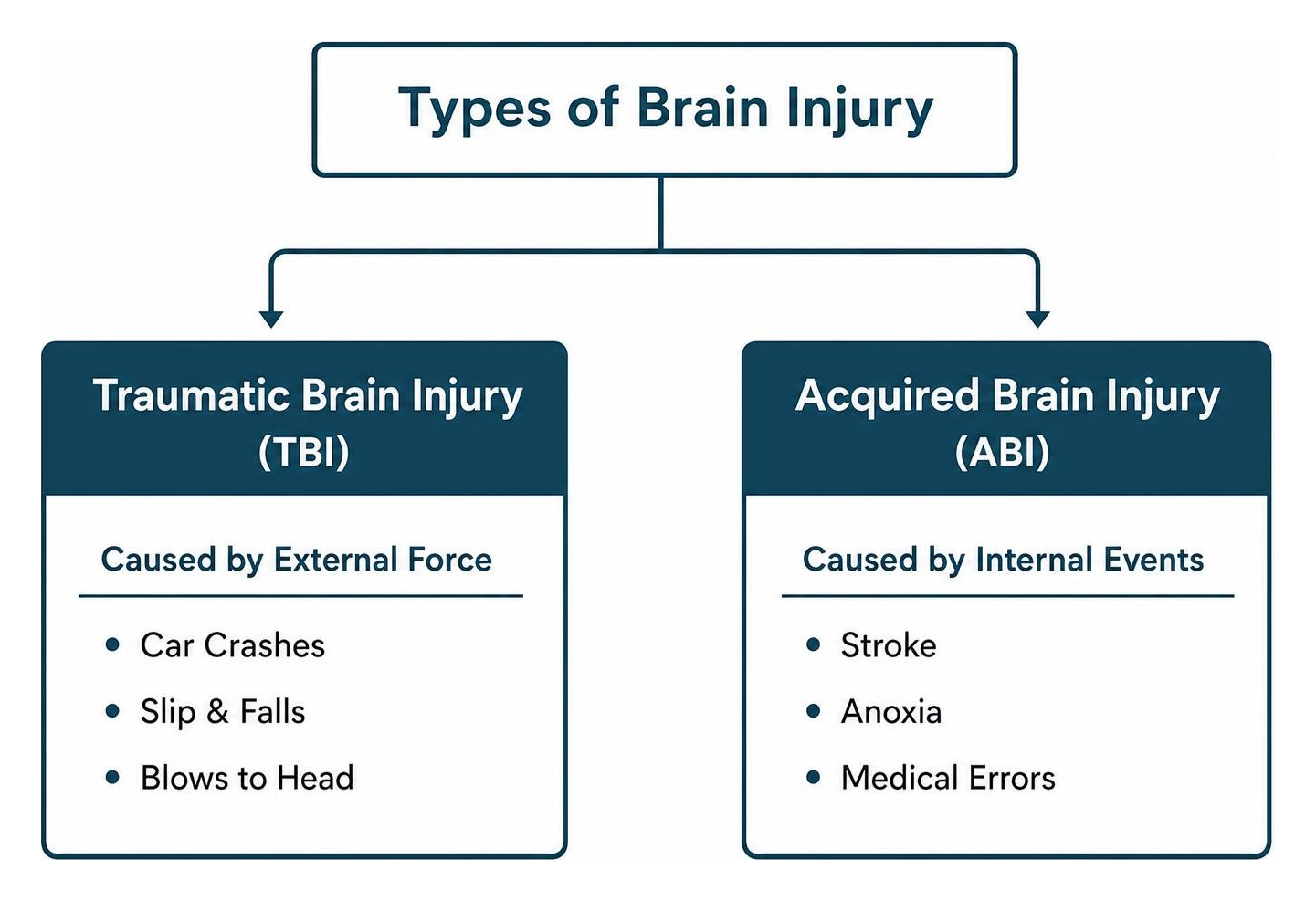
A Traumatic Brain Injury is caused by an external physical force. This could be a violent blow, a sudden jolt, or a penetrating object that disrupts the normal functioning of the brain. When a negligent driver slams into your car on the highway or a heavy object falls on you at work, the physical impact causes a TBI. If you need representation for this specific trauma, reaching out to a Houston Traumatic Brain Injury Lawyer is a vital step.
An Acquired Brain Injury, on the other hand, is an injury to the brain that occurs at the cellular level after birth but is not caused by external trauma. Instead, ABIs typically stem from internal medical events, such as a stroke, infection, or severe oxygen deprivation (anoxia or hypoxia).
Even though ABIs are internal, they often involve negligence. For example, if a medical professional at a facility in the Texas Medical Center fails to monitor a patient’s oxygen levels during anesthesia, or delays diagnosing a stroke, the resulting oxygen deprivation can lead to a severe ABI.
Medical Classifications of Traumatic Brain Injury
A TBI is not a one-size-fits-all diagnosis. Doctors classify these injuries into three distinct tiers of severity based on cognitive testing, physical symptoms, and the duration of any loss of consciousness. To learn more about how these medical classifications influence legal strategy, you can review our Houston Brain Damage Attorney Ultimate Guide.
- Mild TBI or Concussion: This is the most common form of brain injury. While labeled “mild,” the long-term effects can be anything but. A mild TBI may involve a brief loss of consciousness (under 30 minutes) or no loss of consciousness at all. Symptoms include headaches, confusion, dizziness, memory lapses, and emotional sensitivity.
- Moderate TBI: A moderate TBI typically involves a loss of consciousness lasting from 30 minutes to 24 hours. Victims often experience prolonged periods of confusion, physical coordination issues, cognitive deficits, and behavioral changes that can persist for months or become permanent.
- Severe TBI: This classification is applied when a victim loses consciousness for more than 24 hours or slips into a coma. Severe TBIs involve extensive damage to brain tissue, often leading to permanent physical disability, profound cognitive impairment, or a persistent vegetative state (defined as a vegetative condition lasting longer than 30 days).
To objectively measure the severity of a brain injury immediately after an accident, emergency medical teams use the Glasgow Coma Scale (GCS). The GCS scores a patient’s verbal, physical, and visual responses on a scale from 3 to 15:
- GCS Score of 13 to 15: Indicates a mild TBI.
- GCS Score of 9 to 12: Indicates a moderate TBI.
- GCS Score of 8 or below: Indicates a severe TBI.
Open vs. Closed Head Injuries
Another critical distinction in brain injury cases is whether the trauma is “open” or “closed.”
- Open Head Injuries: These occur when an object penetrates the skull and enters the brain tissue, or when a severe skull fracture exposes the brain to the outside environment. These are common in high-impact construction accidents or violent assaults. They carry an incredibly high risk of localized tissue damage and severe infection.
- Closed Head Injuries: These happen when the brain is damaged without any break in the skull. Closed head injuries are caused by blunt force trauma or rapid acceleration and deceleration (such as whiplash in a car wreck). In these scenarios, the brain violently collides with the hard inside walls of the skull. This movement can tear blood vessels, bruise brain tissue, and cause dangerous swelling.
Closed head injuries are particularly insidious because they are often “invisible.” A person might look completely fine on the outside, but internally, their brain is suffering from micro-tears or secondary brain injuries, such as swelling, bleeding, or chemical imbalances that worsen over the hours and days following the initial impact.
Part 2: Common Causes of Head Trauma in Houston
Houston is a massive, bustling city. Unfortunately, our bustling economy and crowded infrastructure also create countless opportunities for serious accidents. Whether you are commuting, working, or simply running errands, a sudden head injury can happen in the blink of an eye. If you find yourself in this position, reading through Houston Brain Injury Lawyer Tips can help you protect your physical and legal recovery.
Motor Vehicle Accidents and Highway Collisions
Our local highways are notorious for high-speed, high-impact collisions. Major arteries like Interstate 45, Loop 610, and Beltway 8 see thousands of wrecks every year.
- Car Accidents: A standard rear-end collision or T-bone crash can cause your head to strike the steering wheel, window, or airbag. Even without a direct impact, the rapid deceleration of a vehicle can cause your brain to whip violently back and forth inside your skull.
- Commercial Truck Wrecks: Due to the massive size and weight of 18-wheelers, collisions involving commercial trucks almost always result in catastrophic injuries. The sheer force of these crashes frequently leads to severe, life-altering brain damage.
- Motorcycle and Pedestrian Crashes: Lacking the metal cage of a traditional vehicle, motorcyclists and pedestrians are highly vulnerable. Even when wearing a helmet, a rider thrown onto the asphalt can suffer profound brain trauma.
Workplace and Industrial Accidents
Houston is a global energy and industrial hub. While these industries power our local economy, they also present high-risk environments for hard-working Texans.
- Construction Sites: Falls from heights (such as ladders, scaffolding, or roofs) are the leading cause of TBIs in the construction sector. Additionally, workers are constantly at risk of being struck by falling tools, heavy machinery, or collapsing structural elements.
- Oil Rig and Industrial Accidents: Workers on offshore rigs and in local chemical plants face extreme hazards. Blasts, equipment malfunctions, and industrial explosions can cause severe blast-induced TBIs, where the pressure wave of an explosion damages brain tissue even without a direct physical blow.
- Maritime and Cargo Injuries: Port of Houston workers and maritime crew members operate heavy cargo machinery daily. A single slipping hazard on a wet deck or a mechanical failure can cause a devastating fall or crush injury to the head.
Part 3: Proving Negligence with a Houston Brain Damage Lawyer
To successfully recover compensation in a brain injury lawsuit, we must prove that your injury was the direct result of another party’s negligence. Negligence is a legal concept that requires establishing four distinct elements:
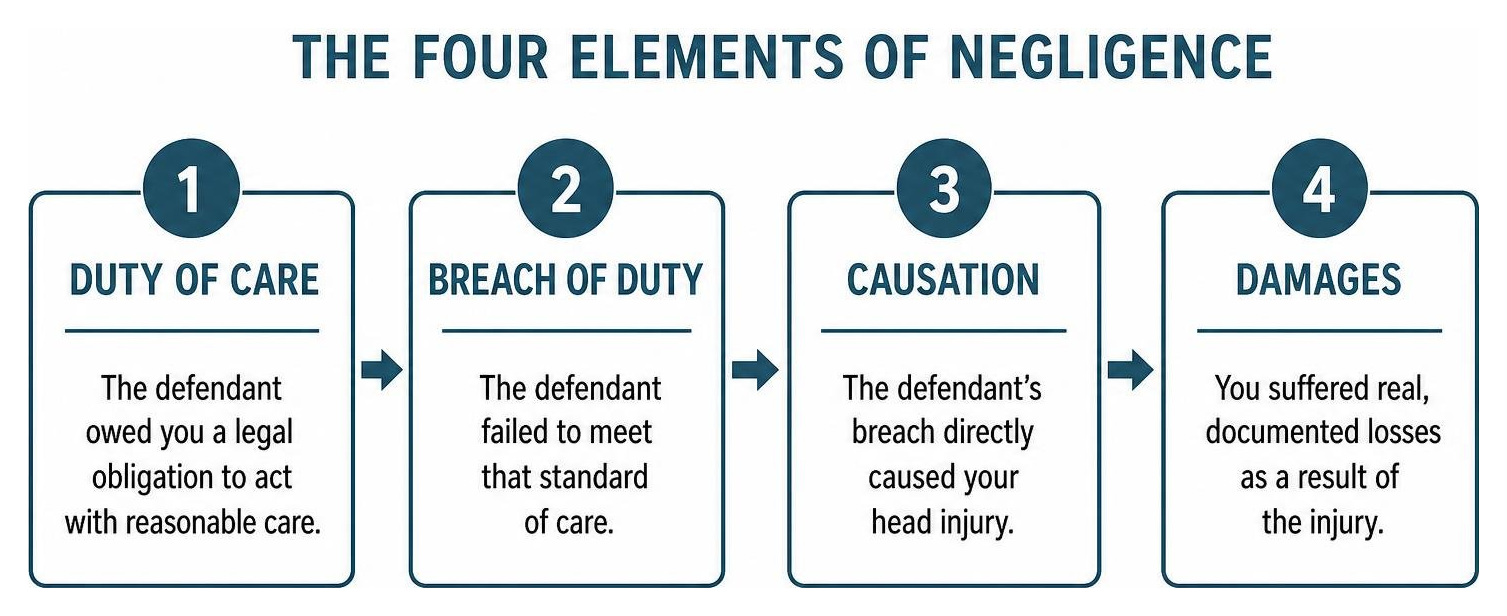
- Duty of Care: The defendant owed you a legal obligation to act with reasonable care. For example, drivers have a duty to follow traffic laws, and property owners have a duty to keep their premises safe.
- Breach of Duty: The defendant failed to meet that standard of care. This could mean speeding on I-45, ignoring a hazardous wet floor in a grocery store, or failing to provide safety harnesses on a construction site.
- Causation: The defendant’s breach of duty directly caused your head injury. We must show that you would not have suffered brain damage if the defendant had acted responsibly.
- Damages: You suffered real, documented losses as a result of the injury. This includes medical bills, lost wages, and emotional trauma.
Proving these elements requires deep legal knowledge and an organized approach. Working with the Best Brain Injury Lawyer in Houston ensures that your case is built on a solid foundation of evidence.
How a Houston Brain Damage Lawyer Builds Your Case
Building a compelling case for a brain injury requires gathering and analyzing multiple streams of evidence. Because brain injuries are often “invisible” to the untrained eye, insurance companies will frequently try to argue that your injury is not as severe as you claim.
To counter these tactics, we systematically collect:
- Accident and Police Reports: Official documents that establish the initial facts of the incident and identify any citations issued to the at-fault party.
- Witness Statements: First-hand accounts from bystanders who saw the accident occur, which can help establish fault.
- Comprehensive Medical Records: Detailed logs of your emergency room visit, diagnostic tests, surgical records, and ongoing physical therapy notes.
- “Before and After” Testimony: Statements from your family, friends, and coworkers. This testimony is incredibly powerful because it details how your personality, memory, and cognitive abilities have changed since the accident.
For additional strategies on gathering evidence and protecting your claim, read our Houston Brain Injury Lawyer Tips.
The Role of Advanced Neuroimaging and Medical Professionals
Standard medical imaging, such as a basic CT scan or MRI, is designed to detect major structural issues like skull fractures or large blood clots. However, these scans often fail to show microscopic damage, such as the tearing of individual brain fibers (known as Diffuse Axonal Injury).
To prove the true extent of your cognitive deficits, we work closely with leading medical professionals and utilize advanced diagnostic tools:
- Diffusion Tensor Imaging (DTI): This is an advanced type of MRI that maps the water diffusion pathways in the brain. It can detect subtle, microscopic damage to the brain’s white matter tracts, providing objective, visual proof of a TBI that standard scans miss.
- Neuropsychological Testing: Administered by a clinical neuropsychologist, these standardized tests evaluate your memory, attention span, problem-solving abilities, and emotional regulation. This provides clear, scientific data showing exactly how your brain function has been impaired.
- Life Care Planners: These medical professionals project your future care needs. They calculate the lifetime costs of your medications, physical therapy, cognitive rehabilitation, home modifications, and any necessary long-term nursing care.
Part 4: Calculating the True Value of a Brain Injury Claim
Because the lifetime cost of a traumatic brain injury can range from $85,000 to over $3 million, calculating the true value of your claim is one of the most critical steps in the legal process. You only get one chance to settle your case; if you accept a lowball offer from an insurance company, you cannot go back and ask for more money when your medical bills continue to pile up years down the road.
Securing representation from an experienced Catastrophic Injury Attorney Houston is essential to ensure every single dollar of your future needs is accounted for.
Types of Compensation Recoverable in Texas
Under Texas law, victims of brain injuries can pursue both economic and non-economic damages:
- Economic Damages (Objective Financial Losses):
- Past and Future Medical Bills: Emergency room care, surgeries, hospital stays, prescription medications, and medical equipment.
- Rehabilitation Costs: Physical therapy, occupational therapy, speech therapy, and cognitive rehabilitation.
- Lost Wages: The income you lost while recovering from your accident.
- Diminished Earning Capacity: If your injury prevents you from returning to your previous job or working at all, you are entitled to compensation for the income you would have earned over the remainder of your working life.
- Non-Economic Damages (Subjective, Non-Financial Losses):
- Pain and Suffering: Compensation for the physical pain and discomfort caused by your injury.
- Mental Anguish: The emotional toll of dealing with a permanent, life-altering injury, including depression, anxiety, and PTSD.
- Loss of Enjoyment of Life: If you can no longer participate in hobbies, sports, or family activities that once brought you joy.
- Physical Impairment: Compensation for the loss of physical or cognitive function.
How Shared Fault and Texas Laws Affect Your Recovery
When filing a personal injury claim in Texas, you must understand how the state’s modified comparative negligence laws can affect your final compensation. This rule is often referred to as the “51% Bar.”
Under the Texas Civil Practice and Remedies Code, you can recover damages as long as your share of responsibility for the accident is not more than 50%. However, your final compensation will be reduced by your percentage of fault. For example, if a jury determines that your total damages are $1 million, but finds that you were 20% at fault for the accident, your final recovery will be reduced by 20% to $800,000.
If your responsibility is found to be 51% or higher, you are completely barred from recovering any compensation under Texas law. Insurance adjusters know this rule well and will do everything they can to shift the blame onto you. This is why having the Best Brain Injury Lawyer in Houston on your side is so important — we protect you from unfair blame and fight to keep your liability percentage as close to zero as possible.
Frequently Asked Questions About Houston Brain Damage Claims
What is the statute of limitations for a brain injury lawsuit in Texas?
Under the Texas Civil Practice & Remedies Code § 16.003, there is a strict two-year deadline to file a personal injury lawsuit. This clock typically starts ticking on the exact day your accident occurred.
In very rare cases, the “discovery rule” may pause the clock if the injury was not immediately apparent and could not have been discovered through reasonable diligence. However, because brain injuries are highly complex, you should never delay seeking legal advice. Failing to file your lawsuit before the two-year deadline means you will permanently lose your right to seek compensation.
What should I do immediately after suffering a head injury in Houston?
Your health must always be your top priority. Take the following steps to protect both your physical well-being and your legal rights:
- Seek Emergency Medical Care: Go to the nearest emergency room immediately, or seek focused care at a dedicated facility like the Texas Institute for Rehabilitation and Research (TIRR) at Memorial Hermann in the Texas Medical Center.
- Document Your Symptoms: Keep a daily journal tracking your physical, cognitive, and emotional changes. Note any memory lapses, headaches, mood swings, or sleep disturbances.
- Follow Your Treatment Plan: Attend all follow-up appointments, physical therapy sessions, and cognitive evaluations. Failing to do so gives insurance companies an excuse to argue that your injury is not serious.
- Avoid Speaking to Insurance Adjusters: Insurance adjusters may contact you soon after the accident, acting friendly and asking for a recorded statement. Do not provide one. They are looking for any statement they can use to downplay your injuries or shift the blame. Let your attorney handle all communications.
How much does it cost to hire a Houston brain damage lawyer?
Hiring a personal injury attorney should never add to your financial stress. At our firm, we handle all brain injury cases on a contingency fee basis.
This means:
- There are no upfront, out-of-pocket costs for you to hire us.
- We advance all litigation expenses, including filing fees, medical record retrieval, and fees for independent consultants.
- We only get paid if we successfully recover compensation for you through a settlement or a court verdict.
- Our fee is a pre-agreed percentage of your final recovery. If we do not win your case, you owe us absolutely nothing.
Protecting Your Lifelong Rights and Well-Being
When a severe brain injury strikes, it does not just impact the victim — it alters the entire family dynamic. In many cases, a person with severe brain damage may lose the cognitive capacity to make their own medical, financial, or legal decisions. This creates a highly complex situation where personal injury law directly intersects with probate law.
At WestLoop Law Firm, we offer a unique approach to these devastating situations. Because our legal practice handles both personal injury and probate law, we are uniquely positioned to protect your family on all fronts.

If your loved one is unable to legally represent themselves, we can help you establish a legal guardianship so you have the authority to make decisions on their behalf and manage their legal claim. Furthermore, we can establish special needs trusts to ensure that any financial settlement or jury verdict is managed properly, protecting their eligibility for vital government benefits like Medicaid while providing for their long-term care.
You do not have to carry this heavy burden alone. If you or a family member has suffered a life-altering head injury, reach out to a skilled personal injury lawyer in Houston today. Contact us for a free, confidential consultation, and let us help you build a secure path forward.