 Skip to content
Houston Oil Rig Injury Lawyers: Protect Your Rights 2025
Why Offshore Workers Need Dedicated Legal Representation
Houston oil rig injury lawyers help injured offshore workers recover compensation under complex maritime laws, which differ greatly from standard personal injury claims. If you’ve been injured on an oil rig, platform, or offshore vessel, you need attorneys who understand the Jones Act, LHWCA, and other federal statutes that protect your rights.
What Houston Oil Rig Injury Lawyers Do for You:
- Steer Maritime Law – Apply federal statutes like the Jones Act, LHWCA, and OCSLA to your case.
- Maximize Compensation – Pursue damages for medical costs, lost wages, pain and suffering, and future care.
- Fight Large Corporations – Stand up to oil companies and their insurance teams who try to minimize payouts.
- Prove Negligence – Investigate accidents, hire professionals, and build a strong case.
- Work on Contingency – You pay no upfront costs and only owe a fee if we win your case.
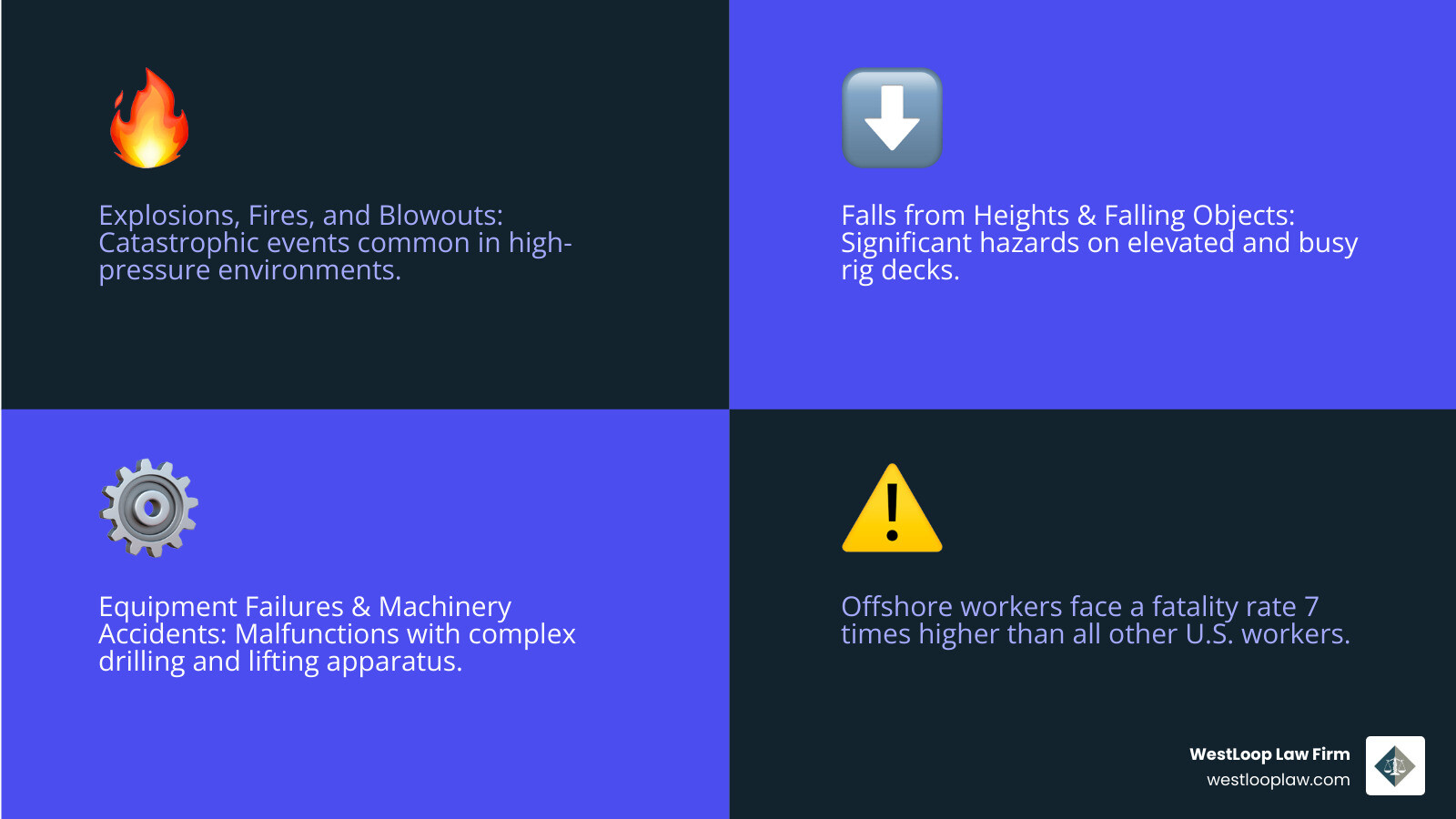
The Deepwater Horizon disaster in 2010, where 11 people were lost after a blowout, is a stark reminder of the dangers offshore workers face daily: volatile substances, heavy machinery, and isolated work environments. The fatality rate for offshore workers is seven times higher than for all U.S. workers, with hazards like explosions, equipment failures, and falls from dangerous heights.
Houston is the hub of the U.S. offshore oil industry, with thousands of workers in the Gulf of Mexico. When accidents happen, injured workers need lawyers who understand both the physical dangers and the legal complexities. Maritime law offers specific protections, but these laws are complicated. Your eligibility for compensation depends on your job, where you were injured, and the cause of the accident. Oil corporations have legal teams dedicated to minimizing what they pay. You need experienced advocates on your side.
Houston oil rig injury lawyers definitions:
The Dangers of Offshore Work and Common Injuries
Working on an oil rig means spending weeks surrounded by massive machinery, volatile chemicals, and the unpredictable ocean, often during 12-hour shifts. It’s physically demanding work where a single mistake can lead to a life-changing injury.

The deck of a platform is often slick with oil and seawater, making falls a constant risk. Workers steer heavy drilling equipment, overhead cranes, and high-pressure pumps. The air itself can be filled with flammable gases.
Long duty hours lead to fatigue, slowing reflexes and clouding judgment, which is when accidents often occur. Extreme weather in the Gulf of Mexico adds another layer of danger, as high winds and rough seas can destabilize platforms and turn equipment into projectiles. Finally, the immense pressure to produce can lead companies to prioritize profits over safety, rushing jobs and cutting corners on protocols.
Common Causes of Oil Rig Accidents
Most oil rig accidents are preventable and stem from negligence, whether it’s an employer cutting corners, defective equipment, or inadequate training.
- Equipment failure: When cables snap, valves malfunction, or drilling apparatus breaks, workers can be caught in machinery, struck by debris, or exposed to chemicals. These failures are often due to a lack of proper maintenance.
- Explosions and fires: Rigs handle highly flammable hydrocarbons. A gas leak or spark can trigger an explosion that engulfs the platform, leaving workers with no escape but the ocean.
- Blowouts: These occur when underground pressure forces oil and gas to the surface uncontrollably. The Deepwater Horizon disaster showed the catastrophic potential of a blowout.
- Inadequate training and ignored safety protocols: Untrained workers may not recognize hazards or operate machinery safely. Companies sometimes skip inspections or pressure workers to take dangerous shortcuts.
- Falling objects: On multi-level platforms, a dropped tool or unsecured pipe can become a deadly projectile, causing traumatic head injuries.
Human error is often a factor, but it’s usually a symptom of larger issues like exhaustion or unsafe conditions. When you’re injured because of another’s carelessness, houston oil rig injury lawyers can investigate the true cause. Our Houston Offshore Injury Attorney team knows how to uncover the facts.
Types of Injuries Sustained by Oil Rig Workers
Injuries on oil rigs are often catastrophic, affecting the worker and their entire family.
- Severe burns: Explosions and fires cause devastating burns. The remote location of rigs delays access to advanced burn units, worsening outcomes.
- Traumatic brain injuries: Falls, falling objects, and explosions can cause TBIs, leading to permanent cognitive and personality changes.
- Spinal cord injuries: These injuries, often from falls or being crushed, can result in partial or complete paralysis.
- Amputations and crush injuries: Limbs can be caught in machinery or pinned by heavy equipment, sometimes requiring surgical amputation or resulting in traumatic dismemberment.
- Toxic chemical exposure: Exposure to hazardous substances can cause chemical burns, respiratory damage, poisoning, and long-term illnesses like cancer.
- Wrongful death: Tragically, many accidents are fatal, leaving families to cope with immeasurable emotional and financial loss.
Other common injuries include serious fractures, internal organ damage, hearing loss, and psychological trauma like PTSD. If you or a loved one has suffered a catastrophic injury on an oil rig, you need experienced legal help.
Navigating Maritime Law: Your Legal Rights After an Injury
Injuries on an oil rig fall under maritime law, a distinct federal legal system, not standard state-level personal injury or workers’ compensation law. This is a critical distinction because maritime law can allow for more comprehensive compensation, including damages for pain and suffering.

However, maritime law is complex. Your eligibility for compensation depends on your job classification (e.g., “seaman”), the location of the injury (e.g., a fixed platform vs. a moving vessel), and the nature of the waters (“navigable waters”). These factors determine which federal statute applies to your case.
Misclassifying your case can lead to filing under the wrong law and losing your right to compensation. This is why you need Houston oil rig injury lawyers who focus on maritime law to ensure your claim is handled correctly from the start.
Key Laws Protecting Injured Offshore Workers
Several federal laws protect offshore workers, and the right one must be applied to your case.
- The Jones Act: This law protects “seamen”—workers who spend a significant amount of time on a vessel in navigation. It allows you to sue your employer for negligence and recover damages for medical bills, lost wages, and pain and suffering. It also provides for “maintenance and cure.”
- The Longshore and Harbor Workers’ Compensation Act (LHWCA): The LHWCA covers maritime workers who are not seamen, such as harbor workers and ship repairers. It provides workers’ compensation-style benefits and allows you to sue negligent third parties (e.g., equipment manufacturers).
- The Outer Continental Shelf Lands Act (OCSLA): OCSLA extends LHWCA protections to workers on fixed platforms located on the Outer Continental Shelf (federal waters). It provides medical and wage benefits and the right to sue negligent third parties.
- The Death on the High Seas Act (DOHSA): DOHSA allows families to recover financial losses when a worker dies in an accident more than three miles from shore.
- Maintenance and Cure: This is a fundamental principle of maritime law requiring employers to pay for an injured seaman’s medical care (cure) and basic living expenses (maintenance) while they recover, regardless of who was at fault.
Each law has different requirements and deadlines. Our Workplace Injury Lawyer team understands these distinctions and can apply the correct law to maximize your recovery.
Who is Eligible for Compensation?
Eligibility is based on your duties and work location, not just your job title.
- Seamen: A seaman is a worker with a substantial connection to a vessel in navigation (typically spending at least 30% of their time on a vessel). This can include drill ship workers and others who live or travel on vessels. Seamen are covered by the Jones Act.
- Longshoremen and Harbor Workers: These workers load, unload, and repair ships. They are covered by the LHWCA if their work is on or near navigable waters.
- Oil Rig Workers on Fixed Platforms: If you work on a platform attached to the seabed in federal waters, you are likely not a seaman but are covered by OCSLA, which provides LHWCA benefits.
Worker classification can be complex, and employers sometimes misclassify workers to limit their liability. Experienced Houston oil rig injury lawyers will analyze the facts of your employment to determine which laws protect you and ensure you pursue all available compensation.
Securing Your Future: Compensation for Oil Rig Injuries
After a serious oil rig accident, financial compensation is crucial for rebuilding your future. It provides the resources for medical care, family support, and quality of life. Under Texas law, you can pursue “compensatory damages” to cover your losses.

Compensation is typically divided into two categories:
- Economic Damages: These are your measurable financial losses. This includes all past and future medical expenses (surgeries, rehabilitation, medication, etc.) and lost wages. We also calculate your loss of earning capacity if your injury prevents you from returning to your previous job or forces you into lower-paying work.
- Non-Economic Damages: These compensate for non-financial suffering. This includes pain and suffering, mental anguish (anxiety, depression, PTSD), and loss of enjoyment of life if your injuries prevent you from participating in hobbies and activities you once loved.
In cases of extreme employer negligence, punitive damages may be awarded to punish the defendant and deter similar conduct.
Calculating the full value of a claim is complex. It requires projecting future medical and financial needs. Houston oil rig injury lawyers work with economists, vocational professionals, and medical consultants to build a complete picture of your losses and fight for the maximum compensation you deserve.
Long-Term Consequences for Workers and Families
A severe oil rig injury impacts the entire family.
- Permanent Disability: A life-changing injury like paralysis or a TBI can mean the end of a career and a profound loss of identity. Many injured workers can never work again.
- Chronic Pain: Constant pain affects every aspect of life, from sleep to relationships, and often requires lifelong management.
- Psychological Trauma: PTSD, depression, and anxiety are common after traumatic accidents, making it difficult to function and connect with loved ones.
- Financial Strain: The loss of the primary breadwinner’s income, combined with mounting medical bills, creates immense stress for the entire family.
- Family Dynamics: Spouses often become full-time caregivers, and the emotional toll can strain relationships. Loss of consortium is the legal term for the negative impact on a marital relationship.
Securing comprehensive compensation is vital for the stability of the entire family. As your Houston Workplace Injury Lawyer, we fight not just for you, but for your family’s future.
Why You Need Experienced Houston Oil Rig Injury Lawyers
After an oil rig accident, you face a difficult fight against powerful oil companies and their legal teams, whose goal is to pay as little as possible. You should not face this fight alone.

Hiring knowledgeable legal representation is critical. Proving negligence under maritime law requires a deep investigation into safety records, maintenance logs, and witness testimony—evidence that companies often try to hide. Navigating the complex web of the Jones Act, LHWCA, and OCSLA is nearly impossible without an experienced guide. A simple mistake, like missing a deadline, can forfeit your right to compensation.
Insurance adjusters will try to get you to accept a quick, lowball settlement before you know the full extent of your injuries. Once you sign, your rights are gone. Experienced houston oil rig injury lawyers counter these tactics and fight for full compensation covering your immediate and long-term needs.
What is the Role of Houston Oil Rig Injury Lawyers?
Our firm handles every aspect of your case so you can focus on recovery.
- Investigate and Gather Evidence: We launch an immediate investigation to secure accident reports, company records, and witness statements before evidence disappears.
- Hire Professional Witnesses: We work with accident reconstructionists, industrial safety consultants, and medical professionals to build a strong case and prove the full extent of your damages.
- Calculate Full Damages: We carefully calculate all economic and non-economic damages, including future medical care and lost earning capacity, to ensure you receive fair compensation.
- Negotiate and Litigate: We handle all communications with insurance companies and opposing counsel to negotiate a fair settlement. If a fair offer is not made, we are fully prepared to litigate your case aggressively in court.
Throughout the process, we protect your rights and guide you. This is Why You Need a Houston Personal Injury Lawyer on Your Side. Our Houston Offshore Injury Attorney team has the in-depth knowledge to handle your case.
What to Do Immediately After an Oil Rig Accident
The steps you take right after an accident are crucial for your health and your legal claim.
- Report the injury immediately to your supervisor in writing. Get a copy of the report.
- Seek medical attention right away. This creates a medical record linking your injuries to the accident. Tell the doctor exactly how you were hurt.
- Document everything. Take photos of the scene and your injuries. Get contact information for any witnesses. Keep a journal of your symptoms and treatment.
- Don’t sign anything from your employer or an insurance company without legal advice. You could be signing away your rights.
- Don’t give a recorded statement to an insurance adjuster. They are trained to use your words against you.
- Contact an attorney as soon as possible. We can protect you from mistakes and preserve critical evidence.
Time is critical. For more guidance, see our FAQS Houston Injury Lawyers Victim Should Know. Don’t wait to get the help you need.
Frequently Asked Questions about Oil Rig Injury Claims
We understand you have many questions. Here are answers to some common inquiries from injured oil rig workers.
How much does it cost to hire an oil rig injury lawyer?
We work on a contingency fee basis, meaning you have no upfront costs.
- No Upfront Fees: You pay nothing out of pocket to start your case.
- Pay Only If You Win: We only get paid if we successfully recover compensation for you. If we don’t win, you owe us nothing.
- Percentage of Recovery: Our fee is a pre-agreed percentage of the final settlement or verdict.
- Free Consultation: We offer a free, no-obligation consultation to discuss your case and our fee structure.
How long do I have to file a lawsuit in Texas?
The deadline to file a lawsuit is called the “statute of limitations.” Missing it means you lose your right to compensation.
- General Texas Deadline: Most personal injury claims in Texas have a two-year deadline from the accident date, per Texas law.
- Maritime Law Deadlines: For oil rig injuries, federal maritime laws have different deadlines. The Jones Act, for example, typically allows three years to file a claim.
- Act Quickly: Because deadlines vary, it is critical to contact experienced Houston oil rig injury lawyers as soon as possible to determine the exact deadline for your case.
Will my case go to trial?
Most cases do not go to trial.
- Settlement is Common: The vast majority of personal injury claims are resolved through settlement negotiations. Defendants often prefer to avoid the risk and cost of a trial.
- Prepared for Trial: We prepare every case as if it will go to trial. This strengthens our negotiating position, as the other side knows we are ready to fight in court.
- Your Decision: The final decision to accept a settlement or go to trial is always yours. We provide the advice you need to make an informed choice.
Take Control of Your Recovery: Contact a Houston Injury Lawyer Today
Working on an oil rig carries inherent dangers, and when an accident occurs, the consequences can be life-altering. You’ve learned about the common hazards, the severe injuries often sustained, and the complex web of maritime laws designed to protect workers like you. You also now understand the critical role that experienced legal representation plays in navigating these challenges and securing the compensation you deserve.
At WestLoop Law Firm, we are more than just lawyers; we are your advocates. With our deep understanding of both personal injury and probate law, we bring a unique and comprehensive approach to your case, ensuring effective advocacy for every aspect of your claim. We are committed to fighting for the rights of injured oil rig workers in Houston and across the Gulf Coast.
Don’t let the complexities of maritime law or the tactics of large corporations intimidate you. Take the first step towards justice and securing your future.
Contact us today for a free, no-obligation case evaluation. Let our experienced Houston oil rig injury lawyers review your situation, explain your legal options, and help you take control of your recovery.