 Skip to content

Who Is at Fault in a Rear-End Crash in Houston?
In most cases, the rear driver is responsible because Texas drivers must leave enough space to stop safely. Fault can change when the front driver brake-checks, reverses, or cuts into traffic without room. Evidence from the scene and the crash report usually determines the outcome.
What to do first after a rear-end crash in Houston:
- Call 911 and ask responding officers to complete a Texas Peace Officer’s Crash Report, commonly called a CR-3.
- Photograph vehicle damage, lane positions, skid marks, traffic signals, and weather conditions before vehicles move.
- Get witness names and contact details, then seek medical care promptly if pain, numbness, or stiffness develops.
- Avoid a recorded statement or broad medical release for the other driver’s insurer before getting legal advice.
- As a final step, contact a Houston personal injury attorney to discuss your options and next steps.
Texas drivers must operate at a safe speed and keep enough distance to avoid a collision. Texas Transportation Code Section 545.062 supports the practical presumption that the trailing driver may be negligent after a rear-end impact on I-45, I-10, Loop 610, or Beltway 8.
That presumption is not automatic liability. The CR-3, vehicle damage, traffic-camera footage, witness statements, and phone records can show whether the rear driver was following too closely, distracted, speeding, or unable to stop for predictable Houston traffic.
A rear end accident lawyer houston or Houston rear-end collision attorney can help preserve evidence and assess how the facts apply to a specific claim. For a related overview, see who is at fault after a rear-end collision.
What Does Following Too Closely Mean in Texas?
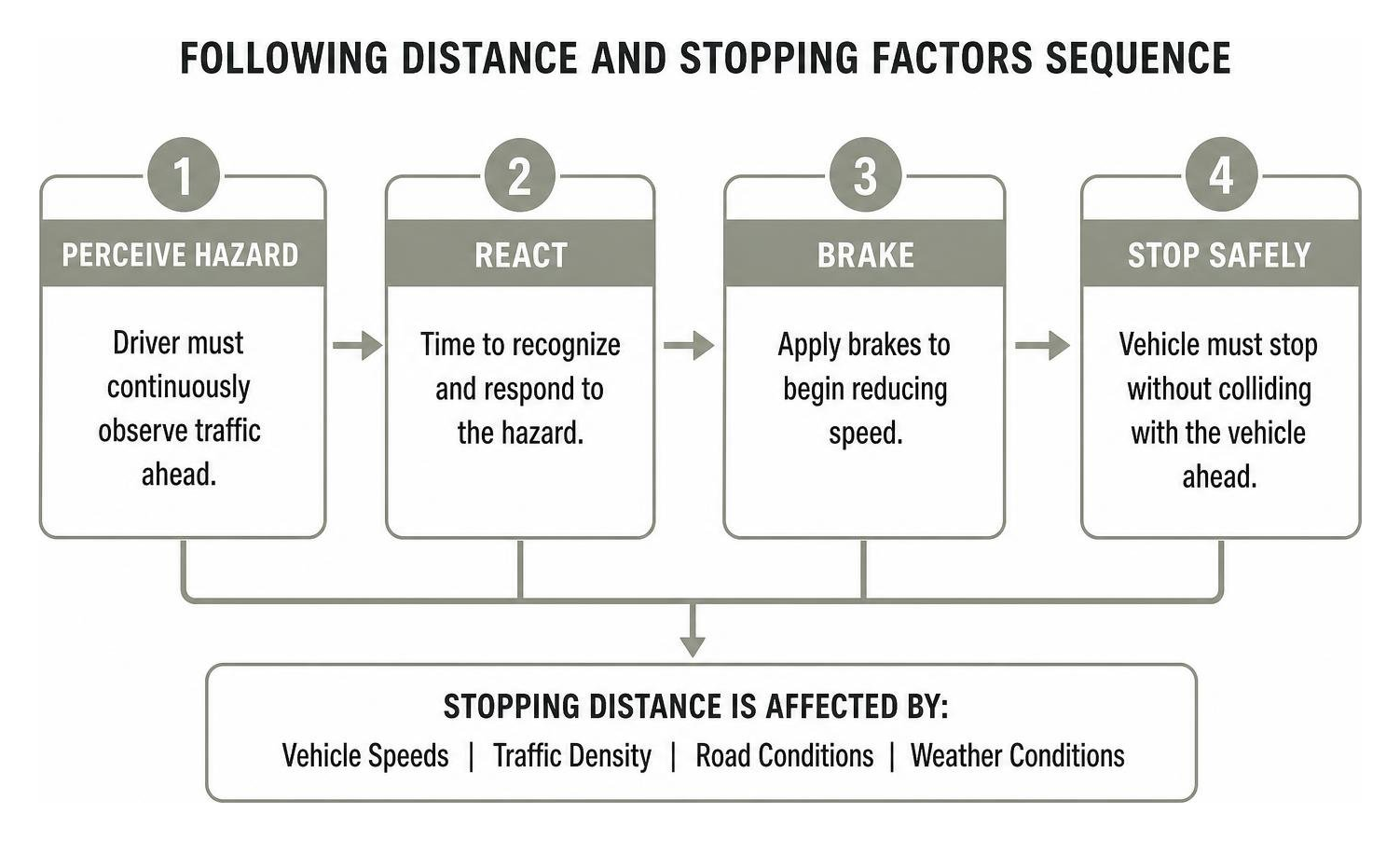
Texas does not set one fixed following distance for every road. The legal question is whether a reasonably careful driver had enough space to stop under the traffic, speed, visibility, and road conditions present at the time.
When Can the Front Driver Share Fault in a Houston Rear-End Crash?
The front driver can share fault when their conduct created an unreasonable hazard that a careful rear driver could not reasonably avoid. Examples may include reversing into traffic, making an unsafe lane change, driving with nonworking brake lights at night, or intentionally brake-checking without a road-related reason.
Texas uses proportionate responsibility under Texas Civil Practice and Remedies Code Chapter 33. The key number is 51 percent: a claimant who is more than 50 percent responsible cannot recover damages from the other party.
Insurers may argue that a lead driver stopped suddenly or cut into a lane. Those claims still require evidence. A normal slowdown near the Katy Freeway, an intersection, or heavy traffic on the Westpark Tollway does not excuse a rear driver who had time and distance to react.
In a chain-reaction crash, investigators should identify the first impact and the direction of each vehicle’s movement. Damage patterns, event data recorders, and nearby camera footage can help distinguish a push-in collision from a separate double impact. These facts also shape comparative negligence in Houston assessments.
A police report is important, but it is not the only evidence. Repair estimates, bumper-height comparisons, cell-phone records, and independent witness statements may confirm whether a driver had a clear view, adequate braking distance, and a reasonable opportunity to avoid impact.
For additional guidance on shared fault, see understanding comparative negligence in Houston.
What Defenses Can Rear Drivers Raise Under Texas Law?
Rear drivers may argue that a sudden emergency, a phantom vehicle, or an unavoidable event caused the crash. These defenses apply only in limited situations because routine congestion, sudden braking, and changing traffic conditions are common and foreseeable on Houston roads.

A sudden-emergency defense generally requires an unexpected event that the driver did not cause and a reasonable response after it occurred. A driver who was speeding, distracted, or following too closely usually cannot turn routine traffic on I-45 or Loop 610 into an emergency defense. Determining fault and proving negligent driving depends on the facts available from the scene.
Defendants may also try to blame an unknown driver. They need factual support for that claim, such as a description, a video recording, witness testimony, or physical evidence that shows a third vehicle affected the crash.
An insurer may use the phrase “unavoidable accident” to suggest that no driver was negligent. The evidence still matters: a reasonable driver is expected to adjust for rain, traffic backups, limited visibility, and the predictable stop-and-go conditions around Houston interchanges.
Preserving the CR-3 report, witness accounts, dashcam footage, and photographs early can make it harder for an insurer to recast a predictable rear-end crash as an unavoidable accident.
What Compensation and Insurance Coverage May Apply After a Rear-End Crash?
A person injured in a rear-end crash may seek medical expenses, lost income, pain, physical impairment, and property damage when another driver’s negligence caused the loss. The value of a claim depends on the injuries, available coverage, liability evidence, treatment needs, and the effect on daily life.
Texas policies commonly include Personal Injury Protection, or PIP. Unless it was rejected in writing, Texas auto insurers must offer at least $2,500 in PIP benefits, which can help with medical costs and part of lost income regardless of fault.
Liability coverage, uninsured or underinsured motorist coverage, and commercial policies may also matter. That is especially true when a delivery vehicle, rideshare vehicle, or company truck was involved, or when the at-fault driver has limited coverage. When an unknown driver may have contributed, In re Gilberto Gonzales (619 S.W.3d 259) explains Texas requirements for attributing fault to that person.
Keep records of emergency care, follow-up treatment, work absences, prescriptions, repair estimates, and any communications from insurers. A dated recovery journal can also document how pain and mobility limits affect routine work and family activities. Clear documentation helps show both the scope of the loss and the connection between the rear-end collision and the claimed injuries.
Most Texas personal-injury claims must be filed within two years of the crash under Texas Civil Practice and Remedies Code Section 16.003. Prompt medical care and document collection help connect injuries to the collision and preserve options before that deadline.
Frequently Asked Questions About Houston Rear-End Collisions
Is the rear driver always at fault?
No. The rear driver is often at fault because drivers must leave a safe following distance, but the lead driver may share responsibility for conduct such as unsafe reversing, an abrupt cut-in, defective brake lights, or intentional brake-checking.
What evidence matters most after a rear-end crash, including a Houston jury awarded $67,014.82 in motor vehicle negligence damages example?
The CR-3 report, scene photographs, vehicle damage, witness accounts, dashcam video, traffic-camera footage, and medical records can clarify how the collision happened. Collecting that evidence quickly is important because camera footage and witness memories can disappear. A Houston jury awarded $67,014.82 in motor vehicle negligence damages in one reported case, but every injury claim turns on its own evidence and coverage.
What if a third driver caused the collision and left the scene?
An unidentified driver can complicate fault, but a party blaming a phantom driver needs factual support. Vehicle descriptions, video, independent witnesses, and the timing of the impacts may show whether an unknown driver actually caused or contributed to the crash.
How long do I have to bring a Texas injury claim?
The usual deadline is two years from the crash date, although specific circumstances can affect the analysis. Do not wait for an insurer to decide fault before seeking advice about your legal options.
Who can I contact about a Houston rear-end crash claim and calculating car accident damages?
For more information about calculating car accident damages, review the related guide. Contact Westloop Law Firm to discuss the circumstances of a rear-end crash and the records that may help support a claim. A review can focus on fault, available insurance, medical documentation, and the next practical steps.