 Skip to content

What Should I do After an Accident in Houston, Texas at the Scene?
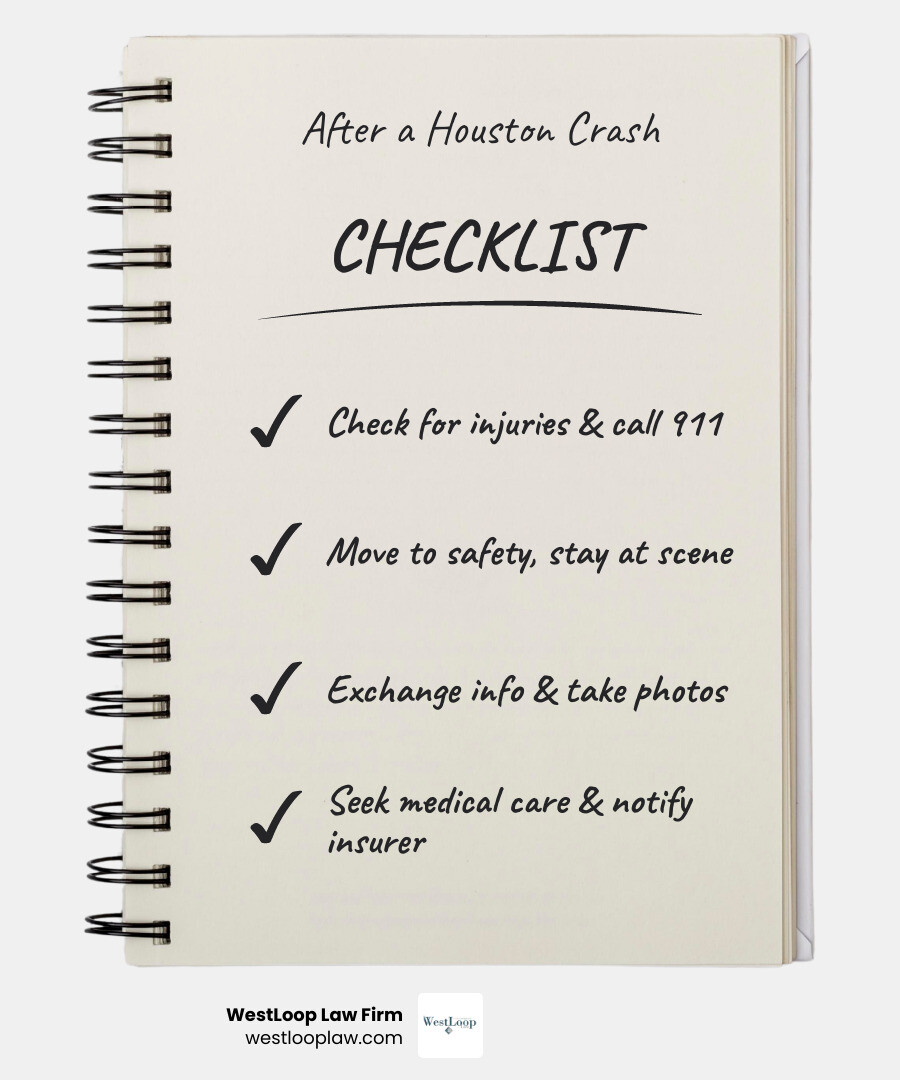
What to do first:
- Check for injuries and call 911. Move out of traffic if it is safe.
- Stay at the scene. Exchange contact and insurance information.
- Photograph the vehicles, road, and any visible injuries. Get witness contact details.
- Seek medical care promptly, even if you feel fine.
- Notify your insurer and save your photos, medical records, and receipts.
Get to safety, call 911, document what happened, and get medical care before negotiating with insurance. Pain can appear hours after a crash, whether it happened on Loop 610 or a neighborhood street. Before accepting an insurance settlement, consider speaking with a car accident lawyer in Houston about your injuries and costs.
Helpful related terms:
At the scene of a crash, prioritize physical safety, dial 911 immediately, and remain where you are until law enforcement arrives. Houston roads like Interstate 45 and Interstate 10 carry high-speed traffic, making rapid stabilization of the scene essential. Taking the correct initial measures preserves your legal rights and ensures medical responders reach injured parties quickly.
The Houston Police Department or Harris County Sheriff’s Office will dispatch officers to secure the roadway, conduct an initial investigation, and clear hazards. Following established steps to take after a Houston car wreck helps you maintain composure during an overwhelming event. We recommend keeping your focus entirely on physical safety, objective communication, and detailed evidence collection from the moment the collision occurs.
Immediate Safety and Legal Obligations: What Should I do After an Accident in Houston, Texas?
Immediately turn on your hazard lights to warn oncoming drivers on busy corridors like Beltway 8 or Highway 290. If the vehicles are drivable and no severe injuries have occurred, move them safely onto the shoulder to prevent secondary collisions.
Under Texas Transportation Code § 550.021, any motorist involved in a collision resulting in injury, death, or vehicle damage must immediately stop and remain at the scene. Fleeing the scene carries severe criminal penalties, ranging from misdemeanor charges to second-degree felonies. Stay at the location, render reasonable aid to injured persons, and wait until the responding officer completes their investigation.
What Evidence and Driver Information Should You Gather?
Gathering comprehensive evidence at the scene provides the foundation for any future injury or insurance recovery claim. Use your smartphone to capture wide-angle shots of the crash area, road conditions, skid marks, traffic signals, and vehicle damage.

Collect the other driver’s full name, phone number, driver’s license number, auto insurer name, and policy number. Additionally, obtain the names and contact information of any eyewitnesses who saw the collision occur. Gathering the correct documents for car accidents in Houston ensures that crucial details are not lost once the vehicles are towed away.
Why Is Immediate Medical Care Critical Even If You Feel Uninjured?
Immediate medical care identifies hidden internal trauma, concussions, and soft-tissue damage that may not cause immediate pain due to shock. Seeking an evaluation within hours creates a clear medical record linking your physical condition directly to the crash. Delaying treatment gives auto insurers an opportunity to argue that your injuries arose from an unrelated event.
Emergency rooms such as Memorial Hermann Texas Medical Center or Ben Taub Hospital routinely evaluate collision survivors for latent trauma. Knowing what to do if you are injured after a car accident in Houston TX helps you protect your physical health while simultaneously building an unassailable record of your damages.
Delayed Symptoms and Medical Evaluations: What Should I do After an Accident in Houston, Texas?
During a traumatic collision, the human body releases a surge of adrenaline and endorphins that temporarily blocks pain signals. As these hormones subside over 24 to 72 hours, severe stiffness, inflammation, and neurological symptoms frequently emerge.
Conditions such as whiplash, herniated discs, and mild traumatic brain injuries often present subtle initial indicators that quickly worsen without medical intervention. A clinical evaluation can detect micro-tears in muscles, subtle spinal misalignments, or intracranial pressure before permanent complications develop. Obtaining an immediate professional assessment ensures you receive an accurate diagnosis and an effective treatment plan.
How Early Medical Records Protect Your Insurance Claim
Insurance adjusters scrutinize the timeline between the motor vehicle collision and your first documented healthcare visit. A gap in care of even a few days provides insurance defense teams with leverage to dispute the origin of your injury.
Diagnostic reports, imaging scans, and physician intake notes from Harris County healthcare providers serve as vital evidence in your case. These objective documents establish the physical severity of your condition, the necessity of prescribed therapies, and the economic cost of your rehabilitation.
What Should You Say—and Avoid Saying—to Insurance Adjusters?
When speaking with insurance adjusters, provide only basic, objective facts regarding the time, location, and vehicles involved without discussing fault or injuries. Never admit guilt, apologize, or agree to give a recorded statement without legal counsel present. Adjusters use polite inquiries to elicit statements that can diminish the financial value of your claim.
Understanding how to handle insurance companies after a car accident protects you from aggressive settlement tactics designed to minimize corporate payouts. Keep all interactions brief, polite, and strictly factual until you have received appropriate legal guidance.
Speaking with Police Versus Recorded Statements to Insurers
When answering questions from investigating police officers, state facts accurately without guessing about speeds, distances, or mechanical factors. The resulting Texas Peace Officer’s Crash Report provides an objective municipal record of the incident.
In contrast, you have no legal obligation to provide a recorded statement to the other motorist’s insurance company. Adjusters often phrase questions deceptively to make you appear uncertain, negligent, or uninjured. Politely decline recorded interviews until you have consulted an attorney who can manage third-party communications on your behalf.
Critical Mistakes in the First 72 Hours
The choices you make during the initial three days following an accident significantly affect the outcome of your claim. Avoiding common procedural errors ensures that your legal standing remains secure.
- Apologizing at the Scene: Saying “I am sorry” can be misconstrued by insurers as an admission of legal liability.
- Posting on Social Media: Insurance investigators monitor platforms for photos or statements to argue that you are uninjured.
- Accepting Quick Settlement Checks: Early cash offers rarely account for long-term medical care, lost earning capacity, or future therapy.
- Signing Broad Medical Authorizations: Blanket releases allow insurers to comb through your entire medical history to find pre-existing conditions.
- Signing Premature Repair Releases: Finalizing property damage paperwork prematurely can inadvertently waive additional structural damage claims.
What Does Texas Law Say About Your Rights and Fault After a Crash?
Texas law entitles injured motorists to pursue financial compensation for medical expenses, property repairs, lost wages, and pain and suffering from negligent drivers. Victims may pursue compensation through third-party insurance claims or formal lawsuits filed in courts such as the Harris County Civil Courts at Law. Understanding how to file an injury claim in Houston ensures compliance with state legal standards.
Motorists in Texas can also access first-party benefits such as Personal Injury Protection (PIP) through their own auto insurance policies. PIP covers medical costs and lost income regardless of who caused the collision, unless the coverage was formally rejected in writing.
Texas Modified Comparative Fault and the Two-Year Statute of Limitations
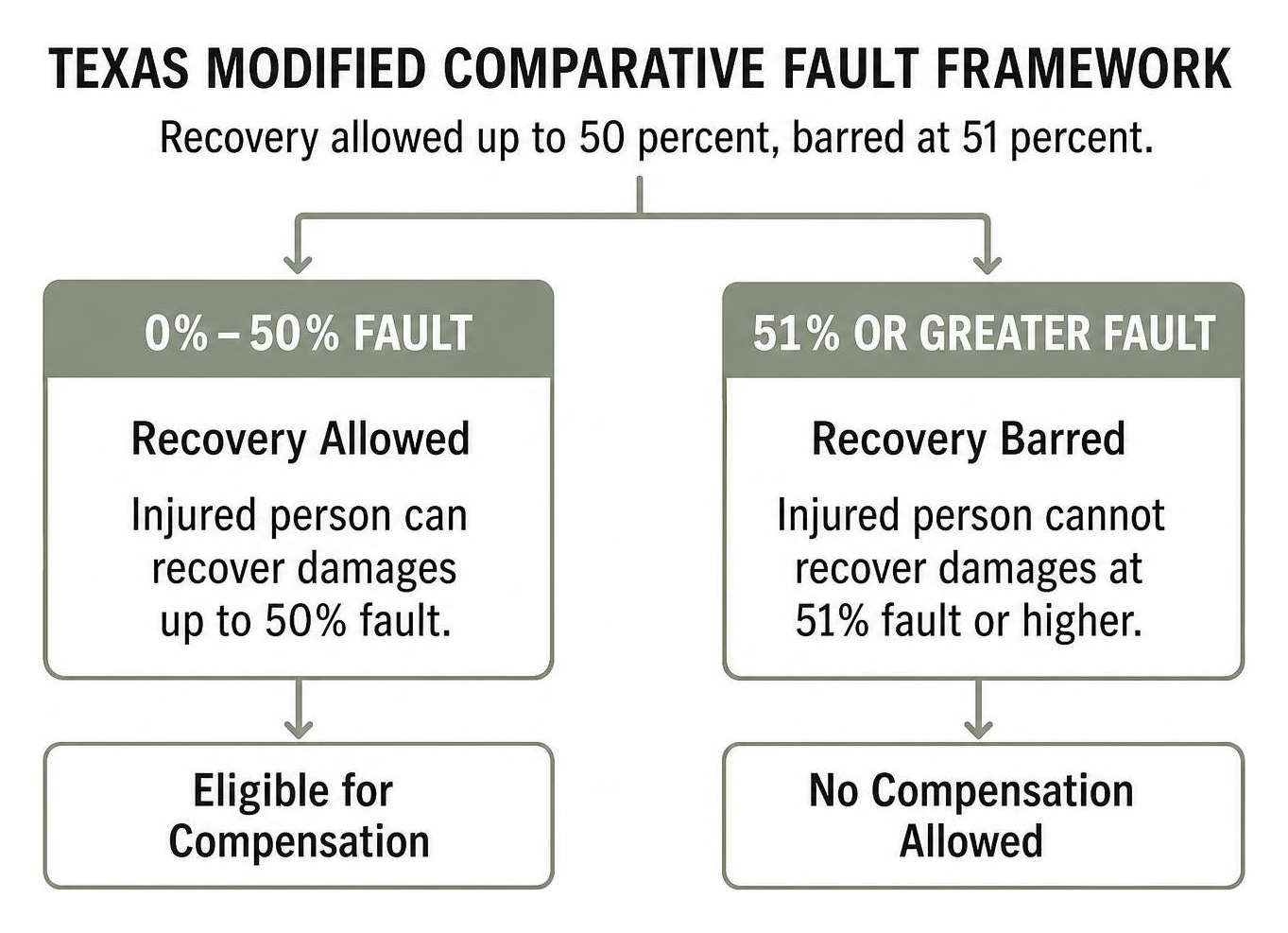
Texas operates under a modified comparative fault rule governed by Texas Civil Practice & Remedies Code § 33.001. Under this 51% bar rule, an injured person can recover damages only if their proportion of responsibility is 50% or less. If your assigned fault reaches 51% or higher, state law bars you from receiving any compensation.
Under Texas Civil Practice & Remedies Code § 16.003, you must file a personal injury lawsuit within two years of the accident date. Missing this statutory deadline generally extinguishes your right to pursue compensation in court.
| Assigned Fault Percentage | Total Proven Damages | Recoverable Settlement Amount | Claim Status |
|---|---|---|---|
| 0% Fault | $100,000 | $100,000 | Full Recovery |
| 20% Fault | $100,000 | $80,000 | Reduced Proportional Recovery |
| 50% Fault | $100,000 | $50,000 | Maximum Allowable Shared Fault |
| 51% or Greater | $100,000 | $0 | Complete Bar to Recovery |
Dealing with Uninsured Motorists or Hit-and-Run Drivers
Texas requires drivers to carry minimum liability limits of $30,000 per injured person, $60,000 per accident for bodily injury, and $25,000 for property damage. However, serious collisions on high-speed freeways often cause medical bills that exceed these statutory minimums, and many motorists carry no insurance at all.
If an uninsured or hit-and-run driver hits you, your Uninsured/Underinsured Motorist (UM/UIM) coverage can pay for medical bills, vehicle damage, and related losses. When the at-fault driver flees the scene, prompt notification to law enforcement and your insurer enables your UM/UIM policy to protect your financial recovery.
Frequently Asked Questions About Houston Car Accidents
Do I have to give a recorded statement to the other driver’s insurance company?
No, you are under no legal obligation to provide a recorded statement to the opposing motorist’s insurance company. These interviews are structured to generate statements that can reduce your financial recovery. Refer the adjuster to your legal representative instead.
How long do I have to file a car accident lawsuit in Texas?
Under Texas law, you have two years from the exact date of the collision to file a personal injury lawsuit. Failing to file your claim within this window typically results in a dismissal of your case by the civil court system.
What should I do if the at-fault driver has no auto insurance?
If the liable driver lacks auto insurance or flees, you can file a claim under your policy’s Uninsured Motorist (UM) or Personal Injury Protection (PIP) provisions. Your insurer then covers your medical treatment and vehicle repairs up to your purchased policy limits.
Protecting Your Future After a Houston Collision
Navigating the aftermath of a severe traffic wreck requires decisive action, diligent evidence preservation, and a clear understanding of Texas civil statutes. Insurance carriers move quickly to settle claims for as little as possible, making early legal guidance an invaluable asset in securing fair compensation.
At Westloop Law Firm, our team advocates for injured Texans and families handling complex injury and probate matters across the greater Houston area. We handle communications with insurers, gather critical crash evidence, and pursue full compensation on your behalf. Contact a dedicated car accident lawyer in Houston today for a free, confidential case review to protect your legal rights.