 Skip to content

Get Help From a Houston Nursing Home Abuse Lawyer
What to do first
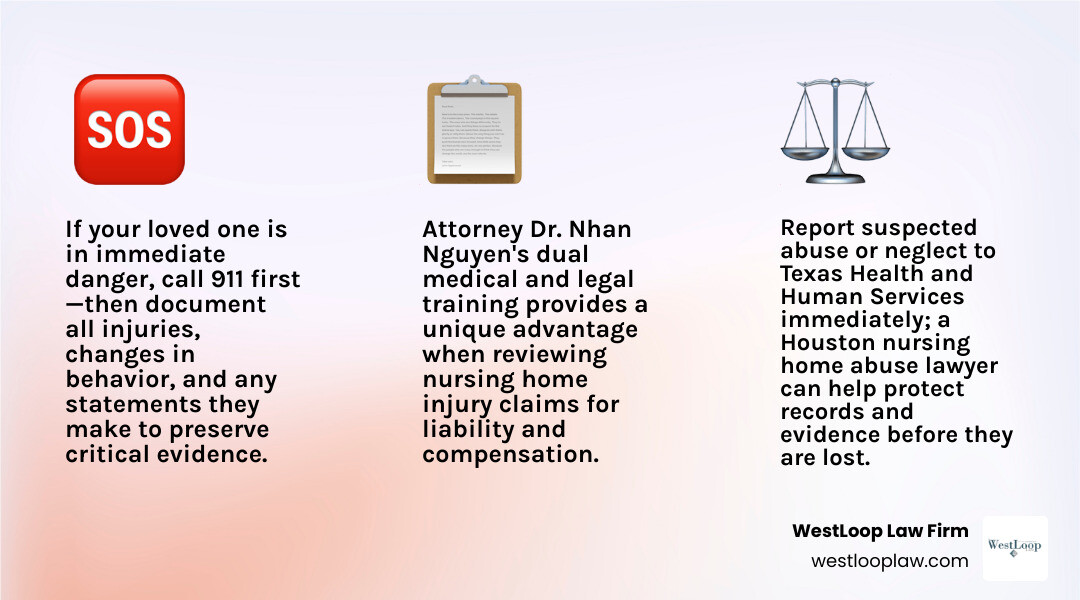
- If your loved one is in immediate danger, call 911.
- Get medical care and document injuries, changes in behavior, and what your loved one tells you.
- Report suspected abuse to Texas Health and Human Services.
- Speak with a Houston nursing home abuse lawyer before records or other evidence are lost.
A lawyer can help you investigate what happened, protect your loved one’s rights, and assess whether you can seek compensation. At Westloop Law Firm, attorney Dr. Nhan Nguyen brings both medical and legal training to the review of nursing home injury claims.
When elder mistreatment leads to severe harm, consulting an experienced personal injury attorney in Houston helps protect your family’s rights. Whether you need a dedicated Houston personal injury lawyer or a skilled catastrophic injury attorney in Houston, taking timely legal action is essential to holding negligent facilities accountable.
Recognizing Nursing Home Abuse and Neglect Under Texas Law
Placing an aging parent or relative into a residential care facility along Loop 610 or out near Beltway 8 is one of the most emotional choices a family can make. You expect professional care, attentive medical supervision, and basic human dignity. Unfortunately, understaffing, cost-cutting measures, and inadequate training across Harris County facilities often lead to severe breakdowns in resident care.
Texas law holds long-term care facilities to strict health and safety standards under the Texas Health and Safety Code. When facilities violate these duties, family members have the right to take decisive legal action. Understanding nursing home abuse is the first step toward halting ongoing mistreatment and holding administrative staff accountable.
Defining Abuse vs. Neglect in Long-Term Care Facilities
Although people often use the terms interchangeably, abuse and neglect represent distinct forms of harm under Texas regulatory standards:
- Abuse involves intentional, willful acts that cause physical injury, emotional anguish, intimidation, or wrongful confinement. This includes physical assault, verbal degradation, sexual misconduct, or using chemical and physical restraints as punishment.
- Neglect involves a systemic failure by administration or staff to provide the necessary goods, medical treatments, or personal care required to protect a resident from harm.
Neglect often manifests as missed medication dosages, poor hygiene, severe dehydration, or failing to reposition bedbound residents. Whether mistreatment occurs in a traditional skilled nursing facility or an assisted living community, learning about suing a nursing home for neglect helps families uncover systemic corporate negligence.
Warning Signs of Physical, Emotional, and Financial Exploitation
Residents dealing with cognitive decline or physical frailty may feel unable or afraid to speak up about mistreatment. Family members must stay alert for physical, behavioral, and financial warning signs during every visit:
- Physical Red Flags: Unexplained bruises, welts, cuts, fractured bones, repeated emergency room transfers to hospitals like Memorial Hermann or Houston Methodist, and rapid, unexplained weight loss.
- Hygiene and Environmental Failures: Soiled clothing, strong urine odors in living quarters, unmanaged dental hygiene, and advanced pressure wounds (bedsores).
- Emotional and Behavioral Shifts: Sudden withdrawal, fear around specific staff members, non-responsiveness, or agitation.
- Financial Irregularities: Unexplained bank withdrawals, missing personal jewelry, sudden changes to wills or powers of attorney, or unpaid facility bills despite available funds.
Learning how to recognize and respond to abuse ensures that minor red flags are investigated before they spiral into life-threatening emergencies.
Why You Need a Houston Nursing Home Abuse Lawyer to Protect Your Loved One

Investigating elder mistreatment requires a detailed understanding of both legal statutes and complex clinical records. Nursing homes often attempt to blame sudden injuries, infections, or physical decline on a resident’s advanced age or pre-existing medical conditions.
At Westloop Law Firm, we approach these complex disputes from a unique perspective. Dr. Nhan Nguyen holds an MD, a JD, and a Master of Science in Finance (MSF). This combination of clinical training, legal acumen, and financial analysis allows our team to look behind corporate defense narratives, read between the lines of altered charting, and understand why having a nursing home abuse lawyer on your side is critical.
How a Houston Nursing Home Abuse Lawyer Investigates Neglect and Liability
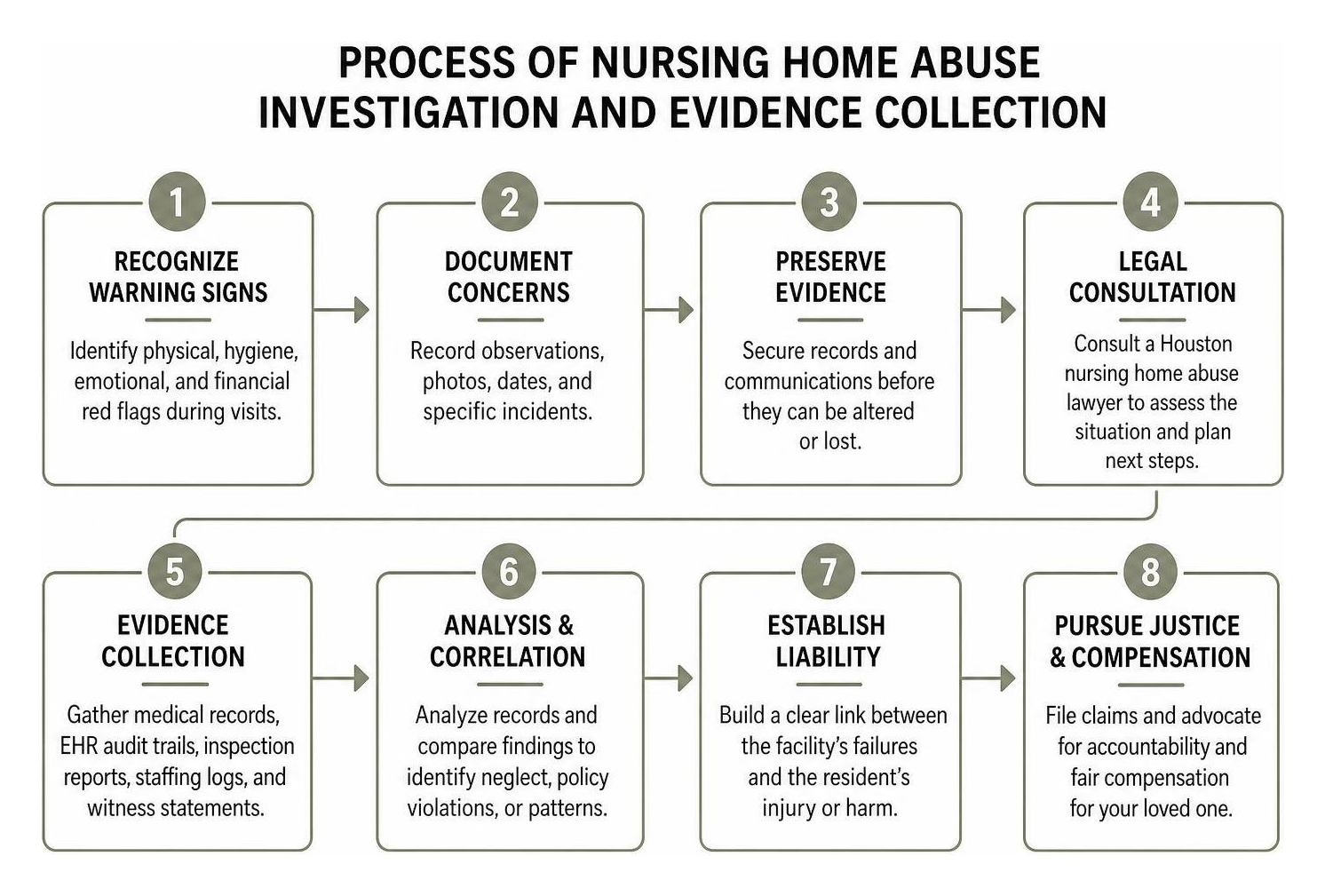
Care facilities rarely admit wrongdoing voluntarily. Proving liability demands a methodical, aggressive evidence-gathering process:
- Electronic Health Record (EHR) Audits: Analyzing audit trails to confirm whether staff actually administered vital medications or falsified repositioning logs retroactively.
- State Inspection and Survey Reviews: Cross-referencing current injuries with past citations issued by Texas Health and Human Services (HHS).
- Staffing Ratio Analysis: Reviewing payroll and shift logs to demonstrate that the facility operated below mandatory staffing thresholds to increase profit margins.
- Witness Depositions: Questioning nurses, aides, and former employees regarding internal training, equipment shortages, and administrative pressure.
This comprehensive approach is essential for navigating fall injuries in care facilities and securing legal support for serious facility injuries.
When to Consult a Houston Nursing Home Abuse Lawyer for Severe Injuries
Some incidents demand immediate legal intervention. If your loved one suffers Stage 3 or Stage 4 decubitus ulcers, a fractured hip from an unassisted transfer, severe sepsis, or aspiration pneumonia, facility negligence is frequently the root cause.
In the most tragic scenarios, extreme neglect leads to the loss of a loved one. During these heartbreaking times, our firm assists grieving families in evaluating fatal elder neglect claims and seeking corporate accountability through the Harris County Civil Courts at Law.
Steps to Take and Legal Process for Filing a Claim in Texas
When pursuing accountability against a negligent facility, following clear legal procedures protects your loved one’s physical safety and strengthens your legal claim.
| Claim Factor | Private Nursing Home Claims | Government-Operated Facility Claims |
|---|---|---|
| Governing Law | Texas Civil Practice & Remedies Code | Texas Tort Claims Act (TTCA) |
| Notice Requirement | Standard formal filing procedures | Formal written notice as short as 6 months (or city charter limits) |
| Statute of Limitations | 2 years from date of incident (§16.003) | 2 years, subject to strict early notice thresholds |
| Damage Caps | Standard medical liability statutory limits | Statutory government liability limits ($100k-$250k per person) |
| Key Target Entities | Private corporate operators, LLCs, chains | County hospital districts, municipal authorities, state agencies |
Knowing how to file a complaint and understanding the steps to take when working with a law firm will keep your case on track from day one.
Immediate Actions: Reporting and Securing Medical Care
If you discover mistreatment, act promptly:
- Secure Immediate Emergency Evaluation: Transport your loved one to a trusted emergency room via I-10 or I-45, away from the facility’s attending medical staff.
- File an Official State Complaint: Report the facility to Texas Health and Human Services (HHS) by calling their regulatory hotline (1-800-458-9858).
- Preserve Physical Evidence: Photograph injuries, bed conditions, call-button placement, soiled linens, and room conditions. Keep copies of all admissions paperwork and payment receipts.
- Consult Legal Counsel: Learn about when to file a nursing home abuse lawsuit before speaking with facility risk management or signing settlement waivers.
Texas Statutes, Comparative Fault, and Filing Deadlines
Personal injury and medical liability claims in Texas are governed by distinct statutory provisions:
- Statute of Limitations: Under Texas Civil Practice & Remedies Code §16.003, victims generally have two years from the date of the injury to file a lawsuit in civil court.
- Modified Comparative Fault (51% Bar Rule): Under Texas Civil Practice & Remedies Code §33.001, an injured party can recover financial compensation as long as they are not more than 50% responsible for the incident. If a resident is found partially at fault, their compensation is reduced proportionally. However, if their fault reaches 51% or higher, recovery is barred completely.
- Personal Injury Protection (PIP): While PIP applies primarily to motor vehicle claims, understanding insurance recovery structures helps families handle medical liens and out-of-pocket healthcare expenses.
To understand how these legal rules affect financial outcomes, review our guide on settlement valuation factors and our breakdown of expected case duration and timeline.
Frequently Asked Questions About Nursing Home Abuse Claims
What is the statute of limitations for nursing home abuse cases in Texas?
Under Texas Civil Practice & Remedies Code §16.003, the standard deadline for filing an elder abuse or personal injury lawsuit is two years from the date the injury occurred or was discovered. However, if the facility is owned or operated by a state, county, or municipal government entity, formal written notice of the claim must often be provided within six months—or even sooner depending on local city charter rules.
What damages can families recover in a Texas nursing home lawsuit?
Families and injured residents can pursue recovery for:
- Past and future medical bills, hospital stays, and rehabilitation costs.
- Physical pain and suffering.
- Mental anguish and emotional distress.
- Physical impairment and disfigurement.
- Funeral and burial costs in wrongful death actions.
- Exemplary (punitive) damages in cases involving gross negligence or intentional malice.
Can I sue a government-run nursing home in Harris County?
Yes, but claims against county-run or municipal facilities must comply with the strict rules of the Texas Tort Claims Act. This law requires filing formal notice of your claim within a short window, often as brief as six months from the date of the incident, and caps the maximum damages you can recover.
Dedicated Advocacy for Houston Families
When a long-term care facility fails to protect your loved one, taking prompt legal action helps safeguard other residents and secures the compensation your family needs for proper medical care. Westloop Law Firm has represented over 2,025 clients across Harris County, recovering millions of dollars in personal injury and medical negligence cases.
We handle all nursing home injury claims on a contingency fee basis, meaning you pay no upfront legal fees unless we successfully recover money for your claim. If you suspect your loved one has suffered mistreatment or neglect in a Houston-area facility, connect with our team and an experienced Houston personal injury lawyer to schedule your free, confidential case review today.